
 A museum built from personal passion: Frederick Stibbert turned his home into a stage for history
Florence is no stranger to museums. In fact, the city is home to around 70 in total! I don’t think it’s possible for any local to visit them all (unless they set their mind to doing so), never mind tourists coming to this glorious city for a few days. So, naturally, some places do fall through the cracks. Some more than others, especially if they aren’t located in the historic center of the city, where many of the attractions are concentrated. This is exactly the case with the Stibbert Museum.
It is out of the way, so even visitors intending to go might end up giving it a miss if they are on a tight schedule. That was almost the case with me. I kept putting this off until my last full day in Florence, when the weather took an unexpected turn for the better, which meant I felt compelled to embrace the last remnants of sunshine before the rain continued.
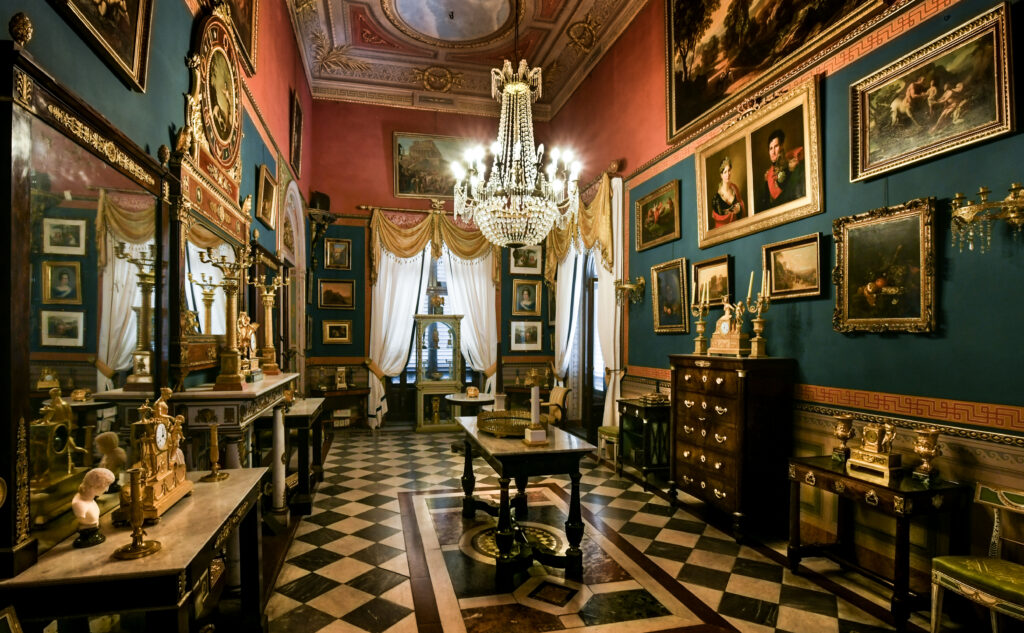 There more than 50,000 objects, yet somehow, every room still feels curated with care
So, I ventured out towards the Stibbert Museum and surrounding gardens, and I’m glad I did. This ended up being one of my favorite locations in all of Florence, and I’m here to tell you why you should make time for this one on your next visit to Tuscany!
History
The museum and gardens make up the former residence of Frederick Stibbert (1838–1906).
 The grand cavalry hall, lined with armored knights on horseback, feels like stepping into a Renaissance battle painting
Born in Florence to a Florentine mother and an English father, he was sent to England to complete his studies. When he returned to Florence as an adult, he began his transformation of Villa Mezzeri, which his mother had originally purchased way back in 1849.
Several years after this, he himself went on to acquire the adjoining Villa Rosselini residence and entrusted numerous celebrated craftsmen with the task of renovating the entire complex into one worthy of housing the collections that he had amassed.
Speaking of which, Stibbert was always intrigued by distant lands and cultures that were vastly different from his own. This intense passion was what fueled his collecting habits, and at the age of 21 years old, he came into possession of an immense inheritance, which he used over his lifetime to realize his dream of remodeling the properties that could proudly display these collections.
 Every corridor is a time capsule—Florentine grandeur meets collector’s curiosity
Following his passing, as requested in his will, the city founded the Stibbert Museum in 1909. In the years following its inauguration, the museum and its park have been visited by numerous illustrious people, including the likes of Oscar Wilde and Queen Victoria.
How to Get There
The museum and gardens are located on the hill of Montughi in Florence, Italy. This is outside the historic city center, where most tourists go. So, to reach this fantastic place, you will have to either walk (which will take just over 30 minutes but will include several steep hills to scale) or use one of the city’s many public transport routes.
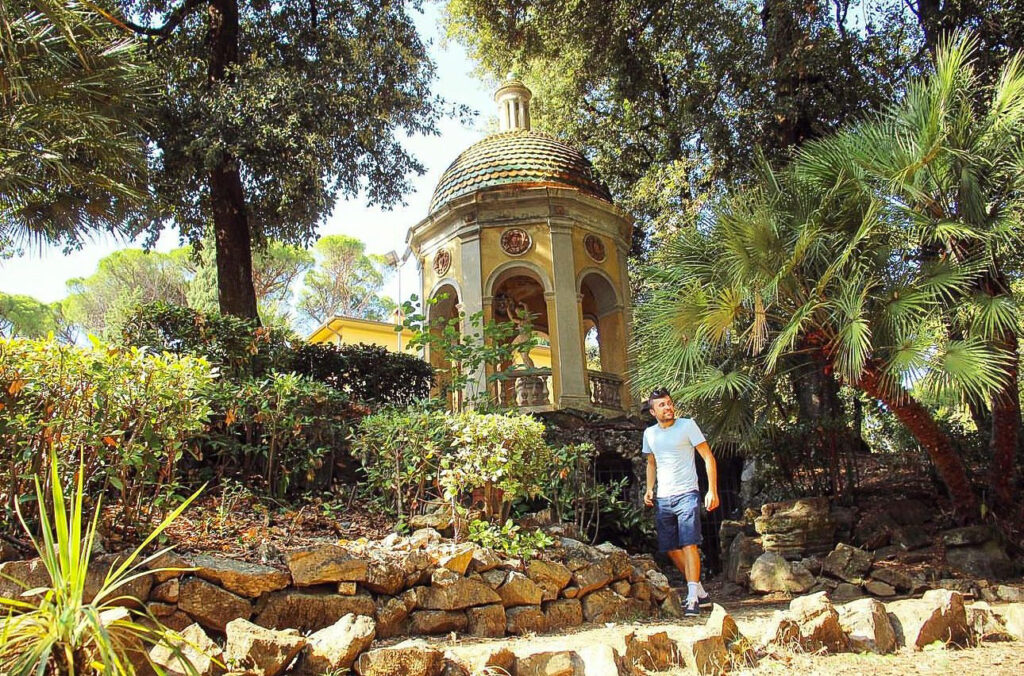 Winding paths through shaded groves offer a peaceful pause from the heavy halls of armor inside
The city’s light rail (T1.3) will take you from the center to about a 15-minute walk from the entrance. Otherwise, bus number 20 also takes you over as far as about 15 minutes away.
If you would rather avoid walking altogether, then a taxi or Uber is by far the best option.
The Gardens
The surrounding gardens are going to be the first thing you come across, especially since the entrance to the museum is located on the side of the building and leads directly into the gardens.
 Stibbert’s taste for drama carries into the landscape: statues, terraces, and cypress trees
Planned in accordance with typical romantic-style precepts, there is no fee to explore these marvelous grounds, and I highly recommend a leisurely stroll around as these are some of the most beautiful gardens I found during my time in Florence.
The plot has many curiosities to see while walking around, including a beautiful pavilion, various marble statues, small, decorated grottos, and an interesting Ancient Egyptian-styled temple monument centered around a small lake, complete with sphinxes and lions.
The garden facing the side of the villa also has many plaques and monuments attached to its walls, which are worth checking out during your visit.
 A quiet museum far from the crowds, this is the perfect place for those who get overstimulated in busy environments
There is also a café attached to the museum exit; you can grab a variety of drinks and snacks from it even if you choose not to enter the museum.
The Museum
As the museum is now privately run, it falls short of the initiative set up by the Tuscan government to offer free entry to disabled visitors. Nonetheless, the museum offers its own discount, costing disabled guests only €2 for entrance (the normal fee is €8 for adults and €4 for children 4–12 years old, with 0–3 years getting free entrance).
Upon entering, you will be presented with a small leaflet outlining the museum and its history. I was also promptly informed that while the visit would be self-guided, there would be staff members throughout the building who could provide any additional information to guests at their own request. There were 4 of these staff members scattered throughout the museum’s many rooms, all of whom were fluent in both Italian and English.
 Stibbert didn’t just collect—he curated a world where East meets West, and centuries blur together
Each room also has various scannable QR codes, one for information on said room, as well as entries for specific objects within the collection. This is great for anyone who wants any additional information but does not want to engage with the staff members present.
The museum is quite large and will take at least an hour to explore. Each room has a specific theme, and Stibbert has arranged his collections to follow these themes.
Armoury was one of Stibbert’s main interests, and there are a variety of impressive armories based around various parts of the world. The building also contains the world’s largest collection of Japanese arms found outside of Japan. This is despite Stibbert never having made it to Japan, though he always had a fondness for the country and its culture.
 Thousands of weapons, armors, and artifacts—all staged like a theatrical production frozen in time
Containing about 50,000 items in total, there is a lot more outside of the armories too, including paintings, ceramics, costumes, and artifacts of all kinds.
Apart from the objects found here, the interior designs of the rooms are impressive in themselves, offering guests a visual insight into the extravagance that Stibbert inhabited.
Other Things to Keep in Mind
As mentioned, a discount is applied to anyone who has a certificate proving their disability. This may not be specifically asked when you inquire, but it is best to have it to hand just in case.
Note: A special thanks to Museo Stibbert who kindly provided additional photography for use in this article. All credit goes to the rightful owners.
 Stibbert’s vision wasn’t just to collect—he wanted to impress, overwhelm, and intrigue
 I found this to be one of Florence’s most underrated museums
 Dimly lit halls and densely packed displays make this feel more like a relic itself than a museum
If you liked this article and would like to support my work, then please consider clicking on one of the buttons above to donate a little to either buy me a coffee or support my business initiative. Your generous support enables me to keep creating new and better content, as well as cover business development costs. Please only do this if you are financially able to do so, as these are challenging times for us all – Thank you!
Leave a Reply