
 It might be one of Europe’s tiniest nations, but don’t mistake size for lack of substance
San Marino is the 4th smallest sovereign country in the world (the smallest is also landlocked in Italy—the Vatican). Don’t let its small size put you off, though; this is without a doubt a place worth visiting for a day or two, especially if you find yourself in or around Rimini, San Marino’s main connection point.
The Basics
Officially known as the Republic of San Marino, this European microstate is located on the northeastern side of the Apennine Mountains and only encompasses a land area of just over 61 km2 (23.5 mi2) and a population of 33,660 as of 2022. This makes it one of the smallest and least-populated nations on the planet.
 From here, a nation still governs itself since the 4th century
San Marino is a landlocked country, or, in other words, an enclave (making it 1 of only 3 nations to be so). However, its northeastern side is within 10 km (6 mi) of the Italian city of Rimini on the Adriatic coast. The country’s capital city, the City of San Marino, is located atop Monte Titano, while its largest settlement is Dogana, within the municipality of Serravalle. San Marino’s official language is Italian.
How to Get There
San Marino is one of the few countries in the world without an airport. It also has no rail network. So, a car, taxi, or bus is your best option. I opted for the latter. There is no land border with Italy, so you won’t have to worry about customs.
Rimini offers a direct shuttle service that can take you to the old town and tourist center of San Marino in around an hour. This was the option I went for, as it was also the cheapest.
To get your bus ticket, you must go to the tobacco shop next to Burger King, directly across from the station. Tickets cost €12 for a return (€6 each way). From here, you will want to turn left (with the store behind you) and make your way to the Napoleon Hotel, a mere 2-3 minutes’ walk up the street. This is where the bus stop is, and it should be noticeable thanks to a large sign on the pole.
 Tucked away and often overlooked, San Marino is full of quiet surprises
Recommended Length of Stay
One day is enough to fully explore the main tourist hub, centered around the peak of Mount Titano. It can even be done in an afternoon if you decide what exactly you want to do while you are there. However, if you want to see some of the other towns and villages surrounding the mountain, then you should at least give yourself an extra day or two.
Things to Do
If you are here for a day, then you are going to want to center your activities around the old town on top of Mount Titano.
It is important to first mention that San Marino has its own initiative for disabled guests, offering free entrance to its publicly owned attractions upon presentation of proof of disability (for example, a certificate).
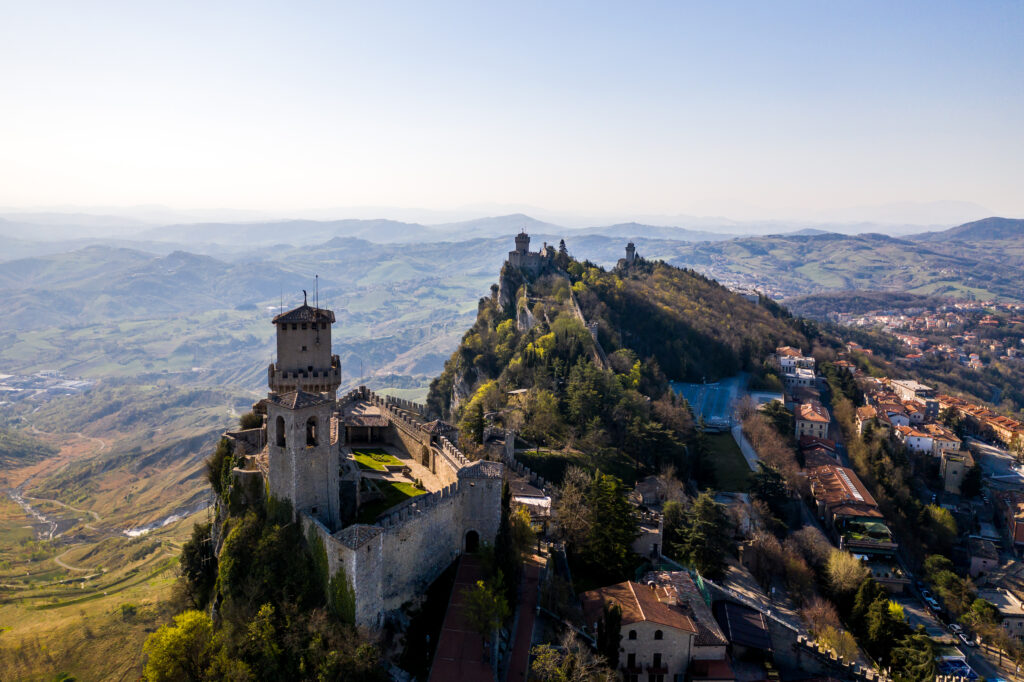 San Marino is a country where medieval defence meets modern-day perspective
It is also useful to know that getting this pass from one of the state-owned attractions will also get you a city pass, which you can keep for use at other attractions.
The attractions that are part of this initiative are: the Guaita Tower (1st Tower), the State Museum, the Public Palace, the Modern Art Gallery, and the Church of Saint Francis. The Cesta Tower (2nd Tower) and its resident Museum of Ancient Arms are also included, according to what I heard, but they were closed for repairs and renovations when I visited. Similarly, the Stamp & Coin Museum is also usually included but was temporarily closed at the time of my visit.
 San Marino uses the euro, but mints its own coins—some of the rarest in circulation
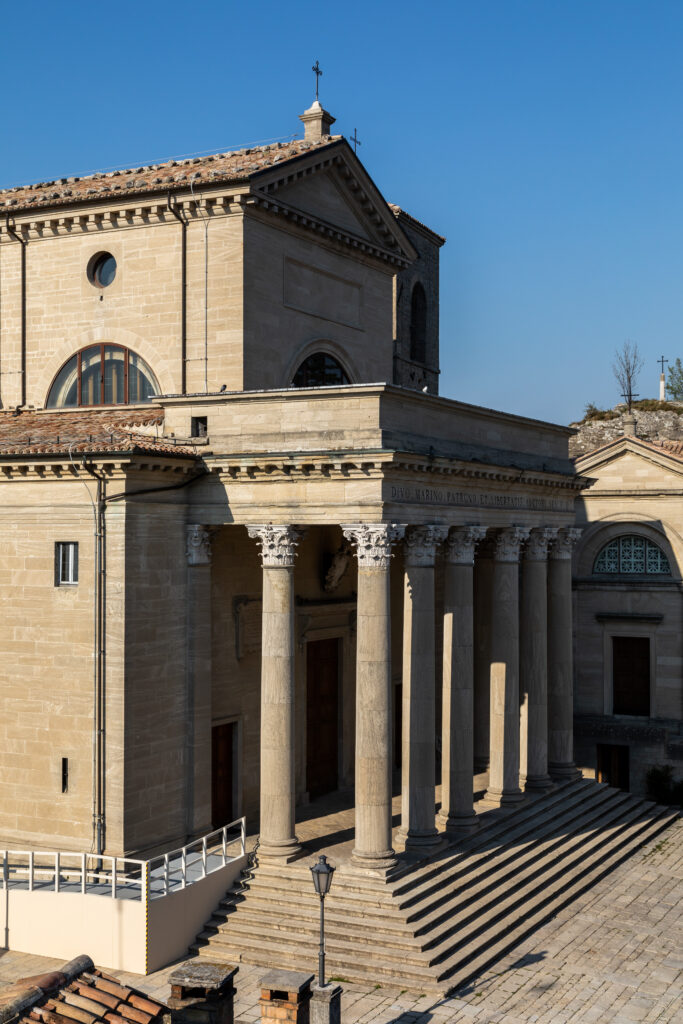 Everything is walkable, nothing feels rushed—San Marino rewards slow exploration
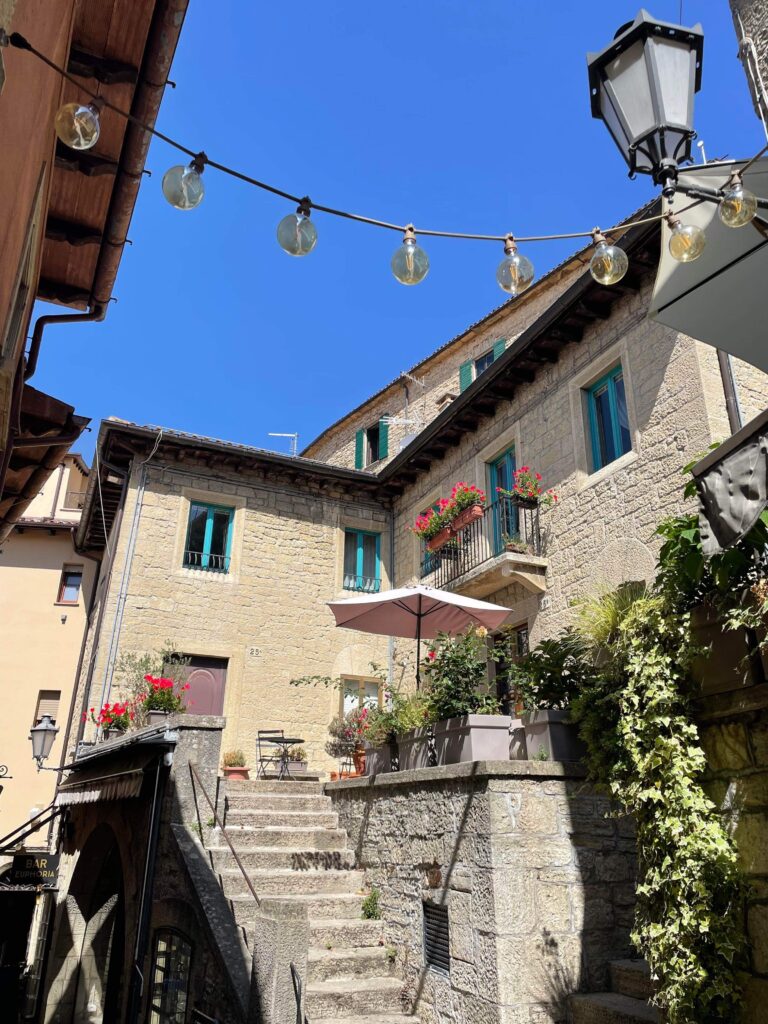 The entire old town is a UNESCO World Heritage Site, perched atop Monte Titano
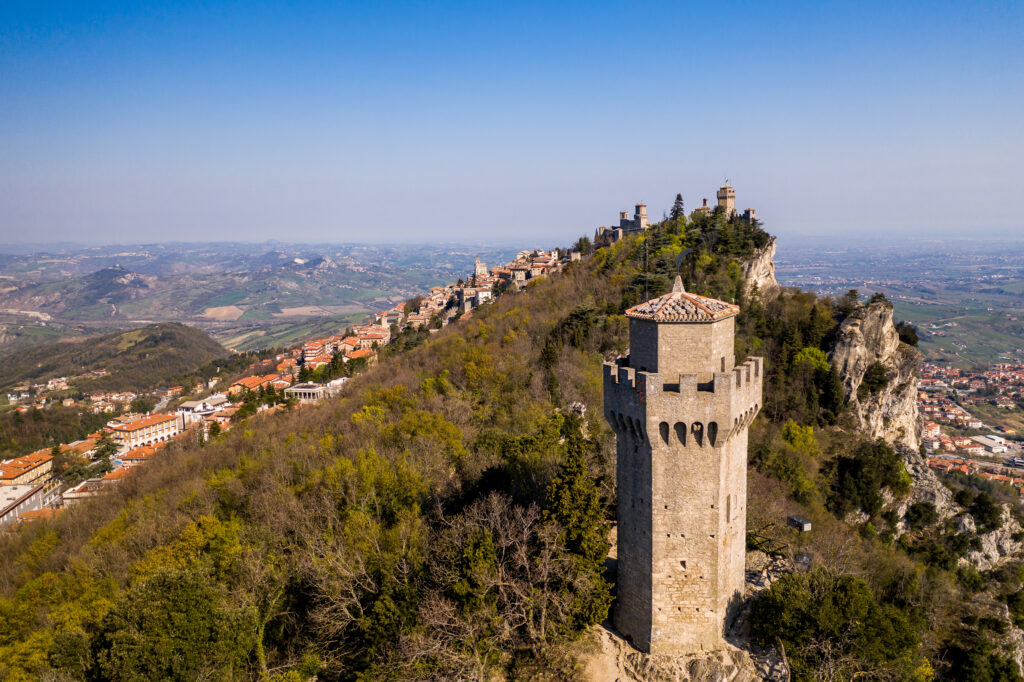 Each tower was built on one of Monte Titano’s peaks
- Three Towers of San Marino
This is the country’s star attraction (or attractions, to be more precise). This group of towers has long been intertwined with the defense system of this tiny nation and stands proud on the mountain’s 3 highest peaks, dominating the lowlands below.
As I mentioned, of the 3 only the Guaita Tower is open to the public. It has several sections based around a lovely little courtyard-like garden area. The first building in the complex was once San Marino’s prison and offers many boards with written information about the castle’s history along with some visual elements (pictures, plans, and artwork in the form of graffiti left behind by the former prisoners).
 The tower trail is more than scenic—it's a walk through nature and history
From here, you can go along the castle walls to get a lovely panorama over the country and even into Italy. The day I went, there was great visibility, so Rimini and other coastal areas on the Adriatic could be seen clearly.
Walking a few short steps further along the wall will lead you to the tower. The tower has a total of 3 levels, all of which are scalable. You will have to be prepared to climb a steep ladder and some metal steps that were part of the original design of the tower to reach the second level. This can prove troublesome when there are crowds, as it is only possible for visitors to go either up or down at one time.
While the other 2 towers were closed, the trailhead from the first tower is a great walk along the mountain’s ridge and will give you plenty more outlooks over the top of the mountain, as well as a lovely forest area that surrounds the final tower.
 The local tourism office lets you get your passport stamped
- Getting your passport stamped
I am not a huge fan of tacky souvenirs when traveling, but I love passport stamps as mementos of some of the amazing places I have been to. And while San Marino has an open border with Italy, a quick visit to the local tourist office means that you can get an official stamp added to your passport for €5. A little pricey, but it was a welcome addition to my current passport, as it has a colorful sticker attached beside the stamp—much more visually appealing than the dull and plain design of the European Union stamps.
The tourism office also houses the Stamp and Coin Museum inside, which was also closed during my visit, unfortunately, due to issues with the aircon inside. Nonetheless, I heard this is also a wonderful experience, and it is even possible to receive Sanmarinese euro coins that are minted over in Rome.
 Wander cobblestone streets once walked by medieval soldiers and sainted founders
- State Museum
The State Museum is the largest museum in San Marino, but still relatively small for a museum overall, in my honest opinion. It should take you less than an hour to visit, unless you really want to take your time with the displays.
It is in an old palace within the historic center. It first commenced life as a museum in 1899; it was subsequently moved in 1982 to its current location in Palazzo Pergami-Belluzzi. As a museum, it is San Marino’s oldest and is divided across 4 floors, each with a distinct theme.
The ground floor is based around archaeological finds from within San Marino’s borders, which contain some interesting and surprising discoveries that have been made over the years, as well as pertaining to the historical evidence of San Marino having the world’s oldest constitution and republic.
Heading upstairs will take you to the art gallery, which is mainly centered around religious artworks spanning across several centuries, though there are other artworks also displayed to a lesser degree. Some of the country’s most important pieces are proudly displayed across this floor.
 Though not in the EU, San Marino operates under the Schengen Agreement
Reaching the top level, you will find an eclectic range of pieces donated to the museum over the years. These range from ornaments to furniture, artworks, sculptures, and ceramics, to name but a few. Not all these donations are from San Marino, with many having arrived from all corners of Europe and further afield.
The basement level is also archaeological in nature but focuses again on donations coming from Ancient Egypt, Cyprus, Italy, and Greece. Being a lover of ancient history, I found this level to be by far the most interesting.
- Basilica di San Marino
If you’re arriving by cable car, then this will most likely be one of the first sights that you will come across. Acting as the main church within the city of San Marino, it is still in use today, which means that visits are out of the question during mass. However, it is otherwise open to the public.
 The Basilica holds the relics of Saint Marinus, the deacon who founded this independent state
Built in place of an earlier structure that stood here previously, the present basilica was completed in 1838 and is built in the Neoclassical style, with a porch of 8 Corinthian columns. Relics of Saint Marinus (from which the country derives its name) are enshrined here in the church.
The basilica was famously visited by the former pope, John Paul II, who gave the basilica his blessing and the relics related to the deacon of San Marino. 10 years after this event, the Vatican made several decrees in relation to the basilica in 1992. These included the fact that the church, as the mother church of the Republic, is exempt from the jurisdiction of the parish of the city of San Marino.
It won’t take long to visit this one, though there is the Chiesa di San Pietro located just to the right of the main structure, which again is small but contains a crypt and is enterable should you wish to extend your time here.
 The Public Palace is not just for show—San Marino’s parliament still meets here today
- Public Palace and Liberty Square
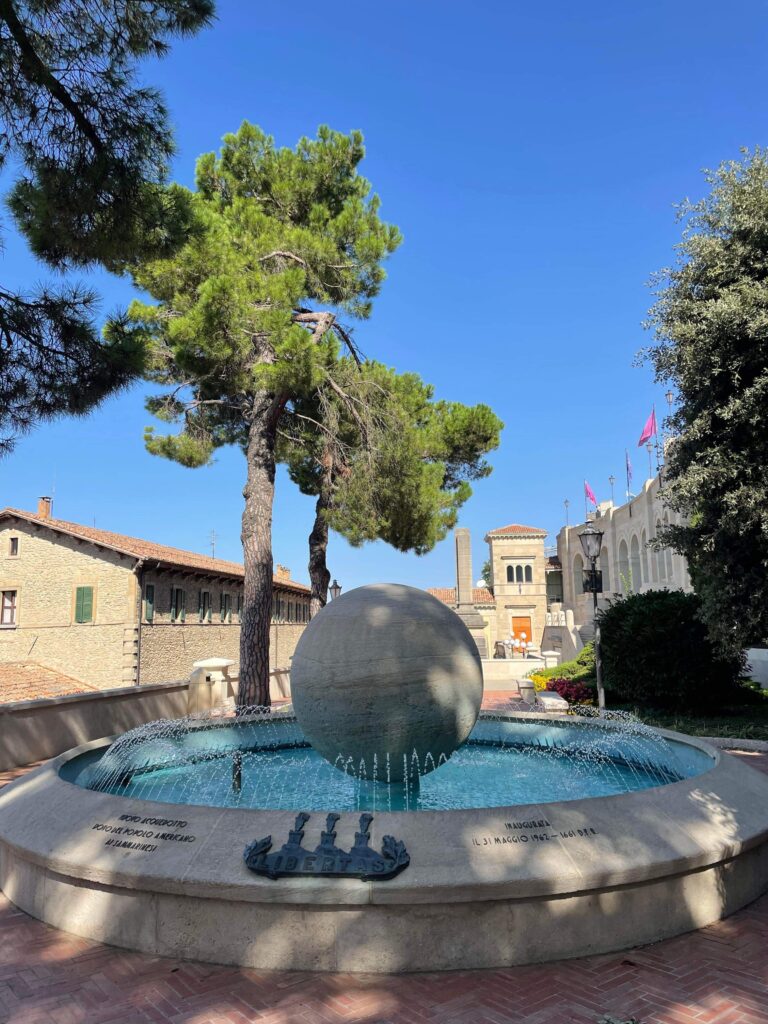
Liberty Square is a hub within the city of San Marino and has several important buildings (as well as several eateries and souvenir shops) located within it. The square is centered around a large marble fountain with a representation of the Statue of Liberty of San Marino perched on top.
To one side of the plaza is the ‘Parva Domus Communis’, a beautiful building that was used as the administrative offices for the postal service. This remains a private building and cannot be entered by tourists.
Sitting directly on the other side of the square, however, is the Public Palace, the main governmental building and seat of parliament in the country today. Built in the 19th century to replace the former building, this palace is also now open for public visits to give visitors a better insight into the political and administrative side of this tiny micronation.
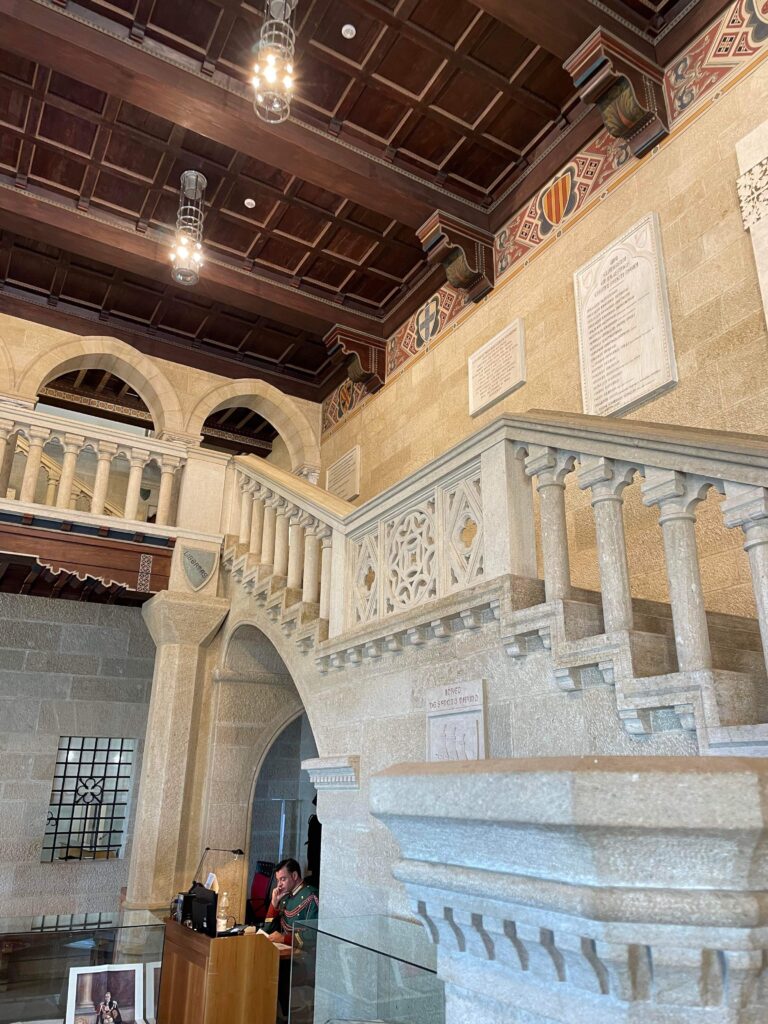 Modern art, ancient relics, and a constitution older than most countries—San Marino delivers on multiple fronts
Only a small portion of the interior is open to guests, so it will probably be a quick trip, like most attractions in San Marino.
Your visit to the Public Palace will start in the sedate entrance hall, complete with a grand stone staircase and several artifacts draped across the walls. You are free to explore this area, and there are also some written information plaques here, more of which can also be found in the other rooms of the tour.
From here, the visit takes you upstairs and onto the mezzanine, which gives you a magnificent view of the entrance hall, as well as several tempera paintings hung on the walls here that depict some notable events in the history of the Republic. As well as interpretive boards here pertaining to the history, there is also a television playing a short documentary that is more suited to learners.
The rest of the visit is centered around the ‘Hall of Great and General Councils.” This grand room, designated for parliamentary activity, is overshadowed by the huge painting covering the far wall as you enter. The scene is symbolic of the creation of the state and shows Saint Marinus at the foot of Mount Titano, leaving the Sammarinese his legacy of freedom and independence.
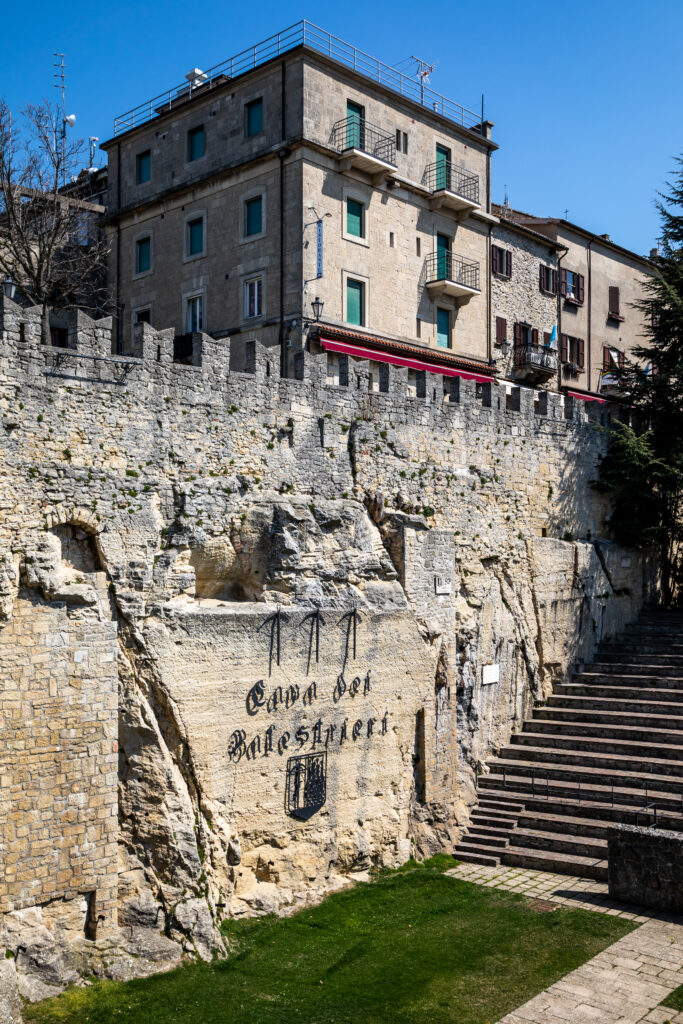 With its stunning panorama and rich history, the old town of San Marino is an open-air museum you can get lost in
You can also usually spot guards in traditional attire standing motionless in the front archway. They seemed happy enough to be photographed with some tourists I saw, but that is not really my thing!
- Cava dei Balestrieri
Not far from where the cable car station is situated is a large portion of fortified wall that now makes for ideal sightseeing over the land below. Just a quick walk down a slope here will take you out to Cava dei Balestrieri. This huge crater was formed when rock was excavated from the site to build the new Public Palace.
Location-wise, it is very central, and most of the attractions can be reached within minutes, including some nearby green spaces and sculptures that have been set up around Cava dei Balestrieri, which makes it an ideal location to find yourself in.
Nowadays, it is used for crossbow practice, with the site having been taken over by the Corps of Crossbowmen. As well as being a training area, it is also used as an occasional outdoor exhibition site, with a range of festivals and competitions having been held here over the years.
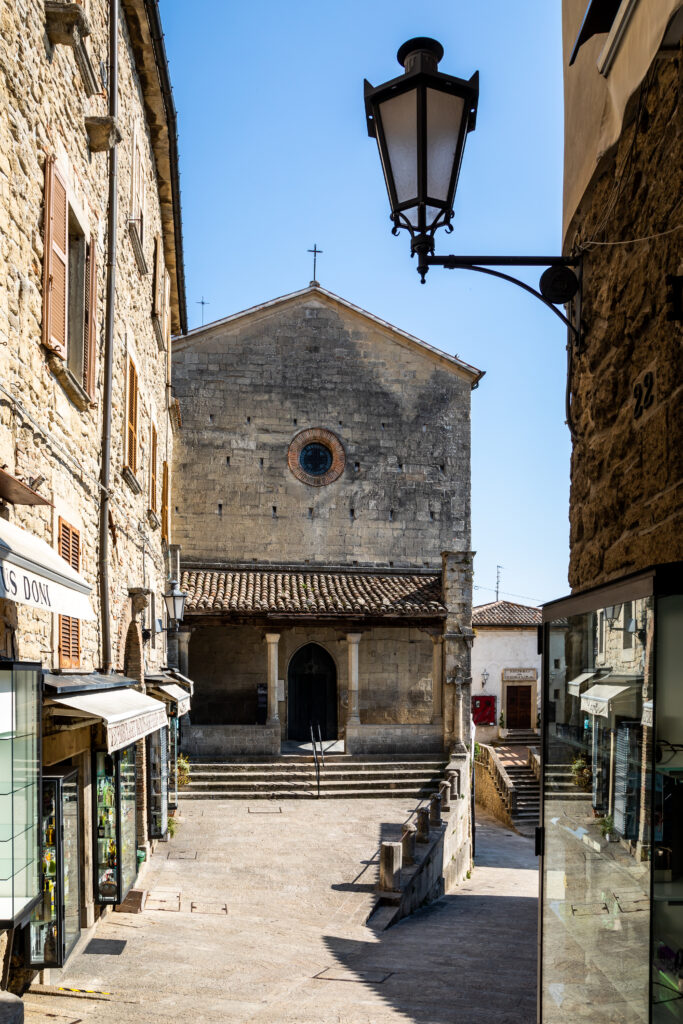 The old town is heart and soul of San Marino
- Church & Museum of Saint Francis
This church and convent’s history can be traced back to around the year 1400 and has remained a mainstay of religious activity in San Marino ever since.
The adjoining museum is housed in the covenant’s loggia and lets guests see a range of religious relics spread across 2 floors.
The upper loggia also contains a small permanent exhibition space for the works of Emilio Ambron, which were donated by the artist himself.
- Modern Art Gallery
This is an interesting one, for sure. It’s the smallest art gallery I have ever visited, spanning one large hall. As such, I reckon a visit can be done within 15 minutes. Either way, if modern art is one of your interests, then a visit should, of course, be on the cards.
The art displayed in the hall here comes in a wide variety of media forms, and there are some interesting pieces by local artists that can be described as experimental. A section of the hall is also dedicated to artworks related to WWII and the resulting post-war fallout (San Marino was a neutral power during the war but was then occupied by German forces before a fierce battle with Allied troops).
 Charming, narrow alleys open up to panoramic views, making San Marino’s old town an enchanting escape
Where to Stay
With the old town situated on the mountain top, there is competition for space and a lack of accommodation (except for the most expensive). Most hotels and hostels are found surrounding the mountain in the lower regions. I personally stayed at Hotel Crocenzi. It’s conveniently located within a short walk of the tram station, making it a great place to stay for those looking for an easy way to get into the city center high above.
Don’t worry if you end up having to book somewhere outside of the old town; there is a convenient cable car that connects the to mountaintop and runs every 15 minutes. Tickets are also cheap, costing only €4.50 for an adult return or €2.80 for a single journey.
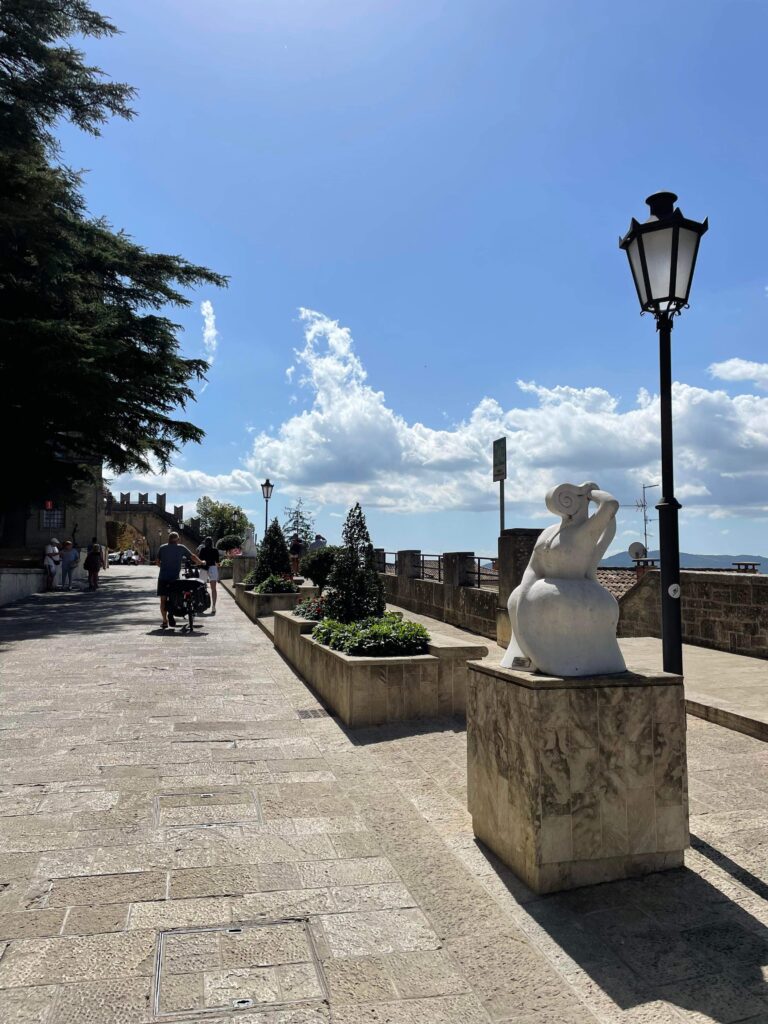 Catch your breath at the breathtaking views from San Marino’s old town
Other Things to Keep in Mind
Despite not being an EU country, San Marino is de facto in the EU due to the lack of a border with Italy, which means non-EU citizens will also be subjected to Schengen days here.
Similarly, the country uses the euro as the official currency, and European phone plans work without issue.
Italian is the only official language, though some older individuals speak Romagnol (which is gradually dying out with every generation, sadly).
Note: A special thanks to Visit San Marino who kindly provided additional photography for use in this article. All credit goes to the San Marino Tourism Board.
 Pizza might be from Italy, but that doesn't mean you can't enjoy it here!
 With a population of about 33000, San Marino is one of the world's least populated countries
 San Marino is one of the few countries without an airport, making it an even more unique destination to visit in Europe
If you liked this article and would like to support my work, then please consider clicking on one of the buttons above to donate a little to either buy me a coffee or support my business initiative. Your generous support enables me to keep creating new and better content, as well as cover business development costs. Please only do this if you are financially able to do so, as these are challenging times for us all – Thank you!
Leave a Reply