
 Elizabeth enjoying the Autumn colors
As many of you may be aware, there is very little in the way of travel-related information online which focuses on autistic adults, or has any input from the autistic travel community.
‘Autistic Travel Voices’ is an opportunity for others in the community to discuss topics surrounding their own travel journeys, and how their lived experience of traveling intersects with being autistic.
In this new edition of ‘Autistic Travel Voices’ I had a chat with Elizabeth Gray. A native Glaswegian, Elizabeth has traveled extensively in a relatively short space of time. We met by chance on a DTLA bus bound for Palm Springs. Upon realizing our Scottish connection, we had a lot to talk about since the cultural differences between there and California are massive. Further into our conversation the topic shifted to this very website, at which point we figured out we were both autistic. Following some time experiencing the Palm Springs nightlife together, Elizabeth kindly agreed to be my newest guest on ‘Autistic Travel Voices’!
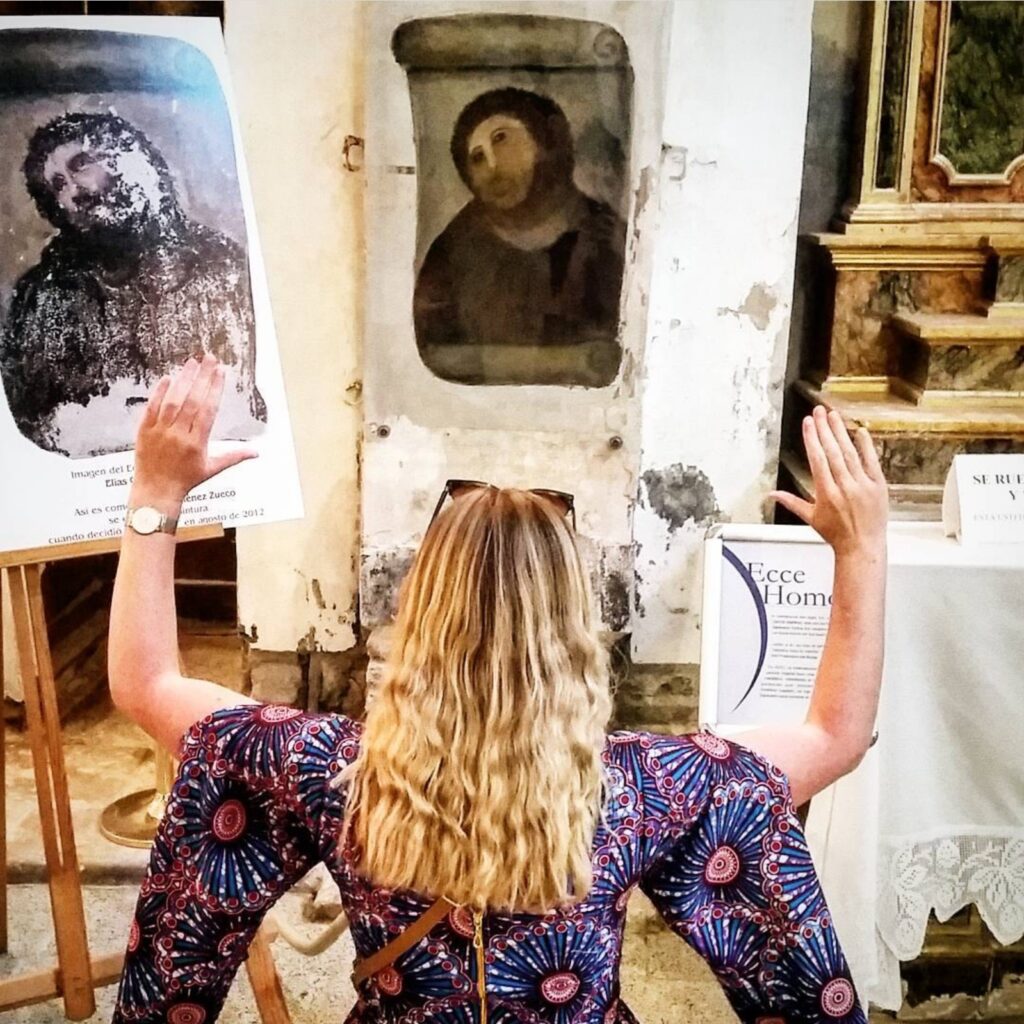 Giving praise to the infamous botched restoration of an Elias Garcia Martinez fresco in Spain
- Q1: Would you like to introduce yourself to our readers?
Hello! My name is Elizabeth, I’m from Scotland and I have travelled to 50 countries. I live in Glasgow where I work in a laundrette, watch films at the cinema, and work on my neverending home renovation project, an ex council flat (that’s a social housing apartment for those who aren’t British).
- Q2: When was your first solo trip? and where did you go?
It was to Prague in 2009. My family always went on the very typical “beach holiday” to Spain etc, and I felt like trying something new. I was in first year at university, aged 18, and we had two weeks after exams in December. Feeling bold with my new independence and my student loan in my pocket, I did absolutely no research except loan a Franz Kafka book from the library. I spent £100 in 5 days, and slept in a 20 bed hostel dorm. I went back 10 years later, more competent and confident and better equipped, and had an even better time.
 To the left or to the right?
- Q3: You said you’ve been to about 50 countries now. Do you intend to keep going past that point, perhaps with a set goal in mind?
Well, the ideal end goal would be all of them, but that’s unlikely. I’d be happy going back to the same places I’ve already been – there’s always something new to see. It’s a privilege to have seen 50 countries and I don’t have any expectations, I’m just happy to see what I can.
- Q4: What have you learned about yourself as an autistic woman since traveling solo?
I’ve learned I’d be incredibly easy to kidnap. I’m so trusting! I have so much naivety that never seems to be knocked even by bad experiences. I did once cross paths with a scammer after I sat next to him on a plane, he spun some crazy lies, stole my credit cards and disappeared, and I swore I wouldn’t chat to strangers anymore nor meet people online nor invite people I didn’t know to stay at my house, but I have done all of that a hundred times since.
 Exploring one of Europe's finest archaeological site; the Colosseum
A more serious answer would be that I’ve learned autism can be an asset. I am so keen to mirror that I pick up on language, mannerisms, and cultural knowledge fairly easily. I’m so keen to “deep dive” into situations that I’m good at immersing myself in a place and embracing it.
- Q5: Our chance encounter and subsequent time in Palm Springs is one of the many reasons I love spontaneous travel. Are you an advocate of spontaneous traveling?
Oh, totally. When I travel I never plan anything until I get there, and just see what I feel like doing. In Glasgow the best way to spend your time is just going with the flow, moving from place to place and seeing what’s fun, what’s happening, who is there. I like to keep that attitude with me when I travel.
- Q6: Do you have a favorite destination so far?
Hmmm. Probably the Faroe Islands. Helicopters are considered public transport, you can see it all from the sky and it’s pretty affordable. It’s just so friendly and welcoming, and the nature is breathtaking. I missed my ferry one day and ended up in a local bar on a different island and got invited to a birthday party, he had an open bar, a buffet and a heated outdoor pool, it was amazing. On the way back to Torshavn the next day, the ferry captain (who had been at the party) let me steer the ferry.
 Covid came with added challenges for travelers, which forced us all to adapt with
- Q7: Having traveled to so many places do you feel that certain places are more autistic friendly than others, based on the inherent cultural differences?
I think so. I’ve always had a drive towards northern countries, even though they’re often freezing, because I find them quite accessible. Places like Germany where everyone is punctual and polite and they take pleasure in being efficient means I’m not so far outside my comfort zone!
- Q8: What challenges does being autistic present for you when you are traveling and what strategies do you use to cope?
The airport is the biggest one. I don’t know how to behave. I hate the lights, the crowds, the queues, the questions, unpacking my perfectly packed bag and then having to re-pack it in a hurry with an audience. I recently had a panic attack during a layover for these reasons. To avoid this I try to prepare well and practise acceptance, but I also allow myself some recovery time once I arrive. Otherwise, problems like sensory overload can happen anywhere but I try to avoid hanging around crowded places or doing group tours, and scheduling alone time. Limiting time in busy, loud places is so important. I’ve left many significant landmarks because I couldn’t enjoy them.
 One of Elizabeth's past adventures saw her be lucky enough to take a yacht ride between Albania and Corfu!
- Q9: From your own experience, how accessible do you feel the tourism industry is for autistic travelers? Do you have any suggestions for improvement?
Pretty inaccessible. When you think about how airports and flights are designed, it’s inevitable that they cause aggravation. I have considered selecting “special assistance” at airports but I think as autism isn’t really seen as a disability that this might be met with rejection or judgment.
Most major landmarks or tourist attractions have the capability to have quiet hours, limited capacity events, or even sensory friendly events. In Copenhagen I often found art museums quite noisy and chaotic during the day – partially due to school trips and partially due to the structure of the buildings that cause echoing. Lots of museums closed at 4pm and reopened at 5pm on Fridays and had live music, interactive events, dimmed lights, and it was adults only. I loved those. If you’re alone and you don’t fancy a bar or a club, a museum would be amazing in the evening.
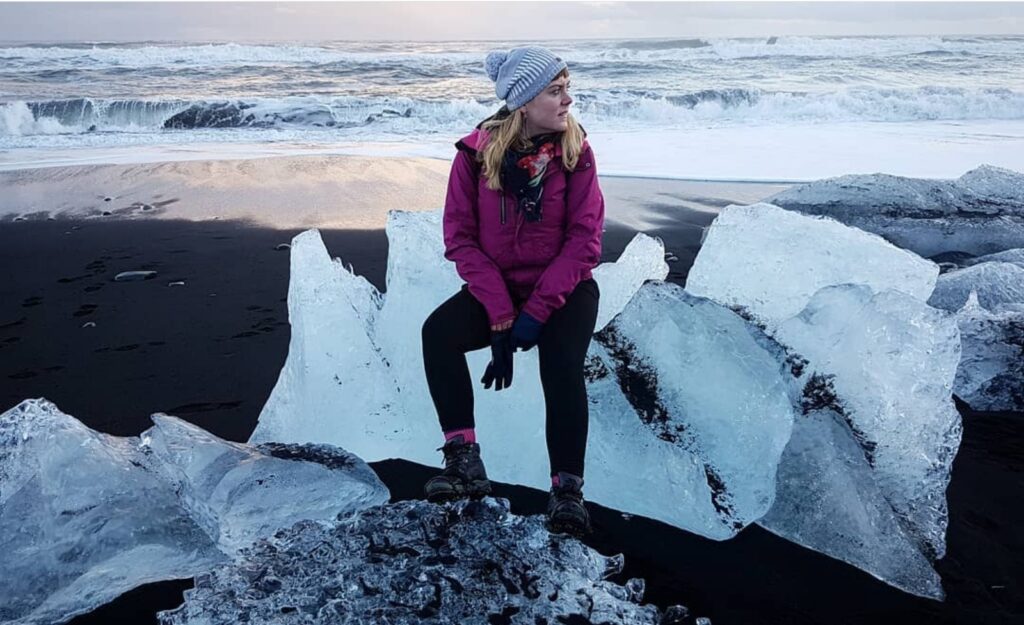 The black sand beaches in Iceland are created from volcanic residue
Things like lighting are a huge issue for me and when I travel I often feel like my eyes are burning. Once my flight was delayed and I missed my layover in Heathrow, and I was given a hotel, by the time I got to the hotel I was almost crying because of the constant bright lights. Waiting in the queue of delayed passengers to check into the hotel I asked the concierge if there was somewhere darker I could wait, and I think he misunderstood autism as epilepsy. It meant he took me quite seriously though! Things like sensory issues aren’t really widely known outside of the autistic community. My friends often grumble when I want to leave a much-hyped bar or restaurant because it’s too loud and bright. Universal acknowledgment of these things and maybe quieter or dim hours would open travel up considerably.
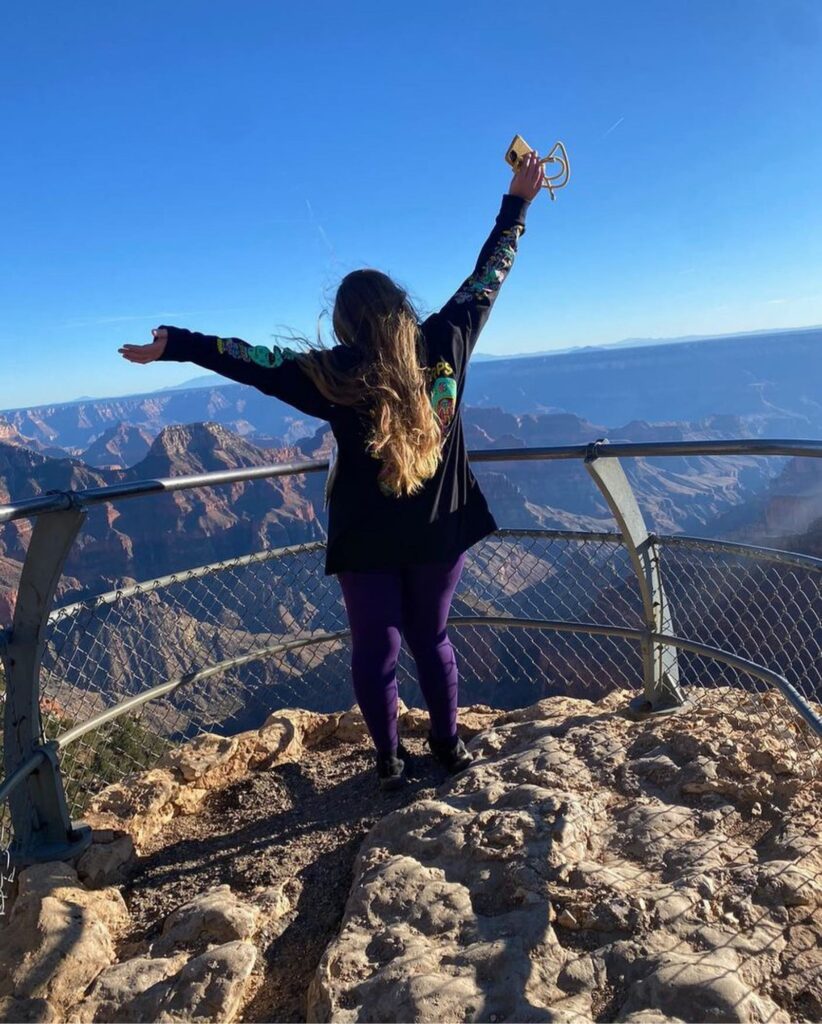 One of the vistas on a recent trip to the Grand Canyon
- Q10: Do you have any advice/tips to share with other autistic adults looking to travel solo?
Ahah not very inspirational advice but – typical of autism – very pragmatic advice.
Leave plenty of time between activities. You will get tired, you will get distracted, you will miss buses, you will walk past a cafe that looks perfect, you will enjoy things more than expected and time will run on. Leaving space gives you flexibility.
I always travel with a diary. I do a journal, but mostly I record what I’ve done each day. Where I had breakfast, what museums I visited, and so on. This keeps a good record for future reference. I can’t tell you how many friends have said to me “remember that night in X place? So much fun, I wish I could remember the name of the bar” and they’re delighted when I can find it.
BUDGET. I can’t stress this enough. I get “lack of control” panic and a new currency throws me completely. I budget before I book flights, before I book the accommodation, when I arrive, and consistently throughout the trip. I do enjoy it though. There is nothing more stressful than being mid trip and realising you’re broke and having no record of where your money even went.
 Exploring the ruins of an old archway in front of a house in Perithia, Corfu
Look up the main sights, good food and drink options, and other things you’d like to see (viewpoints, atlas obscura treasures, whatever) and star them on google maps. When you’re wandering around or between activities just open google maps and you’ll see what’s nearby that you’ve already vetted.
And last of all, be open minded and willing to try new things, but know your limits and boundaries. I used to order all the local foods and had a miserable time with unfamiliar textures and tastes. I now know I like to have a taste but ultimately return to safe foods for meals. If you push yourself out of your comfort zone too fast or too far you will retreat even further next time. It should be organic and seem fun, not scary. I will never skydive or zipline, but I get a lot of pleasure from watching it. I love people watching even if I’m not involved in the activity. And remember observing IS experiencing.
 The forests around Copenhagen are filled with giant wooden sculptures made from recycled wood
- Q11. What’s your favorite/most memorable travel experience to date?
While it’s hard to choose, I had one of the best nights of my life in Hamburg 2018. It was winter and absolutely freezing. I was visiting a friend and she was invited to a friend’s birthday party, and I was so reluctant to go and make awkward conversation with her friends. But the guy in question celebrated his birthday by dressing up as Santa and getting a cart with a Christmas tree, a boom box, loads of paper cups, and two stove burners with vats of mulled wine and hot chocolate on top. He walked around the landmarks of Hamburg and blasted music and invited people to dance with him and have a drink. We arrived in the afternoon and left 12 hours later at 3am, having danced our way through the whole city. Some refugees joined us and taught us traditional dances, and at one point there were maybe 100 of us dancing and we did the Macarena.
Don’t forget to keep up with Elizabeth’s adventures around the world on her Instagram account.
Greetings! Very helpful advice in this particular post! It is the little changes that make the greatest changes. Thanks for sharing!