
 The old town center is beautifully decorated with various brightly colored plants all over
Ohrid is one of those locations that really took me by surprise. When I arrived in North Macedonia, my first port of call was the capital Skopje. My plan was only to be there for a few days before moving on to Albania. However, fate had other plans for me, and I happened upon several other travelers while exploring the city – one of which was staying in the same hostel as me! It wasn’t long before I became aware of this grand lake, as many others were making their way there from Skopje. With enough time and money to make a quick detour, I too, decided to check out Ohrid to make my own mind up about the place (especially since it was a nice halfway point between Skopje and Tirana).
Basics
Ohrid is a city located in North Macedonia and is the seat of the Ohrid Municipality. The city itself is situated along the edge of Lake Ohrid (half of which is in Albania) and is the 8th largest city in the country. Ohrid is rich in history, picturesque houses and monuments, and was once known for having 365 churches within its borders (although many no longer exist). In 1979 and 1980 respectively, Ohrid and Lake Ohrid were accepted as Cultural and Natural World Heritage Sites by UNESCO. Tourism remains the predominant driving force within the city.
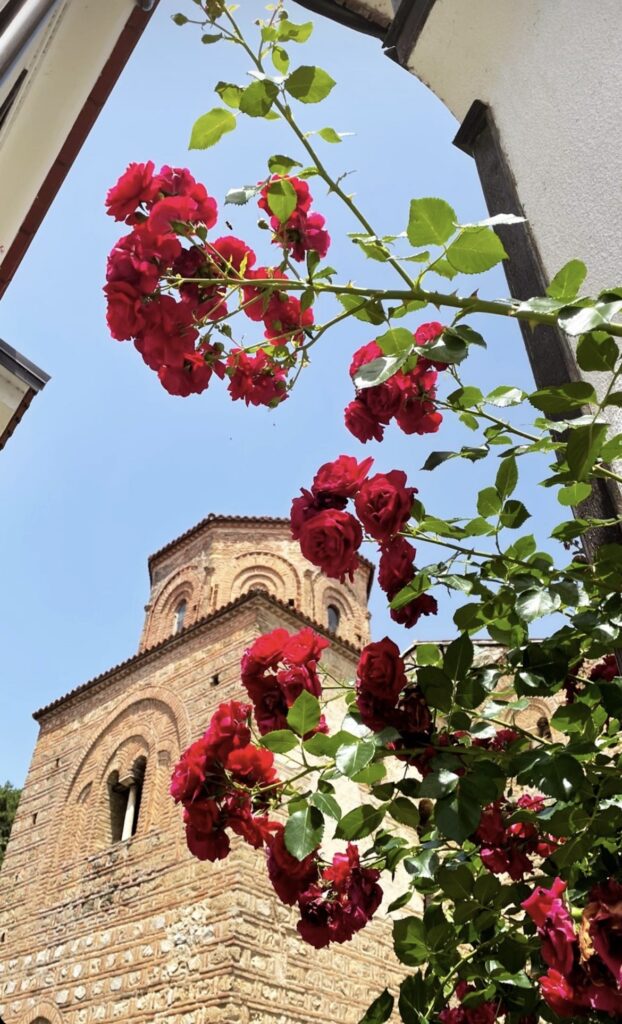 A summertime visit to Ohrid will mean plenty of flowers in full bloom around the town
History
Ohrid has a very long-standing history. Back in Classical antiquity, the city of Ohrid was then a Greek colony, known by its Ancient Greek name of Lykhnidos (thought to roughly translate to the “City of Light”). By the 2nd century BCE, it went on to become a port on the Via Egnatia to Bitola and Greece. Subsequently, it was rebuilt by the Romans after a devastating earthquake in 518 CE. It changed hands again, becoming the capital of a Bulgarian tsar in the early Medieval period – having first conquered the city in the year 867. Its affiliations don’t end there, however, having gone through at least another dozen territorial changes over the years (Serbian Empire, Ottoman, Yugoslavian, Byzantine etc.). Its complex history of various conquests and territorial changes are reflected in modernity by the rich preservation of its archaeological structures and monuments.
How to Get There
Ohrid has no train lines. Most visitors coming here will arrive by either bus or car. Coach services are readily available from Skopje and neighbouring countries for a reasonable price. Coming from Skopje, the bus is 3.30-4 hours long – depending on the traffic conditions.
Ohrid also has its own airport, with flights to and from a limited number of European destinations (as well as Tel Aviv).
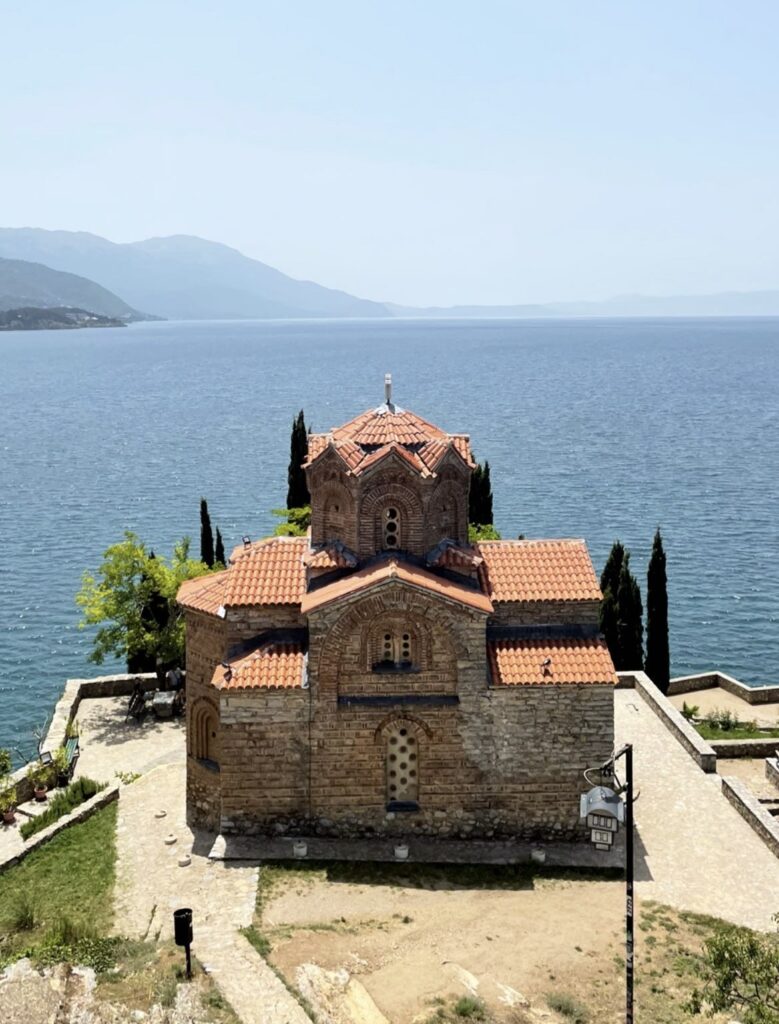 Church of Saint John at Kaneo, one of Ohrid's most recognizable spots
What to do
- Explore Ohrid’s many Churches
Ohrid was once famous for having 365 churches, one built for every day of the year. The passing of time sadly means that many of these are long gone, but the area still has a whopping number still in existence for the size of the city. Almost all can be visited, although many now have entrance fees, so you should choose wisely which you wish to see unless you want to splurge out.
By far the most famous (and photographed) is the Church of Saint John the Theologian. It is a small church, perched atop the cliff in front of Kaneo Beach. As such, it offers some of the best views over the lake, especially on clear days.
The Church of Sophia is another great option to explore. Situated just a short walk to the east of the center of town, it is one of (if not) the largest of the churches within walking distance from Ohrid. Built in the Middle Ages, this place contains a lot of history, and while you must pay to go inside, the grounds are free, and very well maintained – with gorgeous flowerbeds and roaming tortoises to be found on its vast lawns.
 Outside view of the Church of Holy Mary Peryvleptos, a Byzantine construction from 1295
Further up the hill towards the old town of Varosh is the Holy Mary Perybleptos – which rightfully has UNESCO World Heritage status. Built during Byzantine rule, this amazing church is famous for the surrounding archaeological sites on its grounds, and its elaborate wall murals depicting various religious scenes.
Otherwise, I recommend just taking time to stroll through the winding streets to see what other churches you will come across – it won’t take long before you come across more (some no bigger than a garden shed).
- Check out the Lake and its Beaches
Lake Ohrid is huge, so if you intend to visit more of the shoreline outside of the city, then you will need some means of transport (and your passport if you intend to explore the Albanian side). If you are just on a flying visit like I was, then don’t fret though – there’s still plenty on offer around the city itself.
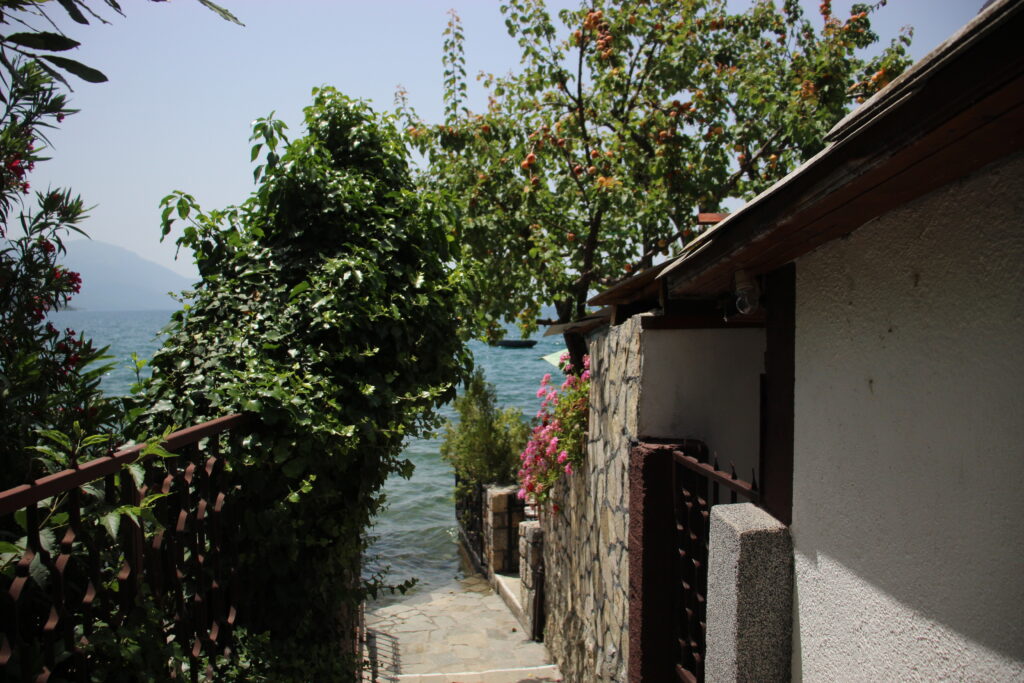 There are plenty of hidden beaches and vistas around the lake that can only be found by walking around
Heading west, you pass through idyllic beachfront homes, leading to an iconic wooden walkway over the water that runs around part of the lake close to the town. This eventually joins a myriad of cliffside paths overlooking the lake close to the ancient settlement of Kaneo. It is a must visit for anyone who finds themselves in Ohrid!
If you want to explore further, then a lot of these paths branch off and lead to secluded beaches – so I recommend doing this if you are looking for a quiet spot away from the crowds that visit the stretch of beach in front of the city center. Several of the paths also link up with notable tourist attractions such as the Fortress and the St. John Church (both are also must sees).
 There is no shortage of lakeside bars and restaurants where you can enjoy the calming waters
If you prefer to stick to the historic city center, then you will find a selection of beachside bars, cafes and restaurants overlooking the water – though expect much higher prices than elsewhere.
- Tsar Samuel’s Fortress
This hilltop fortification is where you will want to head, to get the best command of the area. The site was once the capital of the First Bulgarian Empire during the rule of Tsar Samuel of Bulgaria at the turn of the 11th century. Honestly, the fortress itself isn’t so impressive, but the walls are very well preserved, and you can walk almost the entire perimeter from above, which itself is an activity not to be missed on a clear day.
- Wander the Streets of Old Town
The Old Town is great, there is really something for everyone here. From the delicious smells of the local coffee shops to the fresh seafood being served in the multitude of restaurants that occupy the area – you certainly won’t go hungry here. Otherwise, the town is vibrant with most buildings proudly displaying the most beautiful plants and flowers. The town is also home to an ancient chinar tree (its age is debated but it is reckoned to be at least 600 years old). The Ottoman influences are still strong here and the town features the most outstanding craftsmanship from local artisans from a time when Ohrid was awash with workshops.
 An example of some typical architecture you can find in Ohrid
- Visit the Bay of Bones
The Bay of Bones is like something straight out of a movie set. It’s basically an old reconstructed village of houses built over the lake on wooden stilts. These types of dwellings were typical during the Bronze and Iron ages, and many artifacts discovered from these periods within Ohrid are on display in the village. The reconstruction is supposedly pretty authentic, representing the excavation site of Ploca Micov Kamen upon which it was built. Getting here is a little more difficult, but it is worth the extra effort to get there.
- Ancient Theatre of Ohrid
The Romans loved building amphitheatres wherever they conquered! Ohrid’s theatre, however, is Hellenistic – meaning it comes from the Greek period of this city’s history (the Ancient Greeks also loved theatre). It is the only such theatre, as the other 3 in North Macedonia are all from Roman times.
Located in the upper regions of the old town and superbly preserved, it has staged public performances since the 1980s. The most important of these is the annual Ohrid Summer Festival, which has allowed the amphitheatre to host some high-profile performances on its stage.
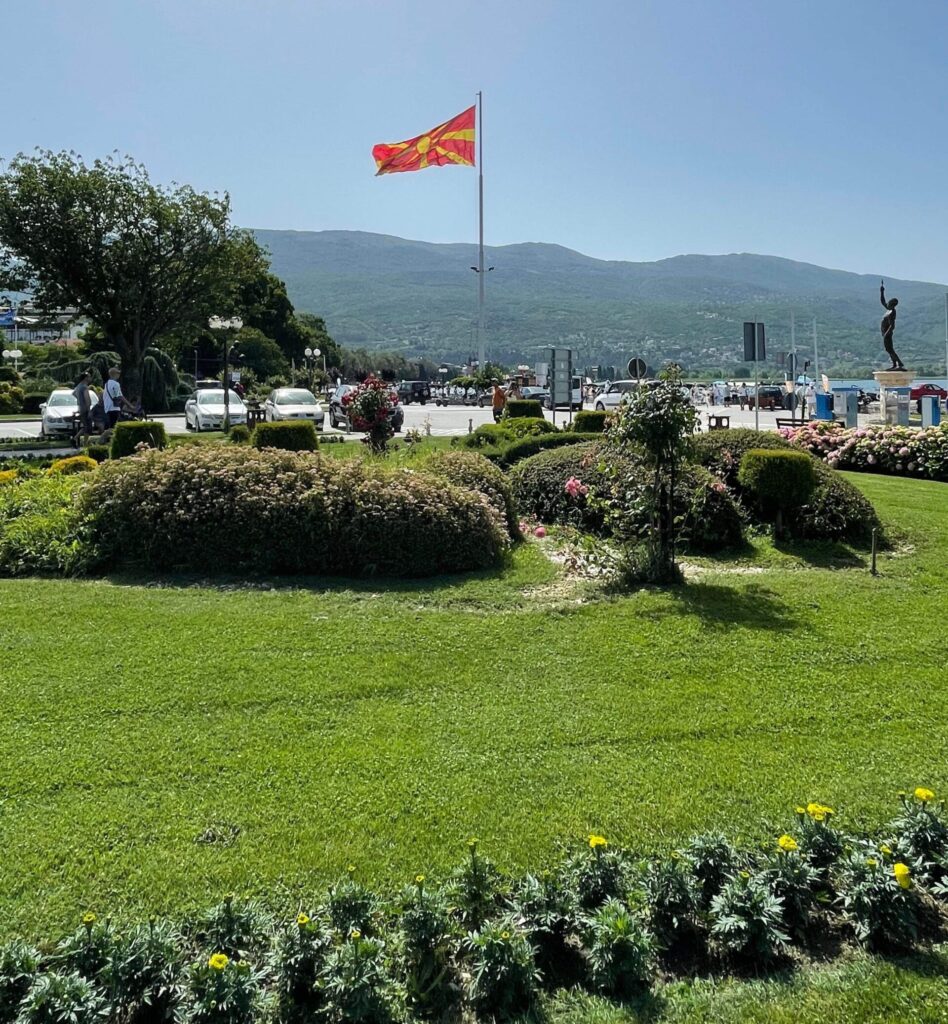 The Central Park of the town is a hub of activity, while also offering some amazing views of the lake
- Get the Best Views from Old City Park
I’ve already covered parts of the park in some of the other points (the Church of Saint John the Theologian, Holy Mary Perybleptos, some of the hidden beaches and the fortress are all found in the park grounds), but it deserves its own numbering for its outstanding natural beauty and ambling hiking trails available.
I found the park overall pretty quiet, so it was somewhat relaxing to just be by myself surrounded by nature. There are plenty of animals to spot if you’re observant enough too, which really adds to the whole experience.
Make sure to visit Labino Vista Point during your hike. The views are outstanding!
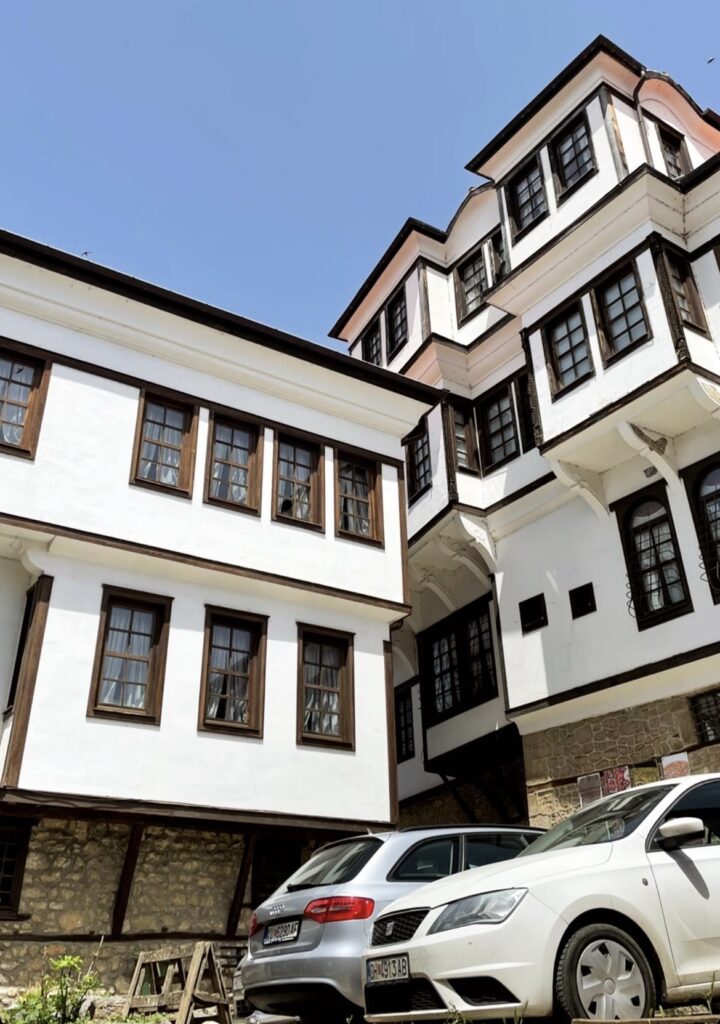 View from outside Robev Family House Museum
- Robev Family House
This former residence is both a famous and historic building within Ohrid – which now acts as a kind of ethnographic museum within the city. Its first incarnation was built in 1827, although it was burnt to the ground in an act of arson about 35 years later. In its current state, the structure was rebuilt around 1861 and is now protected as a cultural monument.
It was as a result of this reconstruction that many of the fantastic components still present in the interior were added: the carved ceilings, cupboards and other decorative elements. However, to distinguish the carvings, for the part of the house which belonged to Angele, other masters-carvers from Debar were invited. During the work in both halves of the building, the groups of carvers were forbidden to see each other, so the left half of the house where Konstantin lived differs from the other half where other masters worked.
This is just a taste of what is in store for you within Ohrid, and if you have more time than I did, then I highly recommend renting a car or scooter (or hitchhiking if you’re feeling up to it) to get out of the city and explore some more of the amazing sights and attractions located around the lake’s perimeter.
 One of the stunning views visitors can witness at Labino Vista Point
Where to Stay
Being one of the country’s largest tourist destinations, there are numerous hotel and hostel options varying in terms of both price and luxury. As I only spent 1 day, I opted to go for the cheapest hostel option. Hostel Valentin is located just a short 5-minute walk from the bus station, which makes it ideal for anyone coming with a lot of luggage. However, the compromise here is that it will take around 20-25 minutes to reach the city center where most of the city’s attractions are found.
Other Things to Keep in Mind
Like the rest of the country, Ohrid is primarily cash-based – so, don’t rely on having cards alone. Halkbank and Stopanska Banka AD Skopje ATMs are both free for withdrawals, so be sure to use either of these if you need to withdraw any of the local currency.
If you liked this article and would like to support my work, then please consider clicking on one of the buttons above to donate a little to either buy me a coffee or support my business initiative. Your generous support enables me to keep creating new and better content, as well as cover business development costs. Please only do this if you are financially able to do so, as these are challenging times for us all – Thank you!
Leave a Reply