
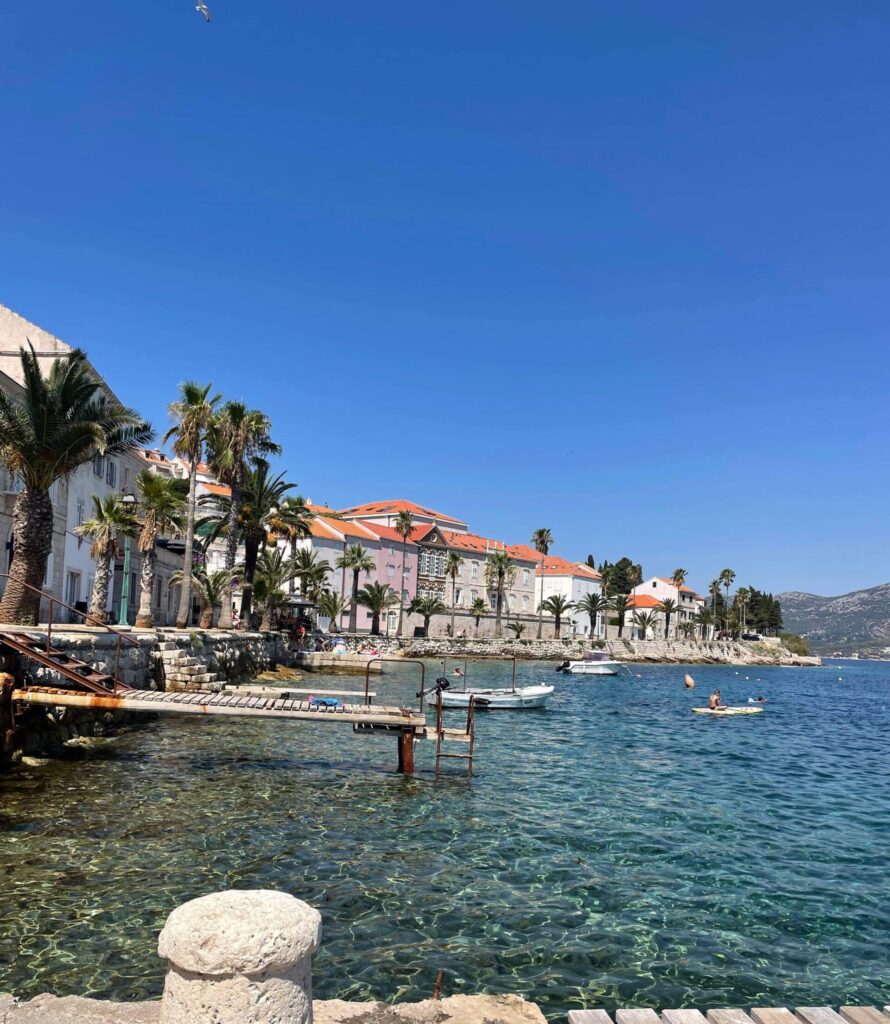
 The view out over Ispod Duvana Beach, located just outside of the old historic center
I didn’t have the opportunity to spend long in Korčula, and I am still sad about it. It is smaller and has less to do than its bigger sister, Hvar – but that wasn’t a negative in my mind. Indeed, my visit to Korčula came at a time when I was starting to become a little disillusioned with the whole travel experience in the Balkans – having seen non-stop excessively high prices in my recent visits to Budva, Kotor, Dubrovnik, and Hvar (as well as other money-grabbing tactics there). So, my visit to Korčula started with low expectations, which is why it ended up being a real breath of fresh air despite my cursory sojourn.
Korčula has the usual array of stunning crystalline pebble beaches and historical old Venetian fortified towns that you can find elsewhere along the Dalmation Coast, but there is so much more if you take the time to look around. What’s more, it hasn’t quite suffered the over-tourism fate that Hvar and Dubrovnik have. That means that not only will you not be competing with hordes of other tourists, but also the prices are much more in line with what you would expect from Croatia more generally.
Basics
A mid-sized island on the Dalmatian Coast of the Adriatic Sea (which itself is part of the larger Mediterranean Sea), Korčula is the second most populated island in Croatia after Krk. Additionally, it remains the largest island not connected to the mainland by bridge. It is about 20 miles long, and 5 miles wide on average (the island is narrow). Its sister city is Rothesay in Scotland.
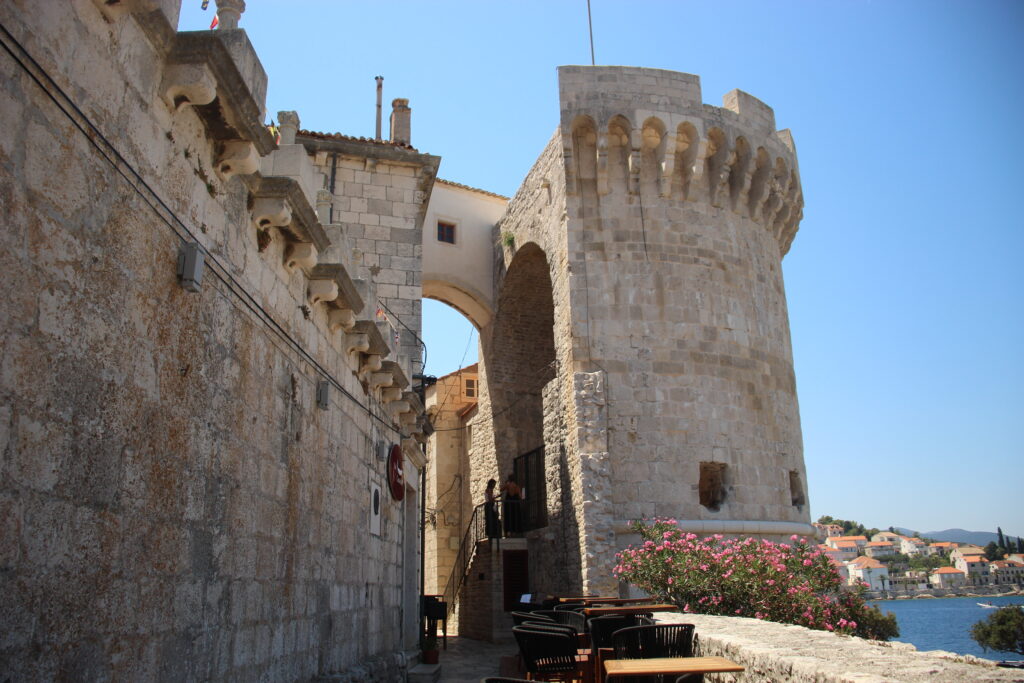 Kanavelić Tower - built in around 1485, under the rule of Augustino Barbarigo, who was then the Doge of Venice
History
Like so many regions in this part of the world, Korčula has a long and convoluted history. After a couple of waves of human immigration to the island, Korčula became a Greek colony in the 6th century BCE. It was at this point in history that it was named ‘Melaina Korkyra’ (Black Corfu), which is, of course, where it derives its modern name.
Following the Illyrian Wars with the Romans several centuries later, the island became part of the Roman province of Illyricum, and later, the Roman province of Dalmatia. By the 6th century, Korčula was under the rule of the East Roman (Byzantine) Empire, and in 998 CE became part of the Venetian Republic (along with the rest of Dalmatia).
This was followed by countless wars, treaties, and loose governance from outside states. I recommend reading some detailed historical records online if this is of interest, because I could write an entire blog on this alone.
 Old town is very small, but is jammed packed with gorgeous architecture that has survived since the period of Venetian rule
Regardless, this all accumulated with the island becoming part of Yugoslavia, followed by Croatia (its current administrator) following their independence in 1991.
One important historical figure connected to the island is Marco Polo. While there was the claim that he was born on the island, evidence now points to him being born in Venice – both of which were under the rule of the Venetian Republic at the time of his birth. However, researchers have since uncovered evidence that his family might have emigrated from Korčula.
How to Get There
As I mentioned, there is no bridge connecting the island to the nearby mainland, nor does it have its own airport. Therefore, direct access to the island is only possible by boat. Regular ferry services are available from most major ports across the coast (Split, Dubrovnik, Brač etc.), and cost around €20 ($19.50/£17.50) per journey.
If you arrive in the country by aeroplane, then these port towns and cities have their own designated airports, so you won’t have far to go to reach the port.
Multiple companies operate the island routes, but I personally went for Krilo during my time in Croatia – based on recommendations from 2 friends who are living on the islands.
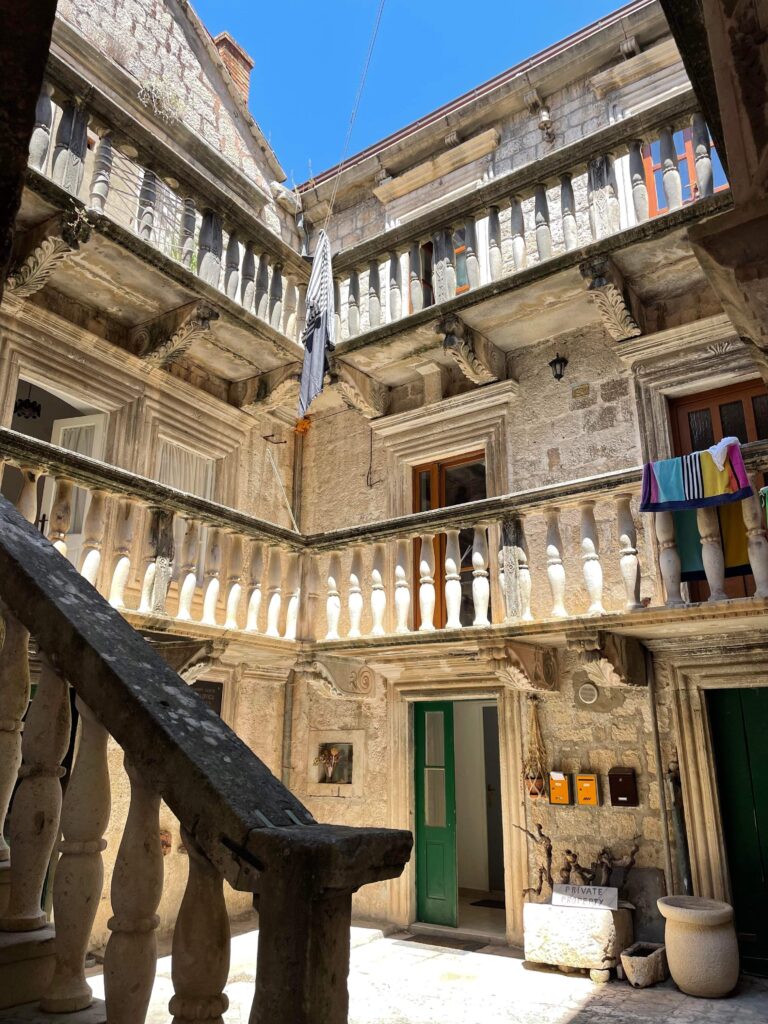 Exploring the winding streets of old town reveal many hidden secrets
 An open-air art piece on display in one of the streets
 The streets are very narrow, but thankfully most foot traffic stick to the main throughway
 As well as stunning Venetian architecture, old town is full of lush greenery
What to do
- Explore Old Town
Croatia is known for its beautiful old Venetian towns along the Dalmatian coast, and here is no exception. This fortified town is tiny, compared to the likes of Dubrovnik and Split – but that was part of its charm for me.
The narrow little streets hide a lot of allure, so I ended up walking along every street to see what I could find (the old town itself is small so it didn’t take too long). There are dozens of fabulous eateries to sample local delicacies – including 2 Michelin Star Restaurants within an eyeshot distance of each other. Numerous religious structures, former defence towers, and museums can also be found nestled within this compact area. So, be sure to make the most of your time here.
- Korčula Town Gate (Land Gate)
This is the first landmark you will spot after coming off the ferry boat. The old gateway into the fortified town still proudly leads visitors into the old town. It is also one of the island’s most popular photo spots, so expect to see many people here trying to get the perfect shot.
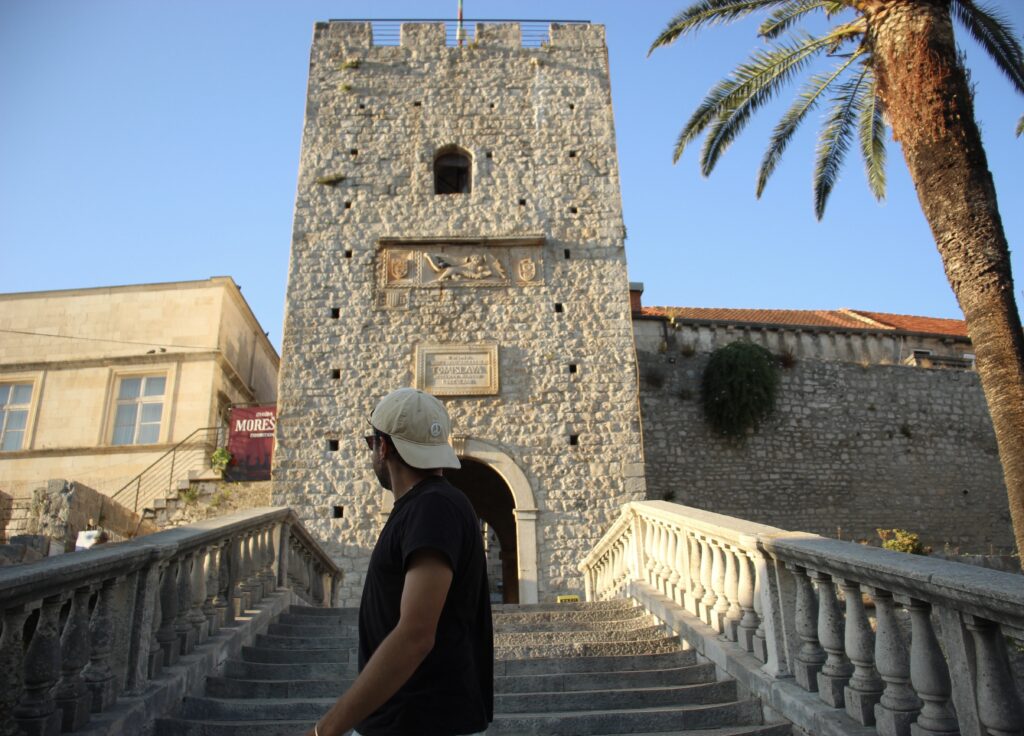 Korčula Town Gate is the main entrance point to old town, and unsurprisingly, one of the main photo spots for visitors
- St. Mark’s Cathedral
St. Mark’s Cathedral is by far the biggest structure in the old town, and being in the main square, is impossible to miss.
Visitors can enter both the cathedral itself and the neighboring bell tower. From the bell tower overlooking the main square, you can witness some stunning views of the town from an unrivalled perspective.
- Marco Polo House
As mentioned, Marco Polo has some connection to the island (to what degree is still disputed), but the island has sought to capitalize on this and has a ‘Marco Polo House’ – his alleged home of birth (again this has been contested). While it is one of the island’s most visited attractions, I cannot offer too much insight into it as it was closed for renovation work during my stay.
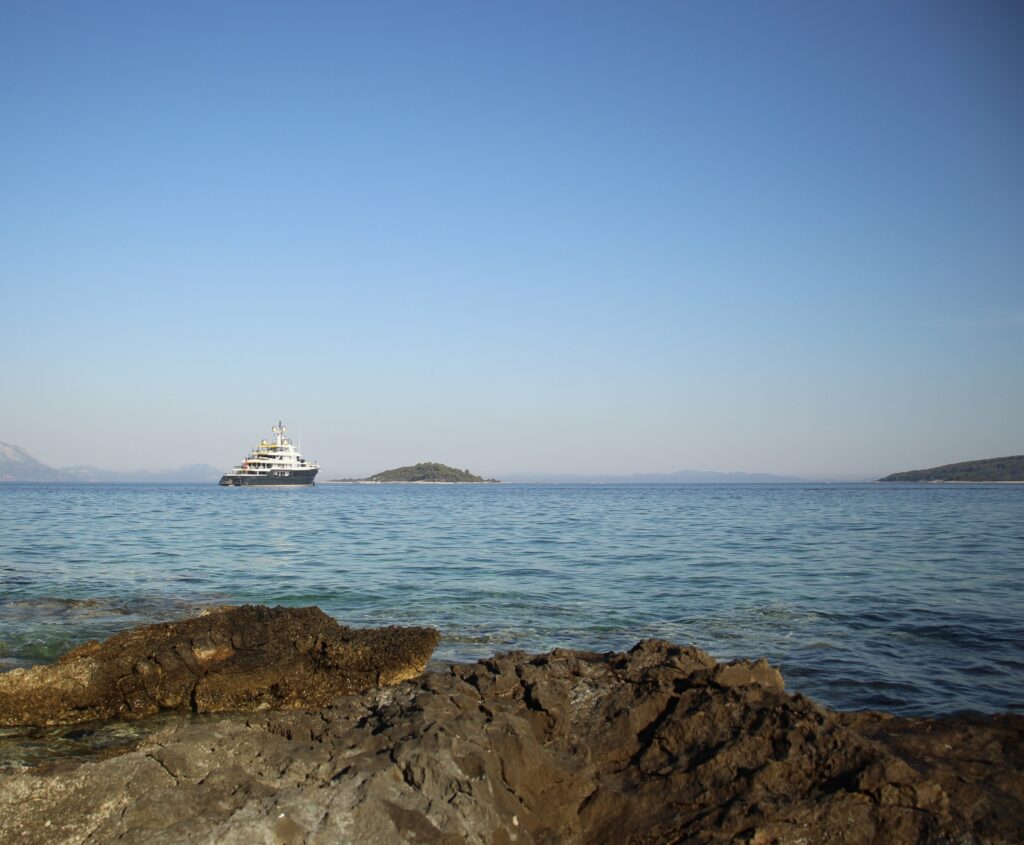 Badija Island is worth checking out for those with a little more time on their hands
- Visit Badija Island
One thing I didn’t know about Korčula before my trip is that it is one of Croatia’s main wine producing areas (along with Hvar and Vis), and you can find wine stores lined up along most streets here. If you want a more rounded experience, however, then consider going on one of the island’s established wine tours. There are 3 wine tasting stops on the tour I was personally recommended; 2 at local vineyards across the island, before coming back to the old town to a local bar. The tour lasts 5 hours and includes local honey, oil, and jam tastings. There will be other tours available, so be sure to search online or enquire directly at your accommodation to find one that suits you best.
- Go on a Wine Tour
One thing I didn’t know about Korčula before my trip is that it is one of Croatia’s main wine producing areas (along with Hvar and Vis), and you can find wine stores lined up along most streets here. If you want a more rounded experience, however, then consider going on one of the island’s established wine tours. There are 3 wine tasting stops on the tour I was personally recommended; 2 at local vineyards across the island, before coming back to the old town to a local bar. The tour lasts 5 hours and includes local honey, oil, and jam tastings. There will be other tours available, so be sure to search online or enquire directly at your accommodation to find one that suits you best.
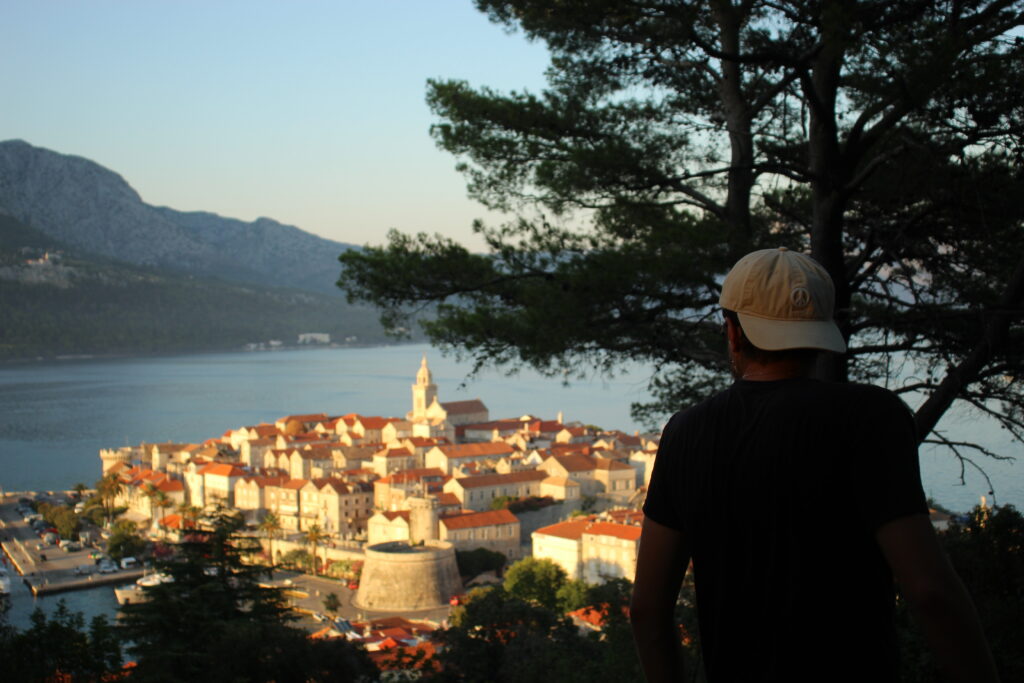 Looking out from the fort towards old town during golden hour
- Take a Hike up to the Fort
This is the perfect sunset location near the center. The hike starts just outside of the old town and extends up and around many residential neighborhoods and into the wooded area above. At the top sits the remains of ‘Forteca Svetog Vlaha’. Don’t expect much from this though. It is now closed to the public and there are no signs offering an explanation to its existence or history. Nonetheless, this small glade makes for a great sunset viewing. We used the time to just unwind and enjoy the encroaching darkness.
- St. Nicholas Dominican Monastery
You can clearly see this huge complex when walking west along Ispod Duvana Beach. It’s a very peaceful place to visit, dating back to around the 16th century. This monastery is still occupied by monks. Visitation is possible all the same though, and the bell tower here can also be ascended for some spectacular views.
 Croatia is famed for its brilliant aquamarine water, with here being no different
- Relax at the Beach
No trip anywhere on the Croatian coast is complete without a trip to the beach. Being an island, you have no shortage of options available to you – and you won’t have any of the crowds that you will find in the more popular Dalmatian destinations. Ispod Duvana and Banje beaches are the closest to the town walls, but don’t be afraid to go further afield if you want somewhere quieter.
- Enjoy a Buffet Breakfast at Hotel Korsal
I only learned about Hotel Korsal as my friend on the island works there! It is a comfortable little boutique hotel outside of the old town, just south on the coastline.
For approximately €13 ($12.24/£11.27) you can enjoy an unlimited breakfast (including beverages). If you have a busy day ahead of you, then this is the place to go to start your morning! They have a wide selection on offer and can also make fresh roasted coffee for you upon request if you do not want any from the pot on the table.
 Like most places in Europe, café culture is just as strong over in Korčula
Where to Stay
Despite its size, Korčula’s economy relies heavily on tourism, so you will find plenty to choose from – both inside the old town and out. Being budget conscious as usual, I decided to stay at the Hostel Korčula. This cozy little hostel is located within the old town walls and is the most budget-friendly option on the island. Plus, as it is situated within the old walls, you will never have far to walk to reach any of the main attractions.
Other Things to keep in Mind
My visit was brief, so I only just managed to scratch the surface of this amazing island. If you have more time, then I advise you spend more time outside of the old town center and explore more of the island. Kočje, Čara, Račišće, and Pupnat are just some of the other picturesque places located on the island that are ideal for visiting.
 The back view of the Land Gate from inside old town
 Old town seen in full from the distance
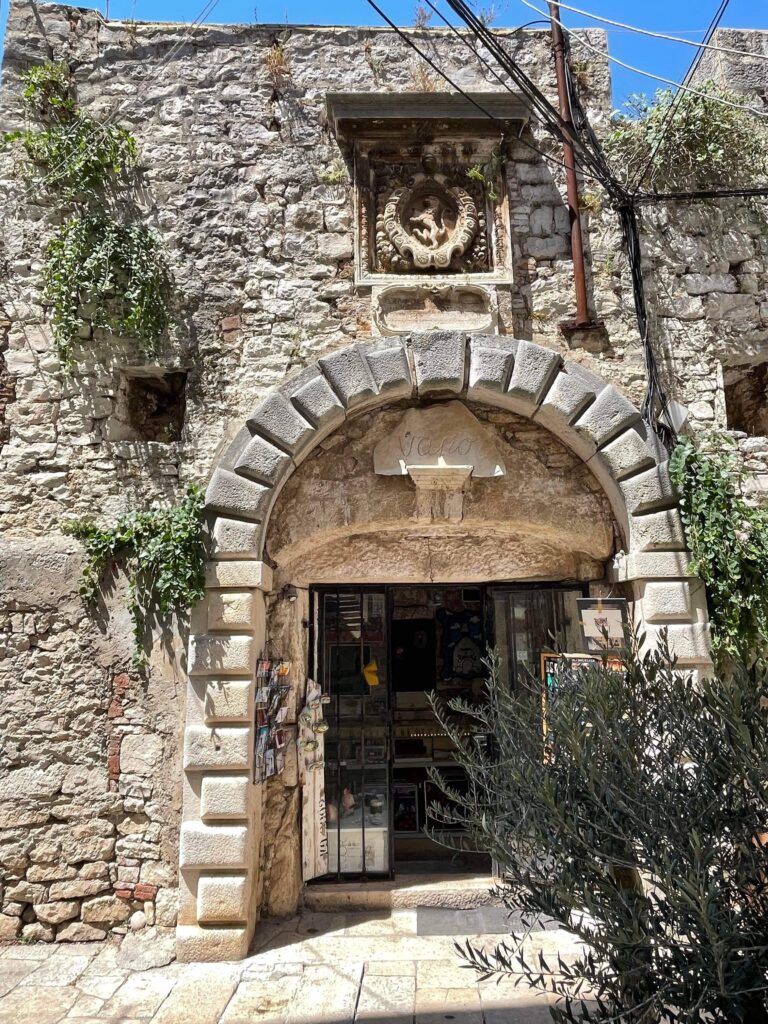 An ancient building which currently houses a crafts store
If you liked this article and would like to support my work, then please consider clicking on one of the buttons above to donate a little to either buy me a coffee or support my business initiative. Your generous support enables me to keep creating new and better content, as well as cover business development costs. Please only do this if you are financially able to do so, as these are challenging times for us all – Thank you!
Leave a Reply