
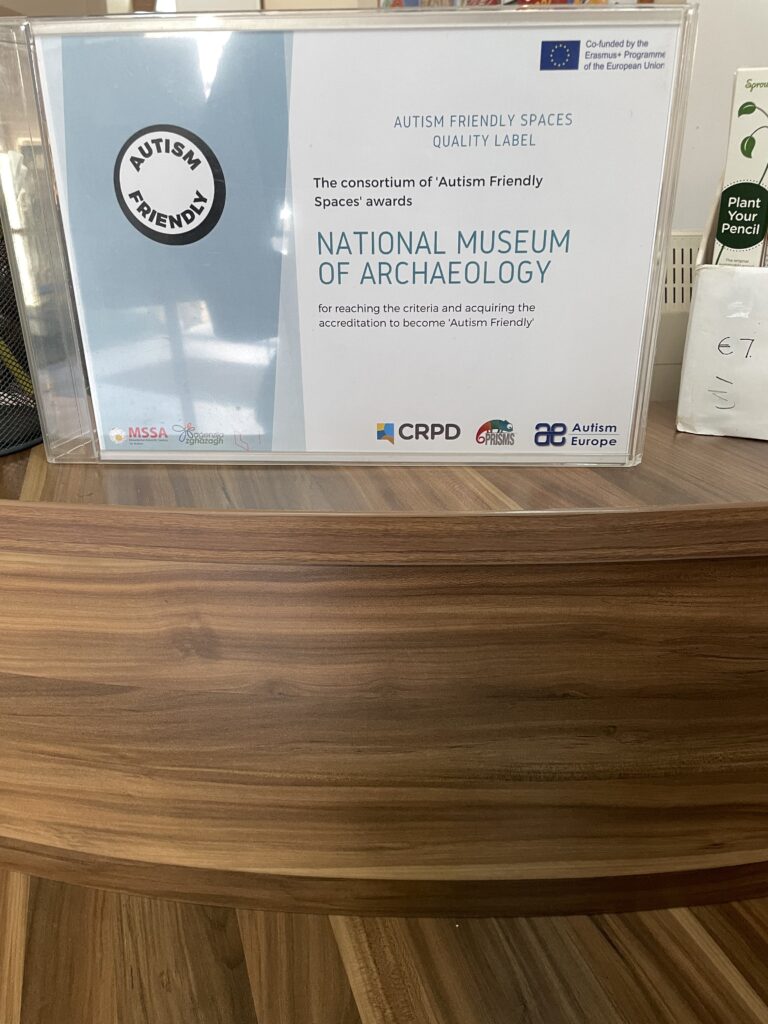
 The sign that initially attracted my attention
Disclaimer: This is not a sponsored/paid-for review, as I visited the site independently. This is an honest review and my opinions, as always, are entirely my own. This review is entirely based on my personal experience of visiting the National Museum of Archaeology in Valletta as an autistic guest, and is not intended to be a comprehensive guide to accessibility at the venue.
During a recent trip to Malta, I decided to stop by Malta’s National Archaeological Museum in Valletta. Anyone that knows me will know that I’m a massive history buff (I considered studying archaeology at university before I changed course), so this was an obvious choice.
Upon entering, I was immediately drawn to a sign at the reception. It said ‘Autism friendly hours on Wednesdays between 13:00 and 16:00’. I was intrigued, but it wasn’t Wednesday that day and I had other plans (I had just gone in to see how much a ticket would cost).
Considering that I had made a firm decision to start this blog and make Autism-focused initiatives a core theme, I thought this would be a perfect place to visit and write about. When I looked on the museum’s website I couldn’t find that much information, so I decided to send an email to the email address on the museum’s website. I quickly received a polite email saying that they would forward my message onto the person responsible for the scheme. I never did receive a reply from the person responsible for the initiative, but I decided that there would be no harm in visiting the following Wednesday.
Upon arrival, I purchased a ticket and asked the desk staff if they could tell me a bit more about what the sign at the reception meant. He was able to provide the information concisely. Apparently, these hours included; a quiet room open to those who needed it, a sensory room, and a couple of the exhibits with dimmed lighting. He told me it was just a new plan that had recently been implemented, so it was still in its infancy.
Armed with this information, I began to explore the ground floor level. I won’t go too much into the exhibits themselves here, but if ancient history is of interest to you then you will surely love this place. Many of the ground floor artifacts are over 5000 years old (older than the Great Pyramids of Egypt) and were found in the nearby Hypogeum. Unfortunately, I couldn’t visit the Hypogeum itself as all the tickets were sold out for my stay, so it was nice to be able to get some in-depth knowledge from the museum’s information cards about the place.
A small portion of the exhibit towards the back contained dimmed lighting, as described by the staff member I spoke to. It was subtle but it did create a pleasant and calming ambience in my opinion.
All other autism-friendly attractions are found on the upper floor. The quiet room can be found in the main corridor that connects the exhibits together. For anyone who doesn’t know, a quiet room (sometimes called a sensory room) is a space specifically designated for autistic people to use as a safe space that they can retreat too when they are feeling overstimulated, overwhelmed, needing to stim, or just generally want to have some quiet alone time.
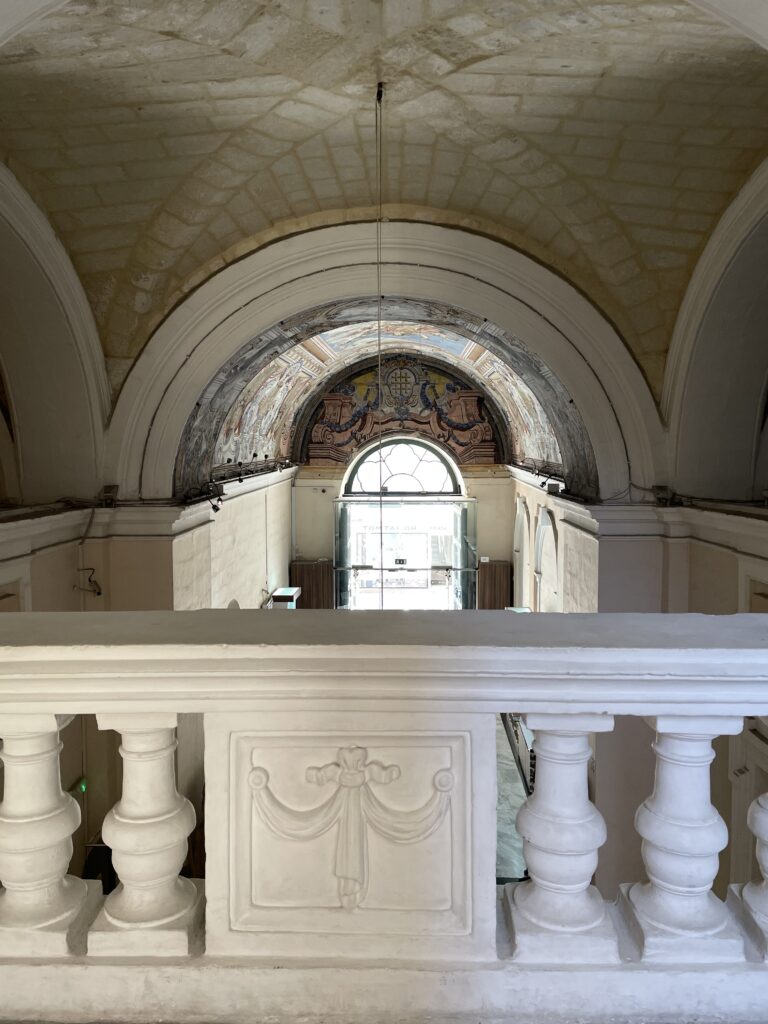 The building itself has a lot of history and architecturally interesting elements
 Several rooms were under restoration during my visit. Entry was still possible, however
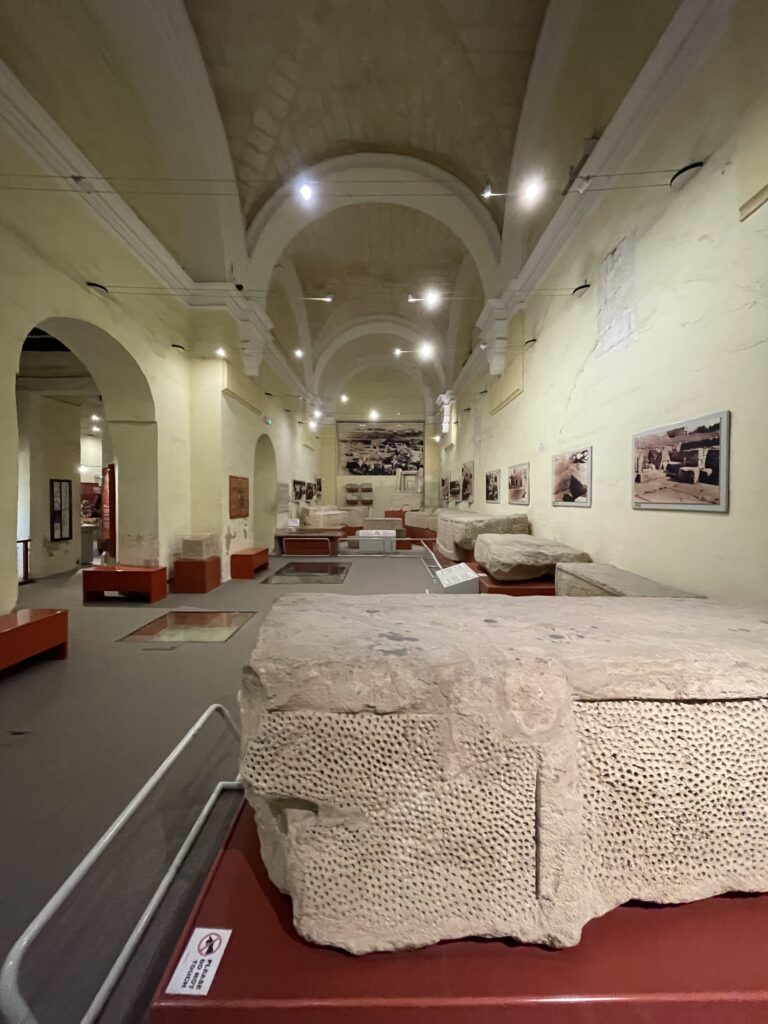 The museum's ground floor
 The sign I found attached to the museum's quiet room
Honestly, I found the entrance to the quiet room slightly confusing, as next to the sign indicating that this was the ‘Quiet room during autism-friendly hours’, there was another sign saying that the room was temporarily closed due to Covid measures. Somewhat intimidating honestly, but I decided just to go in since the staff member at the desk specifically mentioned it when I asked about the initiative. The room was basic, which is perfect, but I did think that it could have had more suitable lighting, it was a bit too gloomy for me personally. It contained several chairs and tables for both young children and adults. Also included was a couple of computers, multiple pillows/cushions, a whiteboard, and a small bookcase (which mainly contained children’s books). The bottom of the bookcase also contained stimming items, which is a necessary addition for quiet rooms.
The sensory room consisted of an exhibit showing how Malta looked in the past. There was a glass floor with artificially landscaping below that had a holographic element that would change colour. It was a small addition, but I’m sure it would be a hugely welcome addition for many autistic people.
I also noticed that almost all curtains were pulled over in the upper level, I was unsure if this was done specifically for the autism-friendly hours. However, it was a nice addition in my case, as it certainly added a lot to the mood the museum was going for.
Overall, I found the layout and vibe of the museum warm, inviting, bright and accessible – all the things I was hoping for when coming here. The information is presented in big writing with an easy-to-read font. The backgrounds were using warm and/or bright colours so it was attractive to the eyes (well, mine at least), and almost everything was accompanied with visual elements which made the written information a lot easier for me to process and understand.
There was room for improvement, but there usually always is. I’m happy that businesses and organizations are taking steps towards inclusivity for the neurodiverse community, and when I thought about the size of Malta in terms of its landmass and population then it’s impressive to see them taking the initiative to focus on the needs of autistic people, including setting designated hours for their Autism Friendly Wednesdays.
 Inside the quiet room - featuring computers, seating and a small bookshelf (with various books and games)
 The museum does a pretty good of incorporating visual elements in its exhibition
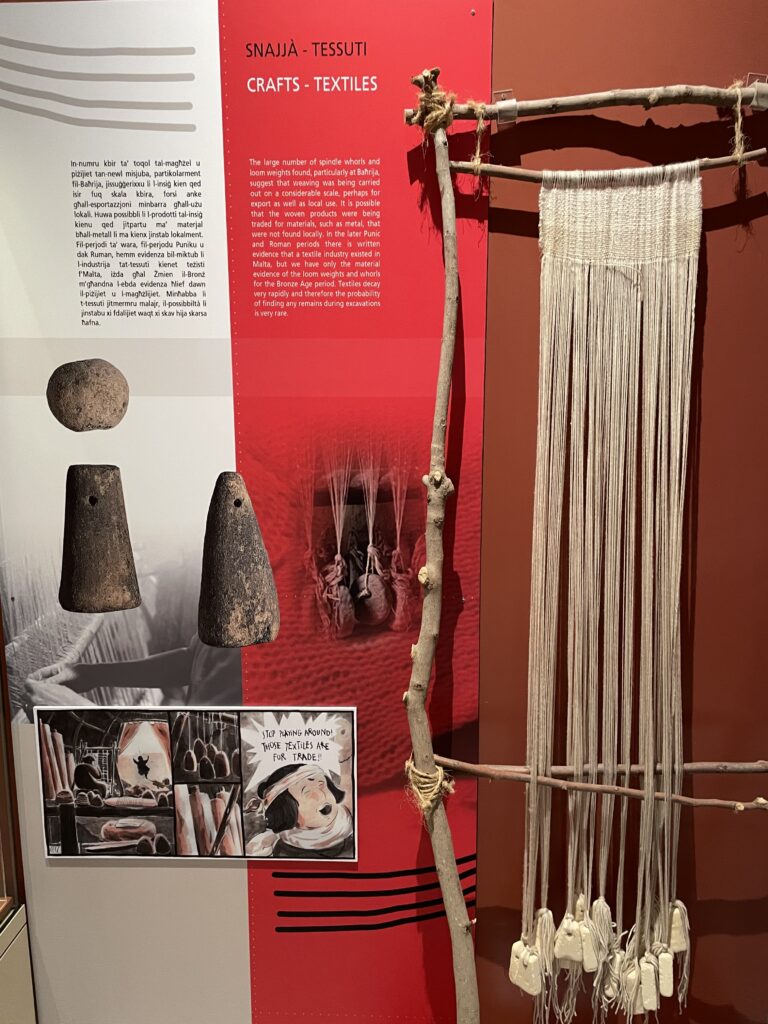 An example of one of the exhibits - featuring various learning styles
If you liked this article and would like to support my work, then please consider clicking on one of the buttons above to donate a little to either buy me a coffee or support my business initiative. Your generous support enables me to keep creating new and better content, as well as cover business development costs. Please only do this if you are financially able to do so, as these are challenging times for us all – Thank you!
Leave a Reply