
 The front entrance of the Zoo - with the ticket booths to the right hand side
LA Zoo has seen constant change since it first opened its doors to the public in 1966, replacing the nearby Griffith Zoo (also located in Griffith Park). The zoo holds a strong desire to keep up-to-date with animal welfare requirements for its park residents, while also aiming high for its accessibility and inclusivity standards with regards to its incoming visitors.
I was extremely privileged to have had the opportunity to receive a docent tour with one of the veteran volunteers, Kathy. I spent the best part of the day exploring nearly every square inch of this wonderful park with her, and I am excited to share my experiences at the zoo with my followers.
History & Facts
Officially known as The Los Angeles Zoo & Botanical Gardens due to its extensive plant collection, the park is owned, operated, and maintained jointly by the City of Los Angeles and The Greater Los Angeles Zoo Association (also known as GLAZA). As such, the park operates as a non-profit organization.
 The physical version of the zoo's map - a digital version can also be downloaded to your device for handy viewing
As mentioned, Los Angeles Zoo was opened more than 50 years ago, replacing the Griffith Zoo – whose abandoned grounds can be found not too far away (both are part of the larger Griffith Park). After experiencing a decline in the 90s, LA city officials passed a $300 million master plan that had been drafted to deal with the infrastructural problems that the zoo had been facing at that time. Not long after, in 1997, the LA Zoo became its own department within the City of Los Angeles (having previously been managed by the Recreation and Parks Department). The shift gave the Zoo a greater voice in City Hall and more direct control over daily operations. At the same time, the Los Angeles Zoo Commission, composed of 5 mayoral appointees, was formed to provide oversight. The zoo also saw a new director appointed around this time, which helped the zoo rebound from its waning – this new leadership also saw a shift in focus, which led to fewer animals in larger realistic enclosures.
The zoo has come a long way since then, and has seen numerous renovations, revamps, revitalisations, and expansions which have allowed it to succeed in becoming what it is today. This is in part thanks to numerous charitable donations the zoo has graciously received over the years, which has in turn allowed it to start its ‘Animal Keeper Advanced Studies Fund’, which sends keepers on hands-on field experiences across the globe.
 The first animal enclosure we came across was that of these cute little meerkats
While some of the animals at the LA Zoo have been rescued or came to the Zoo through confiscations (people trying to smuggle wildlife illegally into the state/country), these animals only represent a small portion of the collection. Confiscations come through the Port of Los Angeles, LAX Airport, and numerous other domestic/international land border crossings into California.
All animals at the LA Zoo—and in any AZA accredited zoo—are part of an SSP (Species Survival Plan) for that species, which ensures that all species in captivity maintain as diverse a gene pool as humanly possible. I was informed that none of the animals in the zoo were taken from their natural habitats. Similarly, many of the plants and flora you will come across in the botanical sections were non-native species that had previously been confiscated by officials at LAX airport.
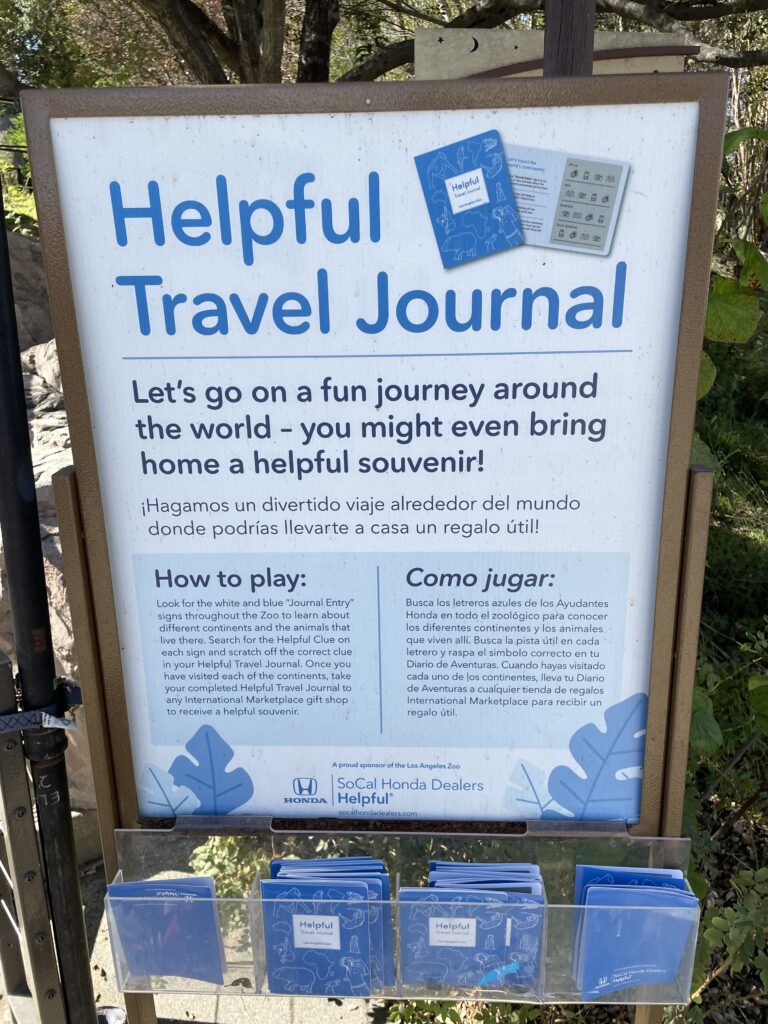 There are numerous info-boards and other helpful signs dotted all across the park
The park strives to keep pace with the latest welfare measures to ensure the highest levels of wellbeing for its residents. Supporting the health and welfare of the animals is listed as their top priority.
The LA Zoo is part of a larger network of other national institutions accredited by the Association of Zoos & Aquariums (AZA), which ensure that healthy, sustainable animal populations exist in human care, safe from the threats faced in the wild. This network also ensures that breeding programs across the country can ensure a much higher success rate – something that can prove imperative for endangered species.
In terms of autistic accessibility and inclusivity, the Los Angeles Zoo has received certification as a sensory inclusive venue from KultureCity. One of the major barriers identified for autistic individuals (among other groups identified) is sensitivity to overstimulation and noise, which is a real possibility in a place like the LA Zoo. The park is now better prepared to assist guests with sensory needs in having the most comfortable and inclusive experience possible when visiting the zoo. As part of the KultureCity certification, the staff were trained by industry professionals on varying sensory needs, the sensory inclusive components throughout the campus, and how to best support all individuals in having a memorable experience at the zoo.
 The zoo offers many seasonal events and attractions, so be sure to check out their website to keep up-to-date
My Visit
As an autistic adult, with a real interest in the natural world, I was keen to see what the zoo offered to autistic individuals, and their families.
I arrived at the zoo gates 10 minutes later than I had agreed with Kathy to meet her. Anyone that knows LA traffic will know this isn’t so bad considering I came from Marina del Rey.
We exchanged formal introductions, having met face-to-face for the first time, after which she informed me we were going to pick up the sensory backpack from a stall just a short walk from the entrance before beginning our tour.
Our first port of call was the ‘International Market’, where backpacks can be picked up by any member of the public wishing to take one with them during their time in the park.
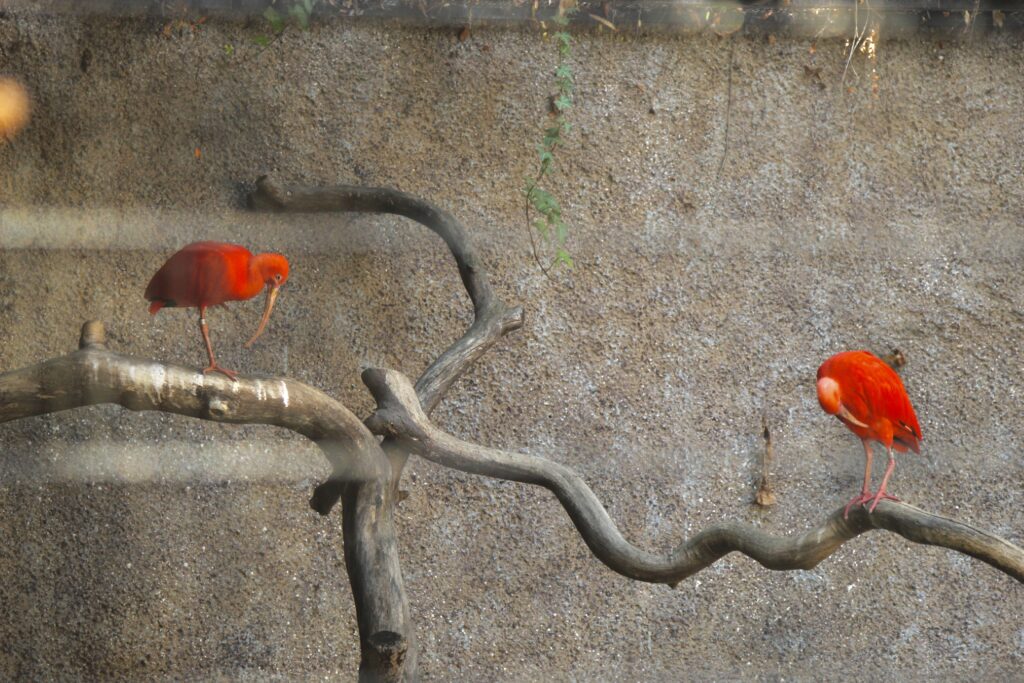 The zoo also contains an extensive bird collection from across our planet's different continents
The pickup point is the ‘Stroller Rental & Return Kiosk’, which is just past the Entry Plaza stairs and across from Reggie’s Bistro. The process is easy, and the staff were adequately trained from what I saw and experienced. To receive a sensory backpack, you just must present a valid form of ID (think passport, driver’s license, state ID etc), which the staff will scan and keep a copy of until you return. The sensory bags contain noise cancelling headphones, fidget toys, verbal cue cards, and a weighted lap pad. As is usually the case, you do not get to pick what you want from the bags, you simply can take out what you need as you need it.
Prior to visiting the Zoo, families should download the free KultureCity App from iTunes or Google Play Stores, where they can view what sensory features are available at the Zoo and where they can access them. Also, on the app is the Social Story, which will provide a preview of what to expect while enjoying a day at the LA Zoo.
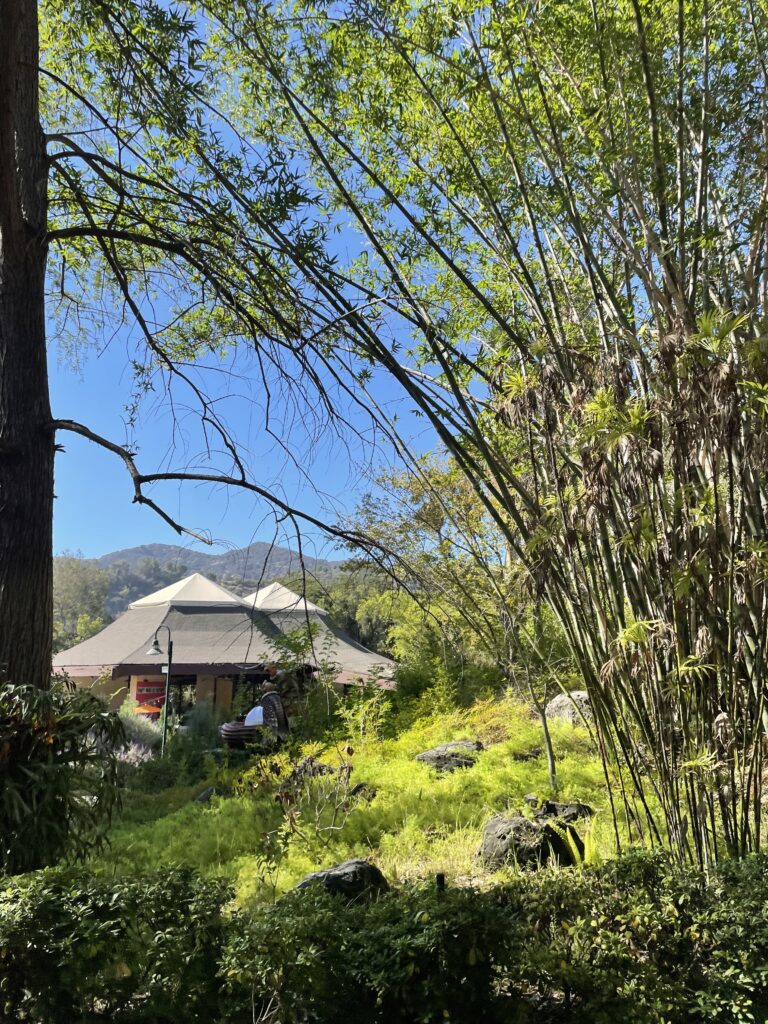 The zoo feels a world away from the usual hustle and bustle of LA County
Paper maps are no longer routinely handed out to guests to save natural resources. Though large print paper maps are available at ticket window #11 for all guests who need them. Additionally, I am told a physical copy can be granted by prior request online. However, there are also various map boards across the park that you can either screenshot for future use as you move around the zoo, or you can use the QR in the corner of the map board to load the map onto your mobile device. You should be able to see that the map indicates the distinct types of terrain (flat/gentle slope/hilly) found at various locations in the zoo. The map also notes the location of shuttle stops, quiet areas, and headphone zones throughout the park.
I had been told prior to my visit that Kathy was previously an adaptive physical education specialist who worked extensively with autistic students. She had a lot of patience and was with me every step of the way to explain the park history/features, background information about the animal species, each animal’s backstory, and the autistic accessibility components. It was not long after picking up the sensory bag she took me to the first ‘Quiet Area’. This, she explained, is part of the KultureCity initiative, and represents places where anyone can take a break if things get too loud or crowded (the idea being that these specific areas are never as busy as other areas within the park).
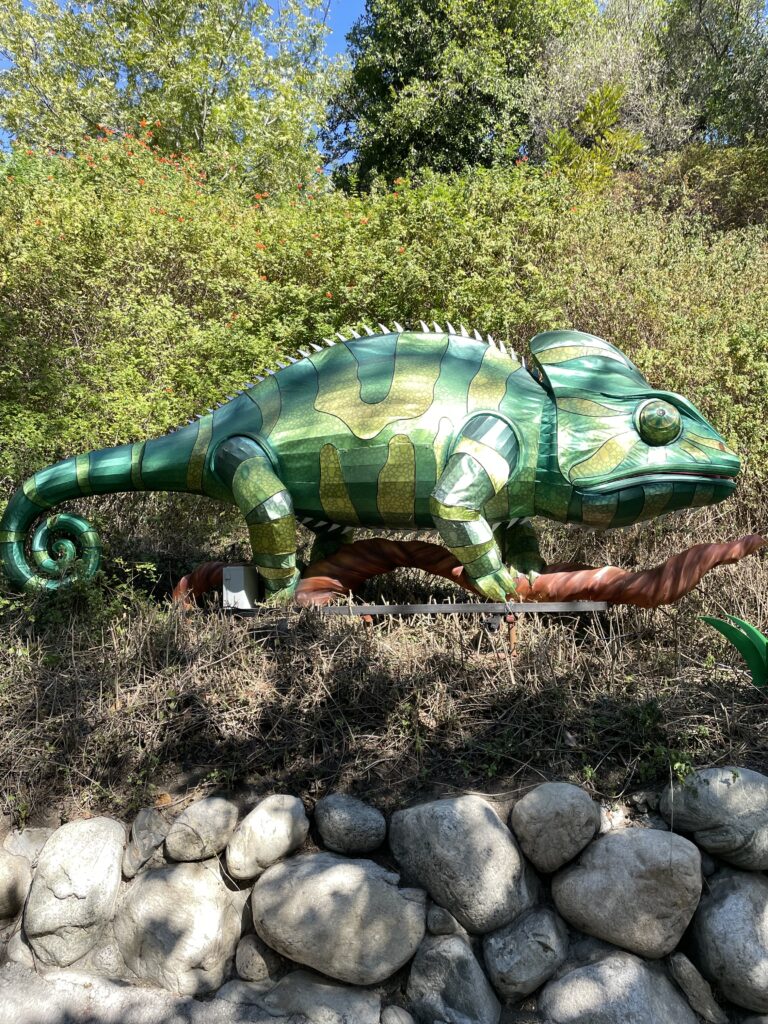 One of the large moving models set up for the 'Animals Aglow' event
Our first ‘Headphone Zone’ marker came not too long after that. This indicates areas in the zoo (such as the chimpanzee habitat) that can get really loud. These are areas where anyone with auditory processing issues might want to use headphones. As such, these signs are there to prepare individuals before entering.
Thankfully, the park was quiet and nowhere throughout the park ever felt overwhelming or crowded. Kathy informed me I picked a good day to come (Monday), as weekends can see a massive influx of families to the grounds. This is something to keep in mind if you want to avoid crowds and enjoy the park at a relaxed pace.
The park itself is enormous, and while it had just transitioned from the COVID restrictions, there was now the threat of an avian flu outbreak – so numerous bird exhibitions were closed to the public (hopefully this will not be for too long).
Kathy pointed out the large animal and plant models that looked like they were made from a similar material to a Chinese lantern. The zoo has numerous seasonal events taking place throughout each year. These models were set up in preparation for the light show ‘Animals Aglow’ which was due to start in November. The models even moved, blinked, and breathed like their real-life counterparts, which was amazing to see first-hand – if you are in the area, keep an eye on the events calendar to see what’s coming up.
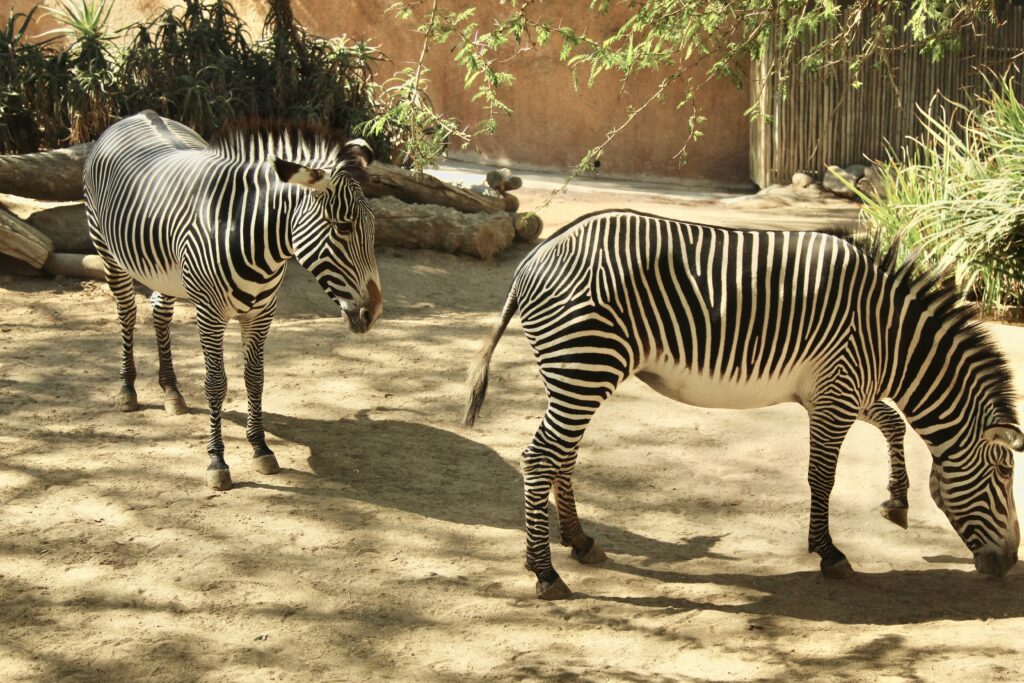 With more than 270 different species onsite, you should definitely set a full day aside for your visit
There are numerous important things to remember within the zoo, such as not feeding the animals or overstepping the barriers, but if you respect the signage onsite (also found online), then you should not have a problem. The layout of the zoo does not follow a straight path and you are often presented with choices on which path to take. Kathy was there to guide me, though it might be wise to keep your map handy on your phone if you are not familiar with the layout and don’t have a guide like I did. Many of the park sections are split into continents, housing a variety of plants and animals that you would typically find on said continent. There is a lot to explore in general, and we spent the best part of 5 hours going through the exhibits and enclosures. There is plenty of written information available to give you an insight, though having verbal reliance on a docent tour was great. There are also ample places to rest (not including the quiet areas), as well as numerous restrooms, eateries, attractions, and entertainment venues spread evenly across the huge space that encompasses the zoo.
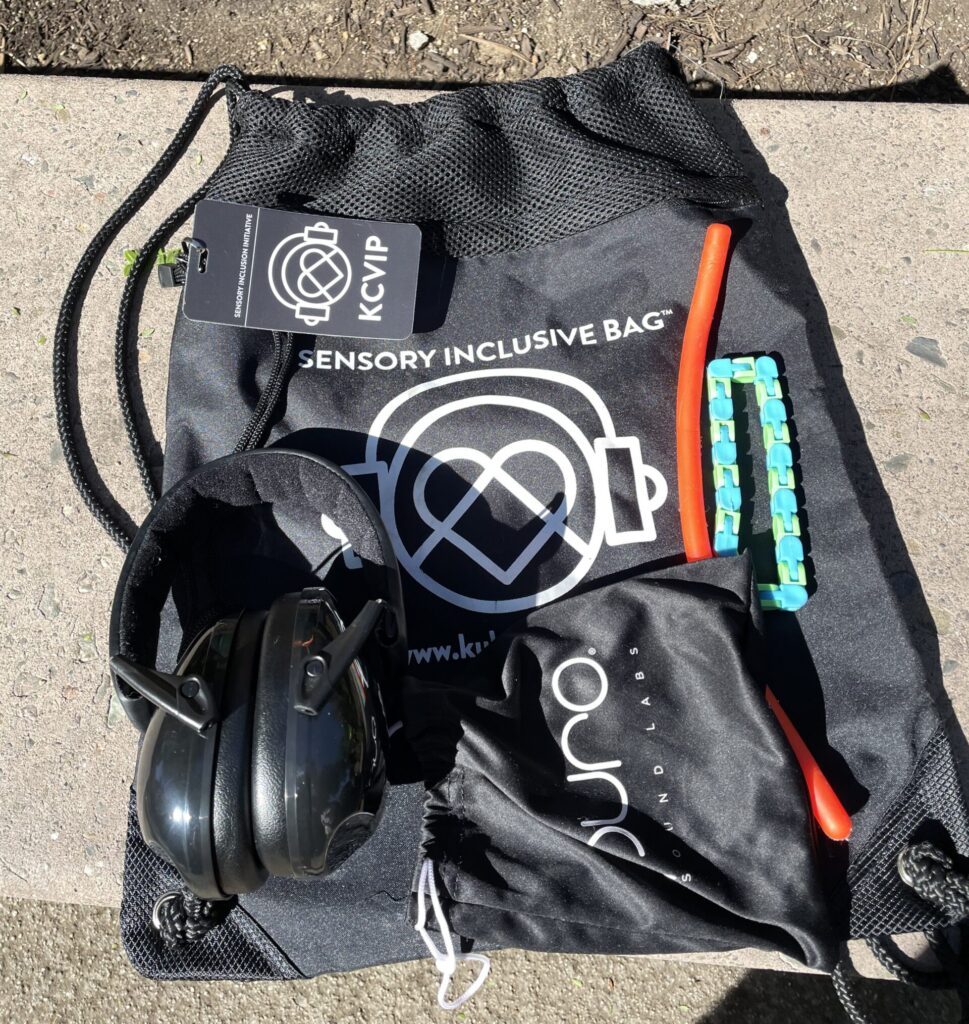 The KultureCity Backpack and its contents
Final Thoughts
This was an absolutely fantastic experience, and sadly one that I think goes unnoticed by a lot of visitors to LA. While this was my first visit to a zoo in a long time, I was impressed by the efforts of the zoo to provide an inclusive environment for their guests, while also providing the animals onsite with spacious enclosures along with the care and respect they deserve. If the rest of the staff are as passionate and responsive as Kathy when it comes to the guests and animals, then I have the utmost faith in their future endeavours.
It should also be noted that the zoo offers several options to meet various accommodation needs, which can be found on their website. If you want a docent-led tour with one of the volunteers (such as the one I took), then do not hesitate to reach out to the zoo via the request form on their website. Auxiliary aids and services are provided at no cost. Some requests, such as a guided tour, require at least 14 days’ advance notice.
 Large portions of the zoo are geographically themed, so you can find a lot of animals from nearby locations grouped together in one area
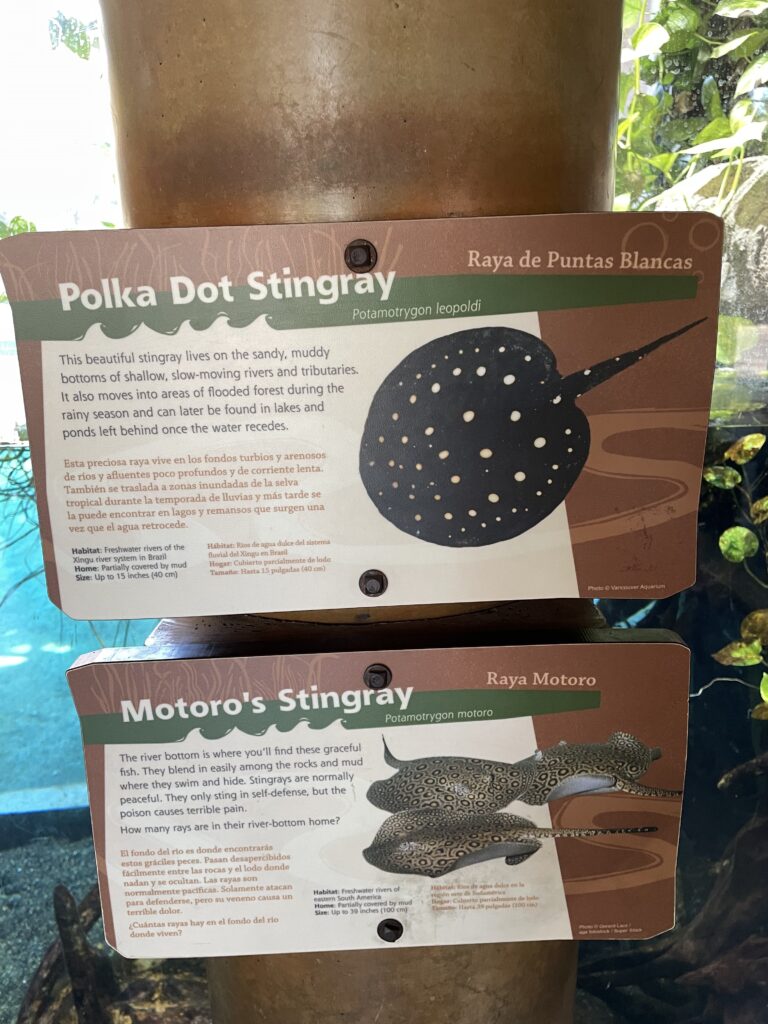 Each exhibit/enclosure includes info-boards contains some basic info in both English and Spanish
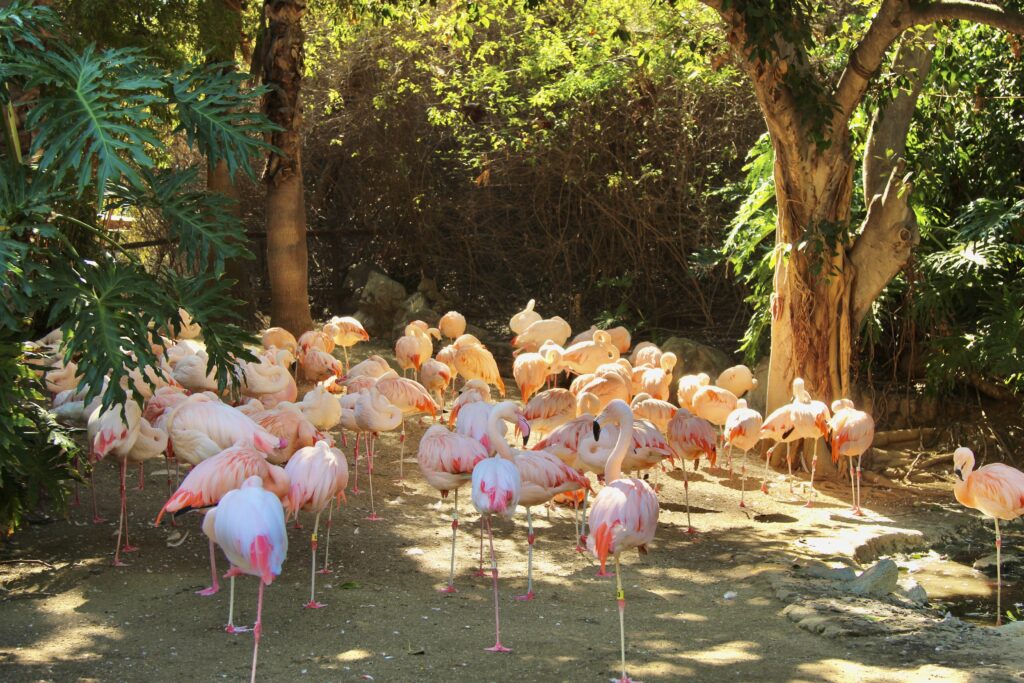 Flamingos were an unexpected, but appreciated site here at the zoo!
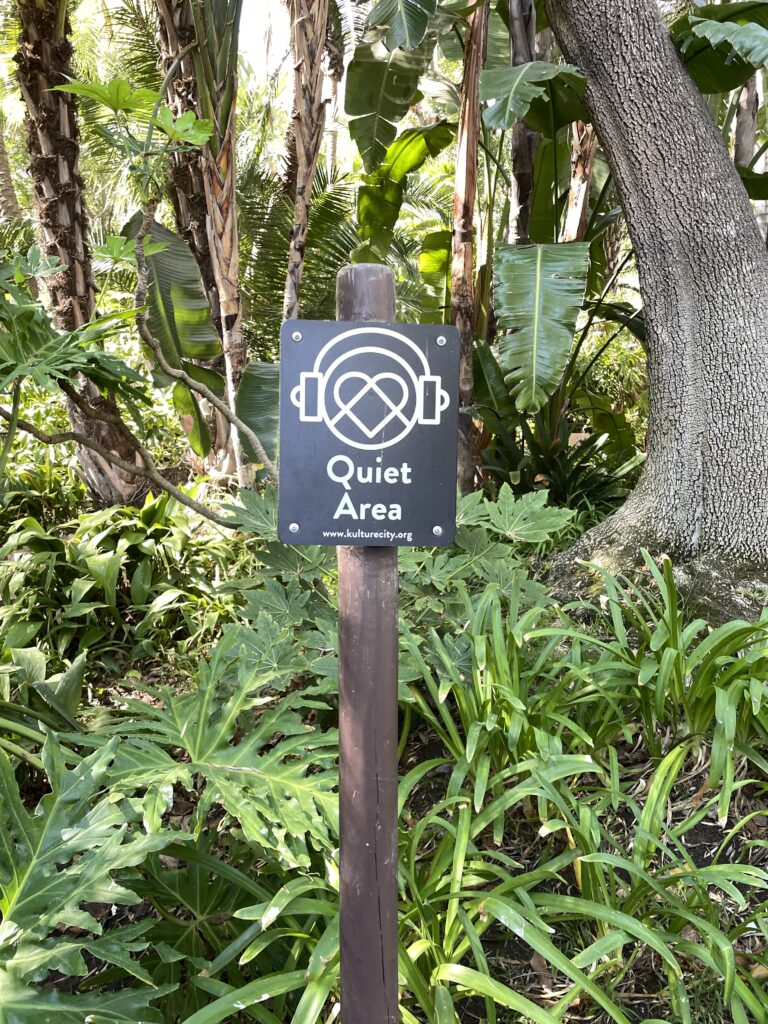 Be sure to look out for these signs, as well as the similar looking 'headphone zone' signs posted around
If you liked this article and would like to support my work, then please consider clicking on one of the buttons above to donate a little to either buy me a coffee or support my business initiative. Your generous support enables me to keep creating new and better content, as well as cover business development costs. Please only do this if you are financially able to do so, as these are challenging times for us all – Thank you!
bookmarked!!, I really like your site!
Thank you Randall, I hope you find some benefit in my writings 🙂