
 The Mediterranean views in Marseille make you stop and just take it all in
Places like Paris can be expensive when you take attractions into consideration, but a little-known secret about France’s 2nd biggest city is that almost all the attractions here are free for tourists, including museums!
Marseille is a pretty devisive city, somewhat akin to Marmite (or Vegemite if you are from Australia). Nonetheless, I had a whale of a time here, and being surrounded by free attractions everywhere sure did help!
So let me take you through some of the main things you can do in Marseille completely for free.
 Palais Longchamp is an architectural gem, blending history with a stunning view
- Palais Longchamp
Despite its name in French, Palais Longchamp isn’t a palace; it is a cultural monument of sorts. In any case, it is one of the most beautiful buildings I have ever witnessed and should be at the top of the bucket list for any visitors to the city.
After several devastating years of being hit by a cholera outbreak as a direct result of widespread water shortages, 18 aqueduct bridges were built to bring drinkable water to Marseille.
It was then decided this joyous occasion needed a monument to celebrate the construction of canals, and Henry Espérandieu (a local architect who also designed the Notre-Dame Basilica on this list) was commissioned to construct the Longchamp plateau, which resulted in this marvelous monument
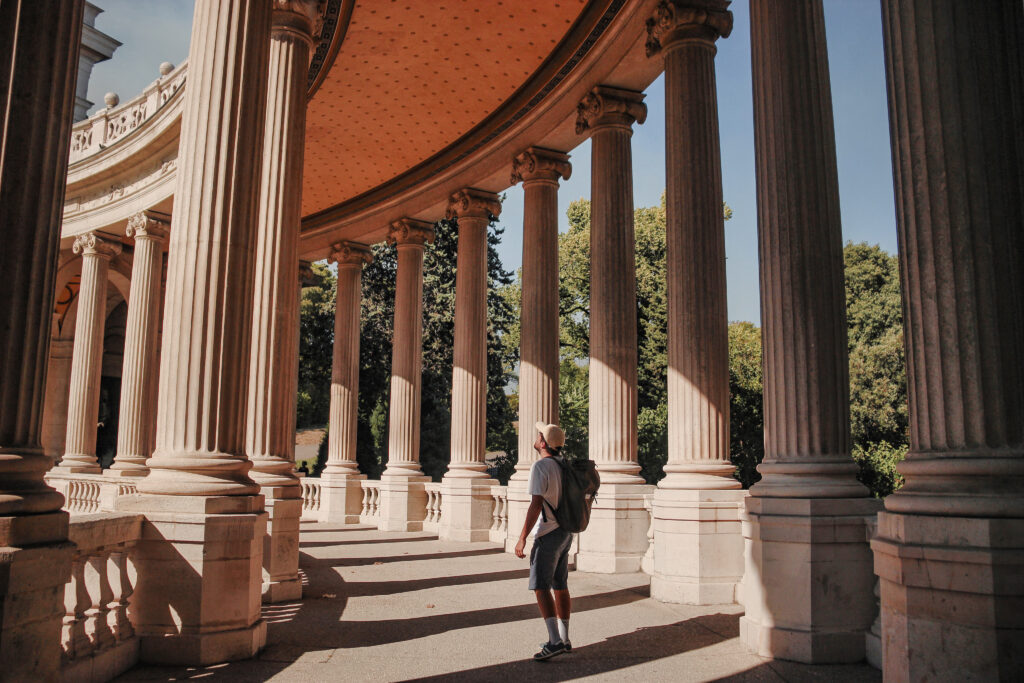 Palais Longchamp is a masterpiece of architecture and history, offering both cultural richness and a peaceful park to unwind in
Be sure to also check out the adjoining park, which is located directly behind the monument. Originally home to the city’s zoo until 1987, it is now a place where you can witness the beauty of French formal gardens.
Both wings of the main structure house the Natural History Museum of Marseille and the Musée des Beaux-Arts. While the latter is free for all, the former has an entrance fee of €3. Though you will get free entrance here on the first Sunday of the month (as is the case with all museums here that have an entrance fee).
Beware that, as with all museums here, they are closed on Mondays (which sadly fell on the day I was here, so make sure this is not your museum day while here).
 The Basilica is a place to see Marseille from above and get a feel for the city’s landscape
- Basilica Notre Dame de Garde
Don’t let the name confuse you; this is not a replica of the one in Paris. In fact, ‘notre dame’ means ‘our lady’ in French, referring to the Virgin Mary, with dozens of such churches bearing this name across the country.
In 1214, a priest named Pierre built a small chapel and a sanctuary dedicated to the Virgin Mary on-site and established the religious calling of the location. Many chapels succeeded one another in the Middle Ages and during the Renaissance until the actual basilica was built. The hill of the ‘Garde’ had three purposes: a lookout post, a military building, and a place of worship and pilgrimage.
Once a small chapel, it eventually turned out to be too small for the many pilgrims that were visiting there. By the middle of the 19th century, it was ruled that the large basilica we know today would be built in its place.
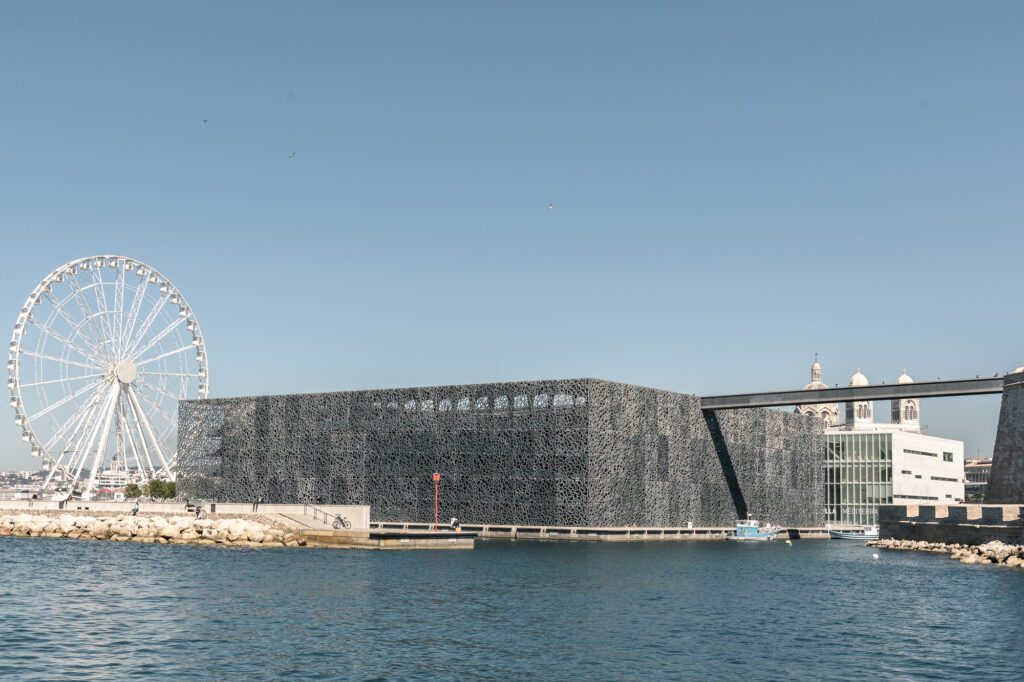 With its modern design, MUCEM is a way to understand the culture and story of the region
This is not only a place rich in history and religious artistry, but it also presents visitors with the most stunning views of Marseille from atop its hill—after you’ve done the hard bit of getting up there, however.
- Museum of European and Mediterranean Civilizations (MUCEM)
A newer addition to the city, having just opened its doors for the first time in 2013. It certainly has a much more modern appearance than other attractions around the city, but its strategic placement on the port doesn’t compete with any of Marseille’s historical sites. Its sleek figure of tinted glass and metal wranglings (which resemble the patterns on leaves) is instantly recognizable.
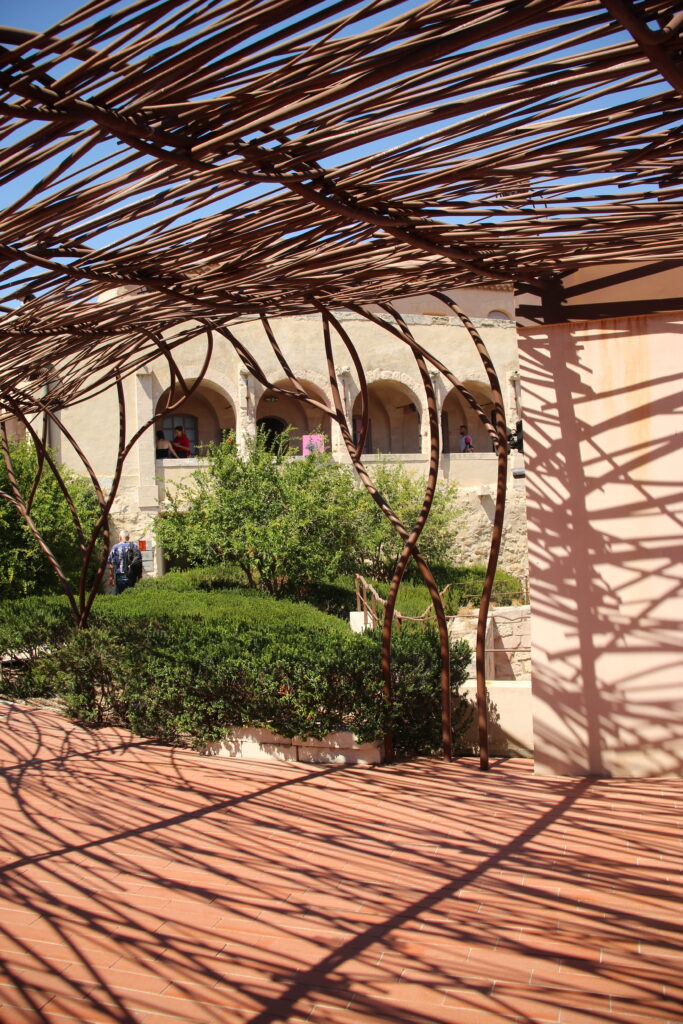 MUCEM contains a wide range of beautiful areas worth visiting
Encompassing a space of nearly 40,000m², you will be sure to find something for you here! This huge museum is split into 3 areas: J4, Fort Saint Jean (which is covered separately below), and the Conservation and Resource Center.
The overall theme of the museum is in keeping with its namesake and is primarily dedicated to the civilizations of the Mediterranean basin. There are numerous features dotted across the 3 sites, including a variety of exhibitions and displays (both temporary and permanent). It is worthy to note that while the sites are completely free to enter and explore, many of the exhibitions do have separate entrance fees that will require you to purchase a ticket.
Other things here include shops, gardens, a bookstore, and a rooftop restaurant.
- Fort Saint-Jean
As mentioned above, this is now considered part of MUCEM. However, its history extends far beyond the museum, so it is a worthy addition in itself.
The fort has been an important part of a military complex that is seen as being inseparable from the history of the city. Built in 1660 by Louis XIV, it became separated from the rest of the city by a ditch following a rebellion by the local populace less than 20 years later.
 As the sun sets over the Mediterranean, Marseille’s soul seems to glow as golden as the light
After the French Revolution, the barracks were converted into a state prison. Then, during WWII, the fortress was used as a depot for ammunition by the occupying German forces.
Nowadays, the fort is one of the most visited monuments in the entire city. An integral part of the MUCEM, it can be reached by footbridges on 2 sides. The fort also offers some of the best views over the bay from a variety of different vantage points.
Numerous events are now also held here, with a fashion show taking place on the evening of my visit—again, completely free!
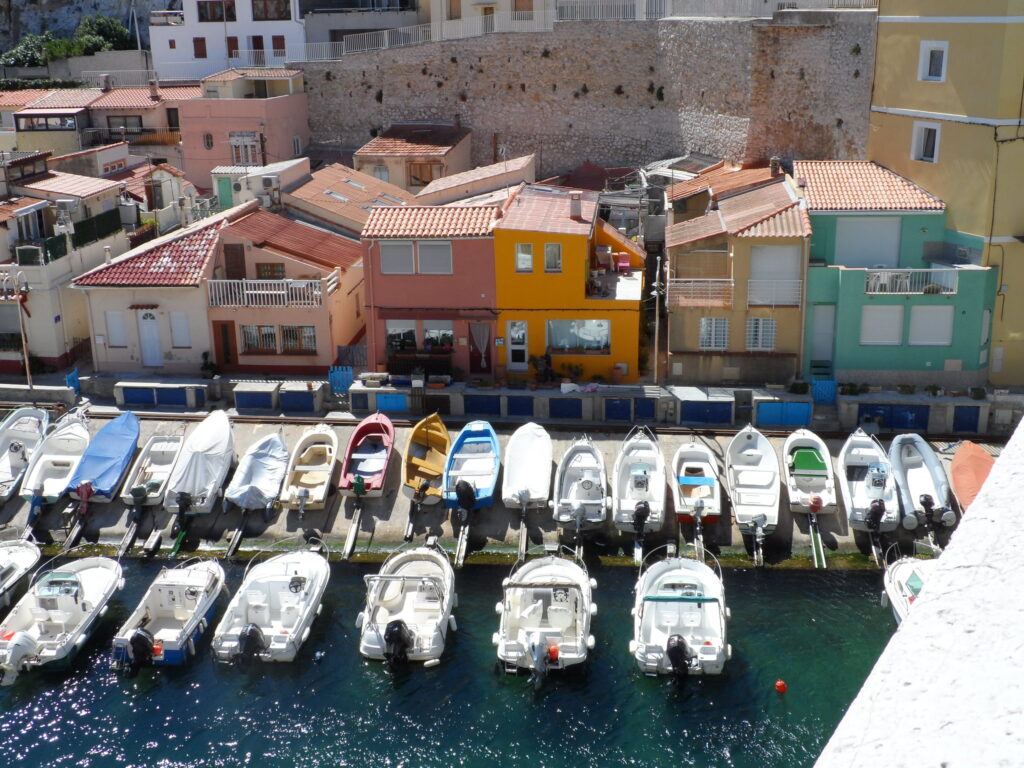 Vallon des Auffes is a slice of old-world charm tucked away just outside the busy parts of Marseille
- Vallon des Auffes
This one is a sight rather than an attraction, but I will include it here because it is worthy of a mention for anyone planning their trip to Marseille!
A mere stone’s throw away from Catalan Beach, right in front of the Statue aux Héros de l’Armée d’Orient, is a small Provençal fishing village, and despite its closeness to the city center, it feels a world away from the hustle and bustle.
This village is now a major point of interest for visitors to the city, offering some of the most picturesque scenery around.
 A small fishing village that feels miles away from the city hustle, offering a different kind of taste of authentic Marseille life
Tucked neatly between 2 cliffs, which lead out directly into the Mediterranean Sea, this quaint little village offers visitors a look into how things once were in the area and is one of the most representative places in Marseille you can find (often appearing in promotional material for the city).
After taking in the scenery, you might want to nestle down at one of the many seafood restaurants and enjoy one of the most beautiful settings here in Marseille to eat. Access to Vallon des Auffes can be made via a long staircase leading from the road above and down to the cove below.
 The cathedral stands tall as a testament to Marseille’s diverse heritage, with its impressive Romanesque-Byzantine design
- Cathedrale de la Major
A Roman Catholic cathedral in the Romano-Byzantine style, it was completed in 1896. It remains one of the largest cathedrals in France and has since been classified as one of the country’s historical monuments.
Equally stunning inside as it is outside, the cathedral’s architectural style was designed to reflect the city’s multicultural makeup, combining both Oriential and Roman styles seamlessly.
Many eateries surround this ginormous structure, which itself sits just a short walk away from the seaside port where you can find the fort and the rest of MUCEM.
- Palais du Pharo
Palais du Pharo’s history starts when it was gifted to Napoleon III by the local government to be used as an imperial palace.
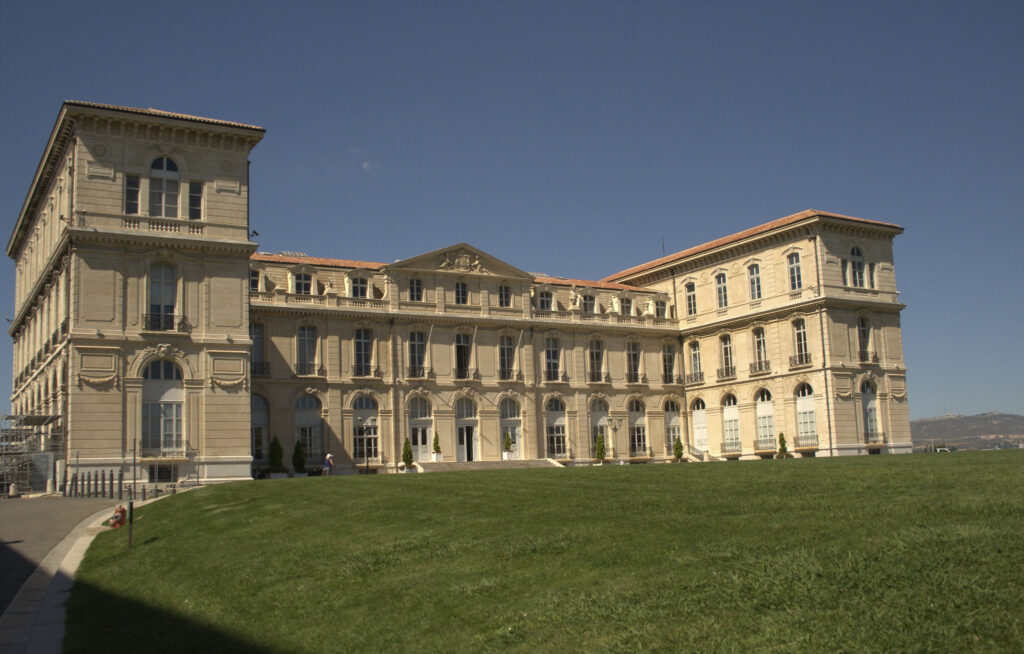 The Palais du Pharo might have been intended as an imperial palace, but today it’s a peaceful spot with one of the best views over the Mediterranean
However, the emperor never once stayed at the palace. Following his death in 1873, his wife decided to grant the residency back to the city.
Nowadays, the impressive palace grounds are a place for quiet relaxation and have some impressive views over the sea from behind the main building. Since 2015, the 2 emblematic buildings at the entrance to the gardens have contained many of the central departments of Aix-Marseille University.
This former imperial residence also has an international congress center as well as spaces for conventions and symposiums.
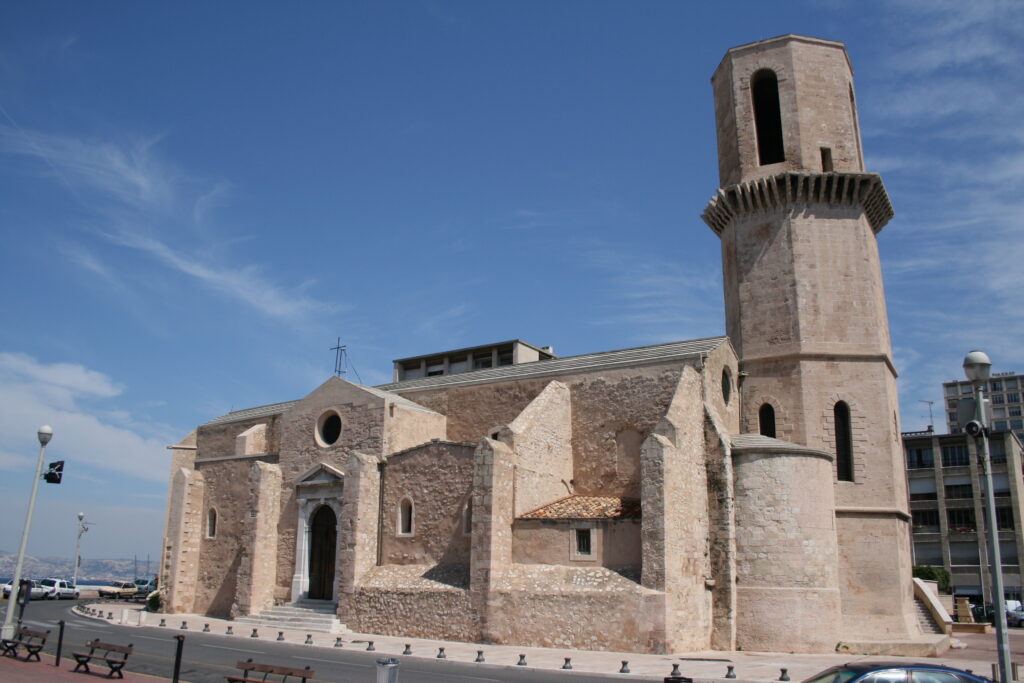 Saint Laurent Church has survived centuries of history, and its location high on a cliff offers a fantastic view of the bay and the city
- Saint Laurent Church
Constructed during the 12th century within the walls of a former fortress, this church is in the Provençal Romanesque style of pink limestone and remains one of the longest standing structures to be found within Marseille (luckily it survived bombing of the area in WWII).
This is just a stone’s throw away from Fort Saint-Jean (one of the main entrances to the fort is located directly across from the church), so they can easily be visited together.
 Le Panier’s narrow streets are a maze of history and color. It’s impossible not to get lost, but that’s part of the charm
Today, the church is emblematic of the many waves of immigration that gave this church and surrounding neighborhood a strong influence.
Listed as a historical monument since 1950, the church has since been renovated and is now back to its former glory. Being perched high on a cliff, the Saint Laurent Church has a breathtaking view of Fort Saint-Jean and the nearby bay
- Le Panier District
This is another addition that cannot quite be considered an attraction but is unmissable all the same! Nestled on a hill near the Old Port, it is known for its narrow, winding streets, colorful façades, and historic buildings. It also happens to be the oldest district in all of Marseille, this was where the Greeks first chose to establish their colony way back in 600 BCE. As such, it’s a hugely popular spot for tourists who enjoy exploring its eclectic shops, artisan workshops, and quaint cafés.
This twisting neighborhood of narrow back alleys has also gone through a revitalization of sorts. The walls here now act as a living tapestry and give artists’ the chance to release their creative energy.
 Marseille’s architecture blends ancient Greek foundations, Romanesque churches, military forts, and modern design
Now considered an open-air museum, there is a lot to discover here, and it’s a rewarding experience just walking around to see what amazing things you can come across (and maybe grab a coffee, wine or cocktail along the way!).
Marseille History Museum
Another one of Marseille’s gratuitous offerings kindly bestowed upon the public, this museum contains detailed recognition of the city’s enduring past.
First opening its doors in 1983, the museum has a lot of interactive and visual elements throughout its displays, which makes it ideal for autistic travelers who are tactile and/or visual.
 The Marseille History Museum takes you on a journey through the city’s origins and its transformation over centuries
The museum has a heavy focus on how Marseille was founded by the Phoceans (as an ancient Greek colony) and carefully sheaths a wide range of artifacts and relics uncovered from this period. It is also a space for temporary expositions, a documentation center, and an auditorium, all of which are accessible during visits.
The garden outside protects the archaeological remains of the antique port of Marseille (it is amazing to see how far inland the bay here once was). The remains were uncovered during excavation work carried out in 1967 for the construction of the shopping center, which today provides direct access to the museum.
Numerous Greek fortifications, funerary enclosures, and parts of the ancient port were all discovered during subsequent archaeological work in the area. Considered part of the museum, this outdoor space can be visited for free too, and it has been laid out purposefully to highlight the various relics that still sit proudly in their original locations today.
 The Museum of Roman Docks is an underrated attraction that gives you a real look into the ancient maritime world of Marseille
- Museum of Roman Docks
The Museum of Roman Docks offers a unique glimpse into the city’s ancient maritime past. Located near the Old Port, the museum is set within the remains of an ancient Roman dockyard. It showcases the remnants of what was once a bustling hub of trade and maritime activity, with said activity spanning from the 6ᵗʰ century BCE to the 4ᵗʰ century CE.
Visitors can explore various exhibits that highlight the architectural and engineering feats of the Romans, including sections of the original dock structures and countless artifacts unearthed from the site. These exhibits provide insights into the daily lives of the people who worked and traded at this crucial port.
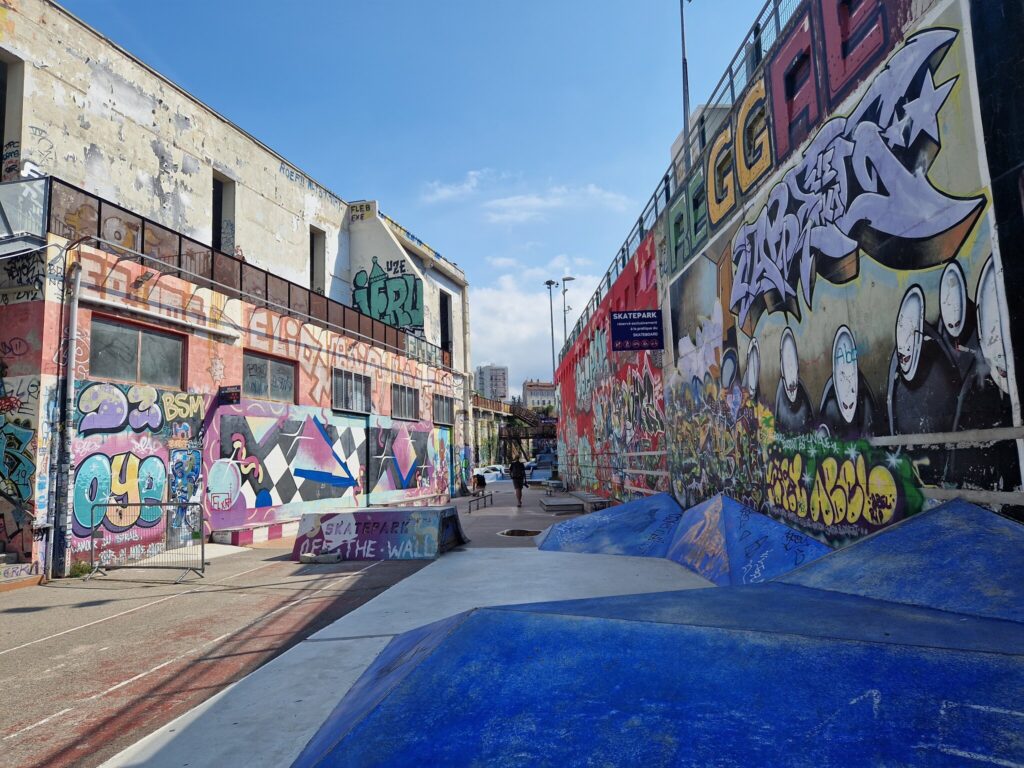 Friche Belle de Mai is where culture and creativity collide, driven by community spirit
The museum’s design integrates the ancient ruins with modern architectural elements, creating a striking contrast that enhances the visitor experience. Through interactive displays and informative panels, the museum delves into the historical significance of Marseille as a key player in the Roman Empire’s commercial network.
- Friche Belle de Mai
A true testament to what urban renewal can offer communities, Friche Belle de Mai has become a place that can only be described as a melting pot of culture, art, and sport, serving multipurpose functions for the public today.
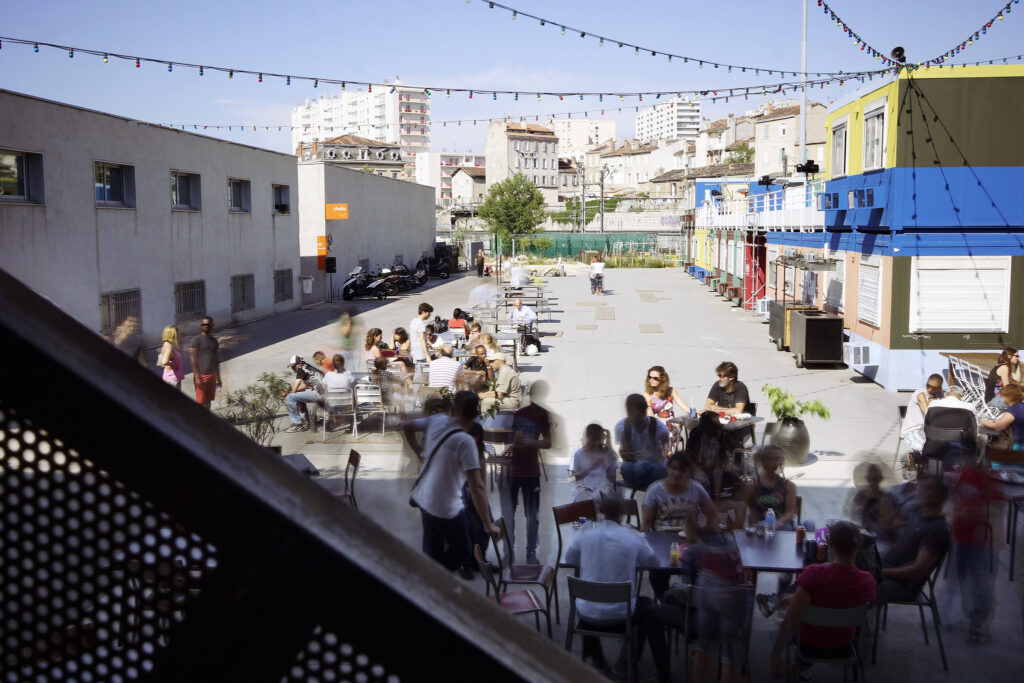 Friche Belle de Mai should act as a reminder that cities are as much about reinvention as they are about preservation
The site features a variety of facilities, including galleries, performance venues, and studios, fostering creativity and innovation. It regularly hosts a diverse range of events such as concerts, theater performances, exhibitions, and workshops. Friche Belle de Mai has become a hub for artistic expression and a key player in Marseille’s cultural scene, drawing both locals and international visitors alike.
It is a little out of the way compared to other attractions that are far more central, but don’t let that sway your mind; it is truly a worthwhile visit to see this place for yourself.
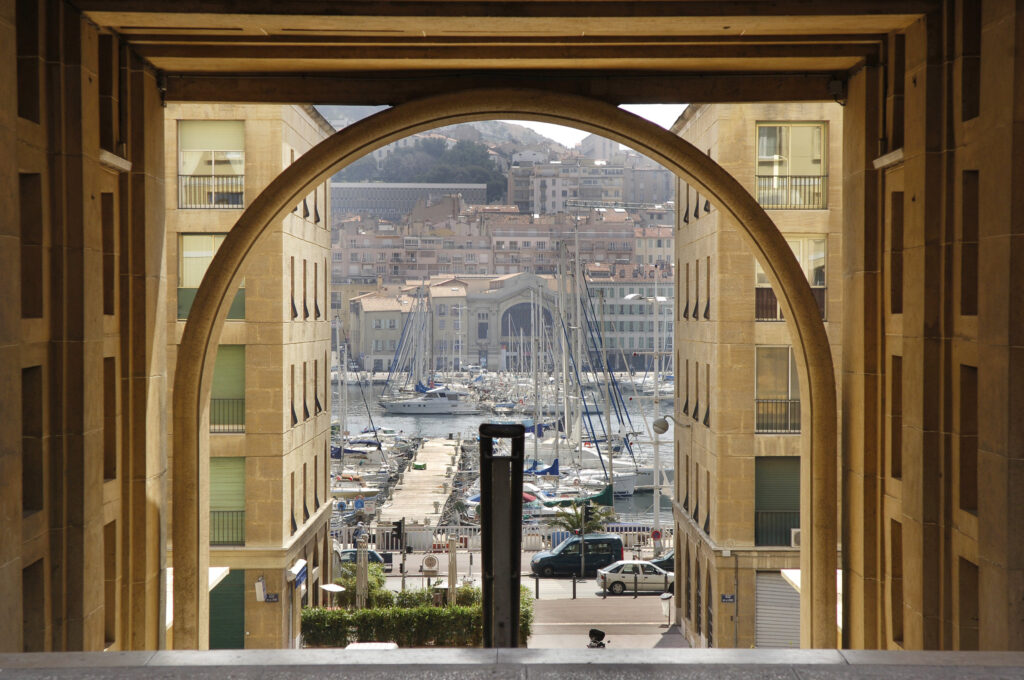 Sun, sea, street food, and centuries of culture—Marseille delivers an experience, not just a view
Other Things to Keep in Mind
This is far from an exhaustive list, but I am sure there will be plenty more free spots/attractions that you will come across during your stay in Marseille. However, as my time here was a mere flying visit, this was all that I had time to experience.
Another superb démarche Marseille has upheld is eBike and eScooter hire. Users will have the first 30 minutes of usage completely free, with any payments being calculated from that point onwards! Apparently initiated to help ease traffic congestion, this is also a fantastic opportunity for any incoming tourists to see the city without having to either walk everywhere or fork out every time for buses or taxis.
Note: A special thanks to Marseille Tourisme who kindly provided additional photography for use in this article. All credit goes to the rightful owners.
If you liked this article and would like to support my work, then please consider clicking on one of the buttons above to donate a little to either buy me a coffee or support my business initiative. Your generous support enables me to keep creating new and better content, as well as cover business development costs. Please only do this if you are financially able to do so, as these are challenging times for us all – Thank you!
Leave a Reply