
 Dunfermline may be smaller than your average city, but it contains an immeasurable wealth of history
Are you looking to step away from the usual busy tourist hotspots in Scotland’s Central Belt (think Edinburgh, Glasgow, or St. Andrew’s)? Then this might be the post for you to keep reading, as Scotland’s newest city also happens to be somewhat of a hidden gem that is now trying to reclaim its place on the radar following its new designation.
While tiny by the usual standards of a city, this allows for easy navigation and compact exploration — as all major attractions and points of interest within the city center are all located within walking distance of one another.
From gorgeous gardens to royal ruins, delectable delights to awesome architecture, it can be hard to choose exactly what you might want to begin with.
With easy and quick access from Scotland’s nearby major cities by either car or public transport, you can add this little-known treasure to your itinerary in order to experience the beauty, history, and culture of Scotland from a different angle, away from the beaten track.
Disclaimer: I was kindly hosted as a guest by Welcome to Fife and Visit Dunfermline for the duration of my visit. As always, all opinions and photographs are my own.
 All of Dunfermline's main attractions are within walking distance of one another
Basics
Dunfermline is a city, parish, and former royal burgh located in Fife, Scotland. Known for its former royal connections, damask linen, and strong associations with Andrew Carnegie, it now acts as a hub city, linking Edinburgh and other major cities with each other as well as other destinations within Fife.
The city is situated just 3 miles (5 km) from the northern shore of the Firth of Forth and approximately 17 miles (27.4 km) from the center of the country’s capital, Edinburgh.
Dunfermline is Scotland’s newest city and was the 8th Scottish city to join the Scottish Cities Alliance, following its elevation from town to city status in May 2022 as part of Queen Elizabeth II’s Platinum Jubilee celebrations.
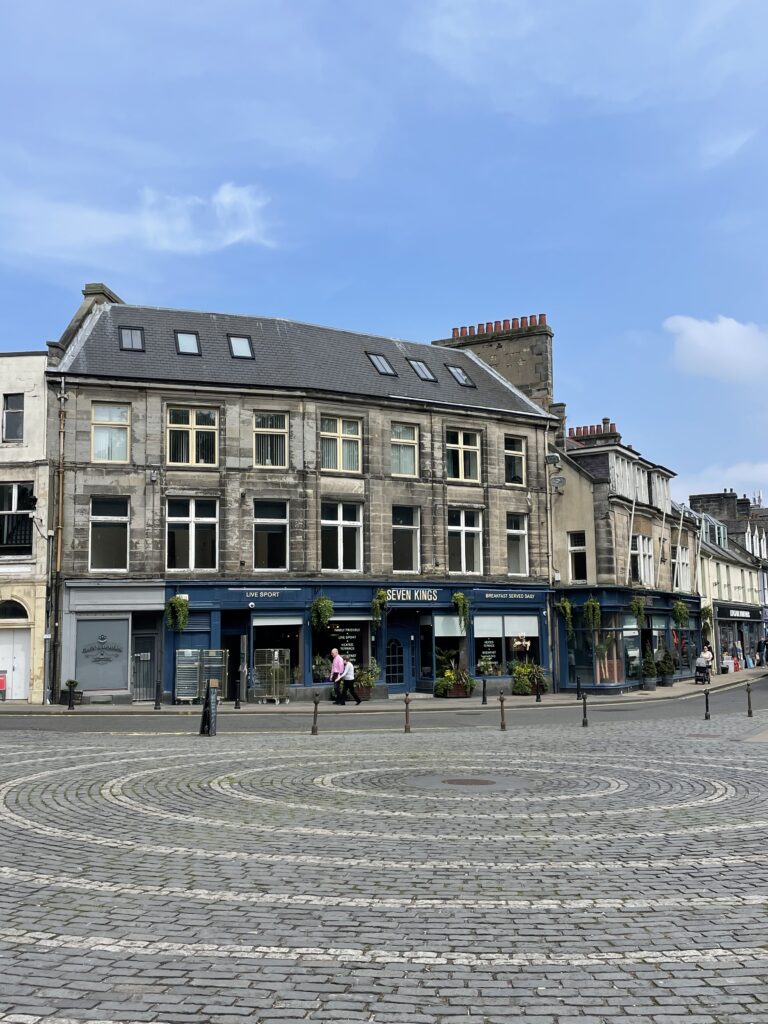 If you are looking for some local pubs, then head over to the 'Seven'Kings'—aptly named so because of the 7 kings that were born in the city
History
While the new city status is a purely symbolic one, the granting of this status to Dunfermline by the late Queen during her Platinum Jubilee celebrations in 2022 perfectly epitomizes that symbolism.
Dunfermline is often referred to as ‘Scotland’s Ancient Capital’. While this period in this city’s history was in fact a de facto means of appointment, it is an important distinction that this former royal burgh had over others between the 11th and 15th centuries. Eventually surrendering its royal duties over to Edinburgh (the current period) in 1452.
It was during this period that the royal palace flourished, and a grand total of 18 monarchs were laid to rest underneath the neighboring abbey.
While the political shift that started with the aforementioned change didn’t completely remove its importance, the gradual decline in the fortunes of Dunfermline lasted until the establishment of the table linen industry in the early 1700s, quickly gathering a worldwide reputation as a powerhouse during the 19th century, as it took some time to develop the weaving techniques over the previous decade. The scale of this could not have been achieved without the introduction of steam power, and the Pilmuir Works factory at the heart of the industry is credited as being the first of Dunfermline’s power loom linen mills.
 The former grounds of the once grand palace are totally free for visitors (though donations are welcomed)
The factory changed hands multiple times throughout the following years, with Dunlop ultimately becoming the final proprietor. From 1947, the factory specialized in weaving tyre fabric until its closure in 2005, marking the end of an era.
Recommended Length of Stay
All the major attractions can be completed easily within a day. However, if you want to combine a visit with the Fife Coastal Path or the Fife Pilgrim Way, which runs through the city, or if you just want to take things at a much slower pace, then it is recommended to spend a night or 2 in the city to make sure that you are able to see everything there is to see.
Where to Stay
There are a limited number of hotels and guesthouses located within the city center, and several more are located throughout the city and its outskirts. While all of these are lower to mid-priced, AirBnB is also an option – though these are typically in the higher pricing bracket.
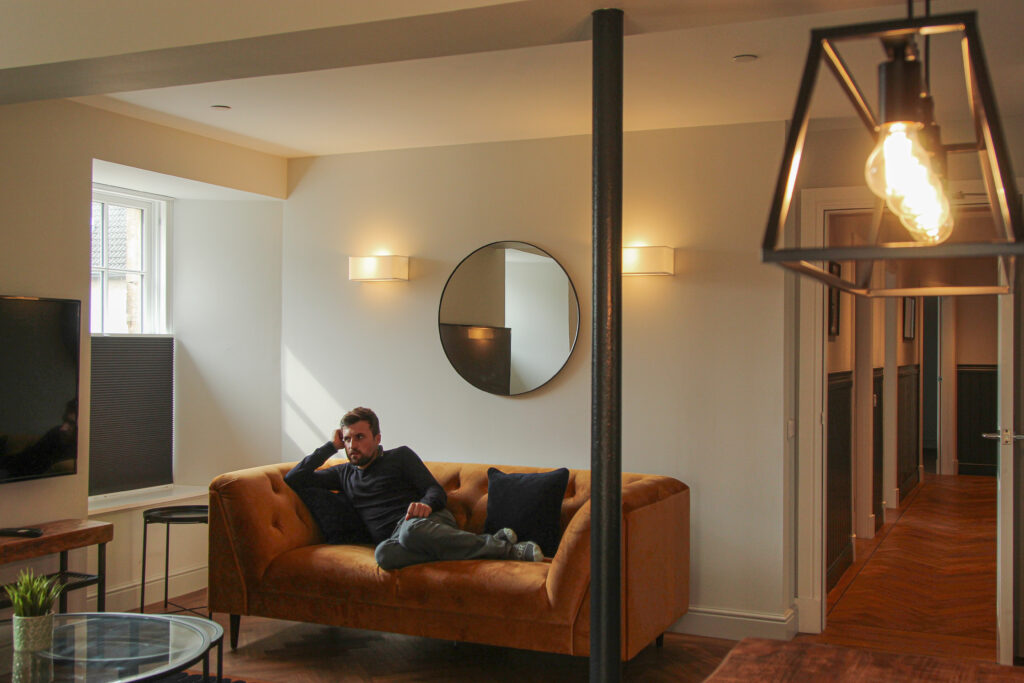 Reid's Corner offers premium luxury to travelers at a competitive rate
I personally stayed at Reid’s Corner, part of the Stay Dunfermline initiative, which itself is part of a wider new city development that is breathing life into the city’s formally abandoned industrial quarters.
Nestled on the former site of 19th-century world leader Pilmuir Works, Reid’s Corner is the oldest structure on the site, initially serving as the original handloom factory and warp loft. Now, the rich history of the site has been reimagined as newly renovated contemporary self-catering serviced apartments in the city, aimed at incoming leisure and business travelers. These apartments give you total freedom to work, cook, sleep, and relax as you please, while being a stone’s throw away from the main attractions in the heritage quarter.
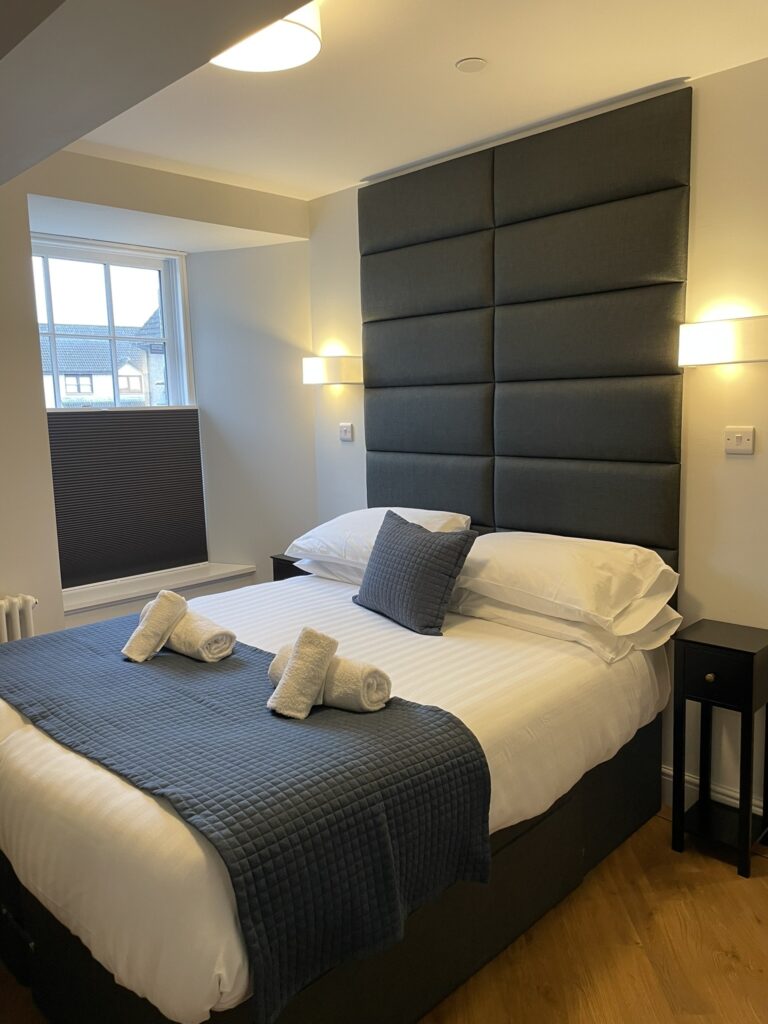 All rooms are fully furnished, and offer optimum privacy for those who need the time and space to focus on work
With a self-check-in system that provides maximum privacy with minimal interaction, rates that are competitive with nearby hotels, and furnished rooms that include everything from basic toiletries to a fully equipped kitchen and a smart TV, this is one to remember if you want to step out of Edinburgh and spend a little longer in Scotland’s ancient kingdom.
How to Get There
Located just 17 miles (27.4 km) from Edinburgh city center and a mere 13 miles (21 km) north of Edinburgh’s international airport, Dunfermline is well connected and easily reachable from Edinburgh and beyond.
Trains from Edinburgh Waverley station take approximately 35 minutes to reach Dunfermline City railway station and run at regular intervals on a daily basis.
Direct buses, on the other hand, can be taken from a number of different routes throughout Edinburgh (and the airport too) and will take roughly 1 hour – depending on your departure point and traffic out of Edinburgh.
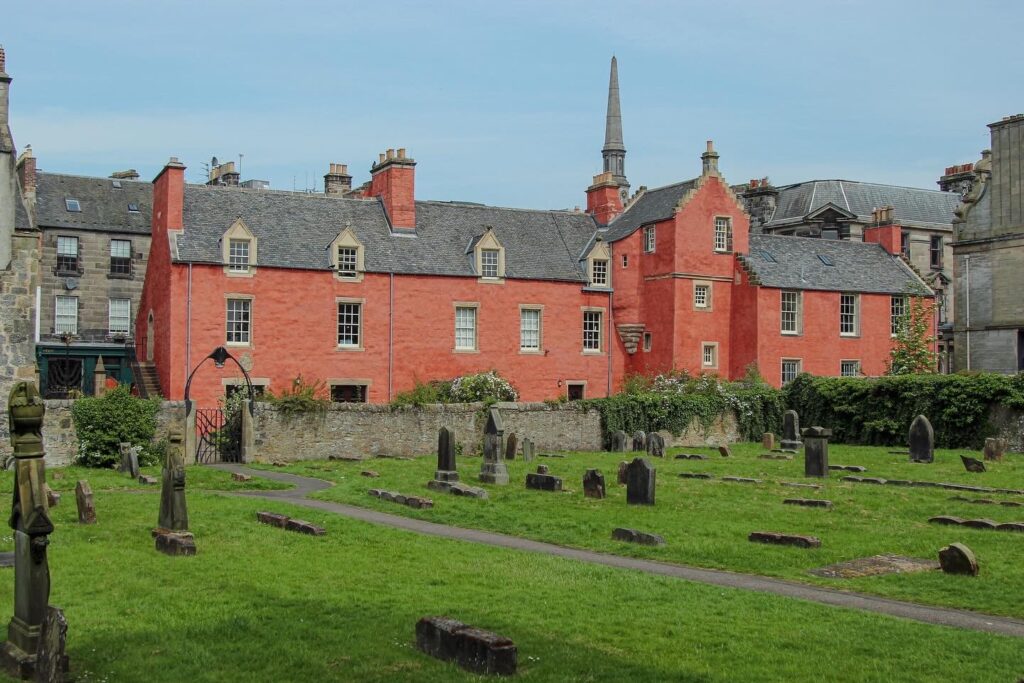 Try and plan your visit during a period of better weather, it'll make outdoor sightseeing much more enjoyable!
Coming by your own mode of transport is also relatively easy for visitors. From Edinburgh, just take the M90 north over the New Queensferry Crossing. The drive should take about 40 minutes in total.
Dunfermline is found within the Central Belt of Scotland (a relatively thin strip of land in the lowlands with the highest population density within Scotland). It can also be reached in just an hour or so from other Central Belt cities such as Glasgow, Falkirk, Dundee, Stirling, and Perth – again depending on your exact departure point and mode of transport.
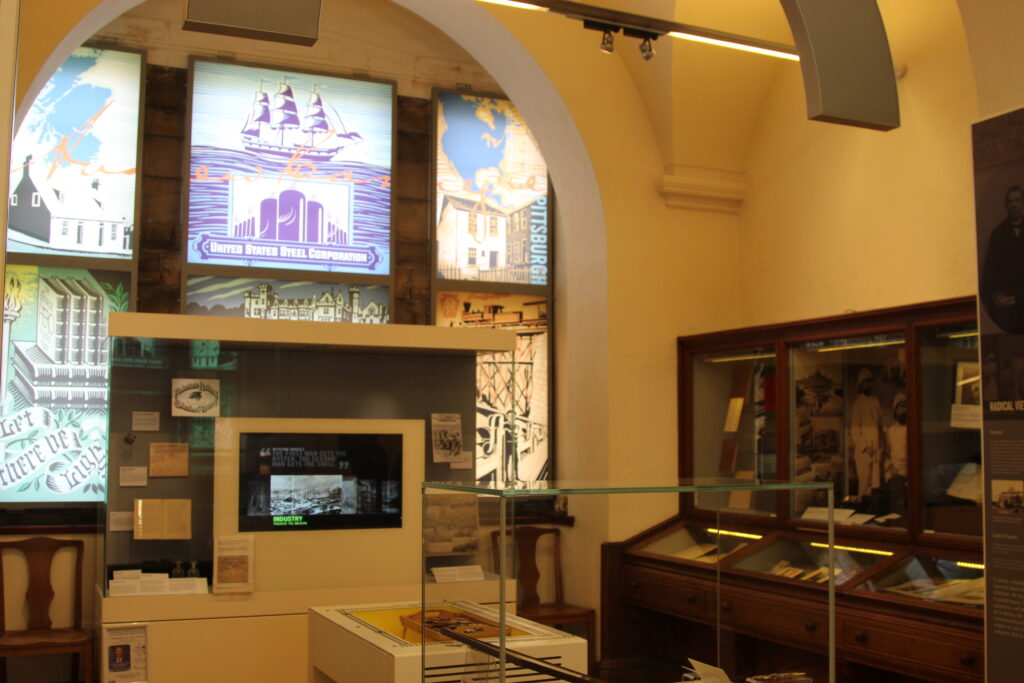 As a very versatile attraction, most should find something of interest at the Andrew Carnegie Birthplace Museum
What to Do
- Andrew Carnegie Birthplace Museum
The museum is located in the former childhood residence of steel tycoon, writer, lecturer, entrepreneur, and philanthropist Andrew Carnegie. He left for a better life on the east coast of the USA in the mid-19th century. The house has been transformed into a detailed account of his upbringing, later migration to the USA, and ensuing success through interior reconstructions, donated artifacts, and infographics.
While Carnegie may be a household name in Scotland, the USA, and beyond thanks to his donations in the form of libraries, concert venues, universities, and many other public institutions, many who use these services and spaces often fail to recognize who Carnegie was or the significance he held and continues to hold due to his long-standing legacy.
 While most of the furniture and accessories in the house did not belong to the family, they were chosen as they were emblematic of the time and the family's previous occupations
The museum does a fantastic job of delving into every possible aspect of Andrew’s life, in spite of its limited space. Those who have any questions can ask one of the knowledgeable staff members, as they really do know their stuff!
What’s more, the museum has a strong commitment to disabled guests, which is enshrined through its partnership with Euan’s Guide (a leading disabled access review website). Additionally, information on quiet hours, private tours, or any other accessibility-related questions can be given upon request via email or phone.
- Dunfermline Palace & Abbey
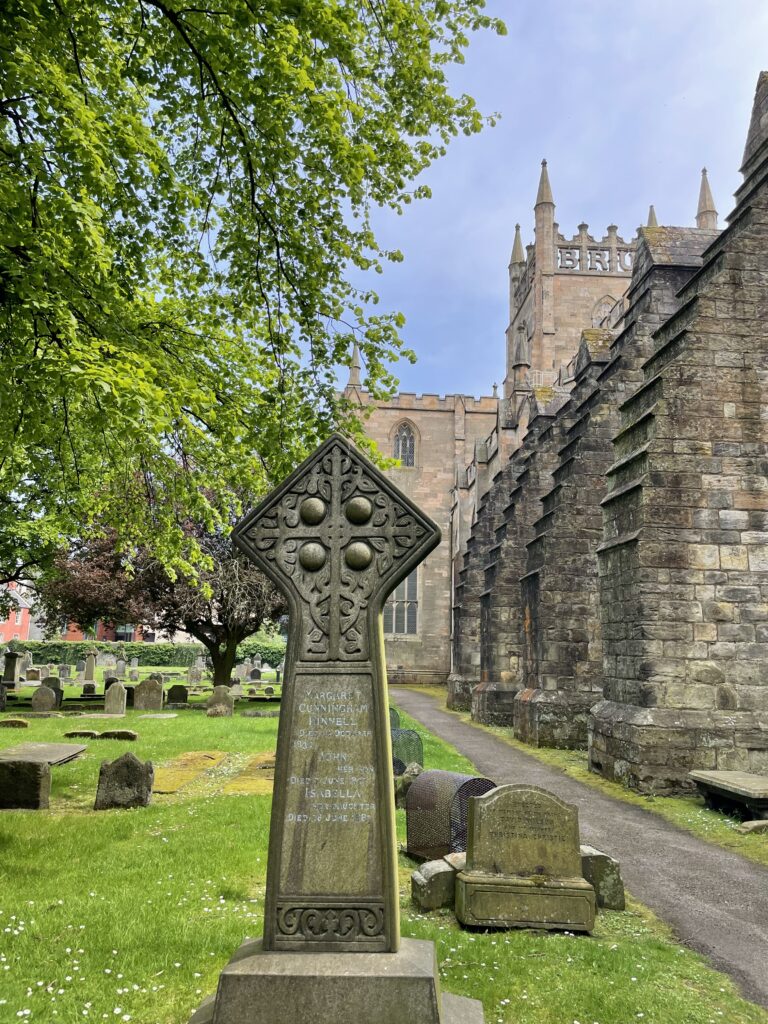
Dunfermline Abbey, which can be traced all the way back to the 1000s, and the imperial ruins of neighboring Dunfermline Palace are an unmistakable reminder of the consequential role Dunfermline had in the history of Scotland.
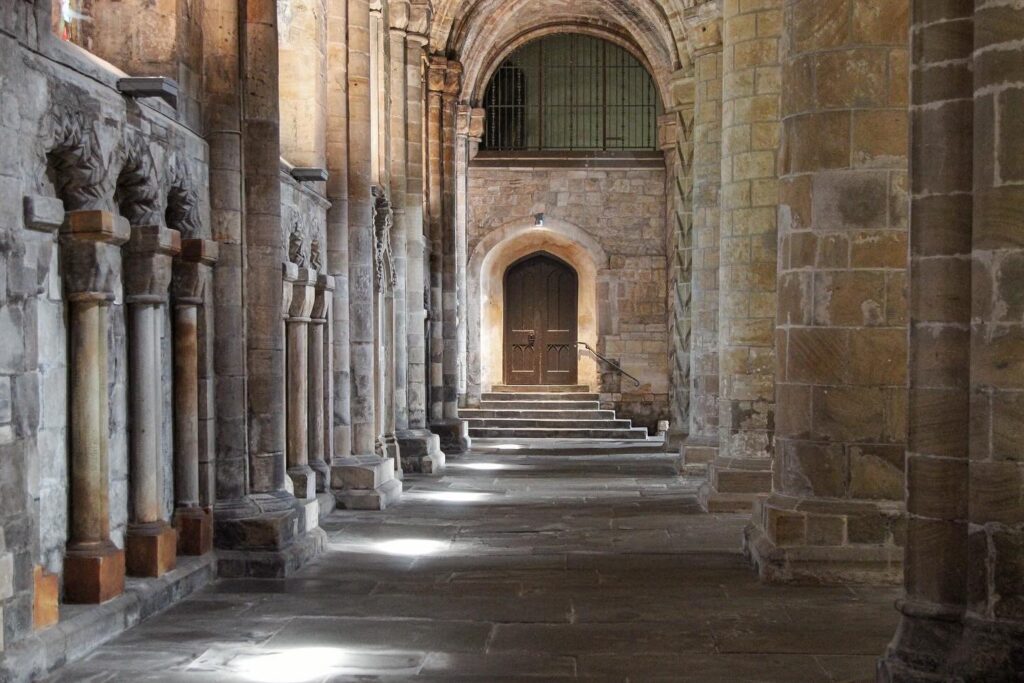 A visit to the abbey is sombre yet spellbinding
While the abbey started its life as a simple priory, it was transformed into an abbey by David I, subsequently becoming a royal mausoleum for numerous nobles. Some of Scotland’s most notable medieval monarchs were laid to rest at this very abbey. Perhaps the most well-remembered of these is Robert the Bruce, Scotland’s Warrior King. Even if your Scottish history isn’t up to scratch, you should know Robert from his popular depiction by Angus Macfadyen in the 1995 blockbuster Braveheart.
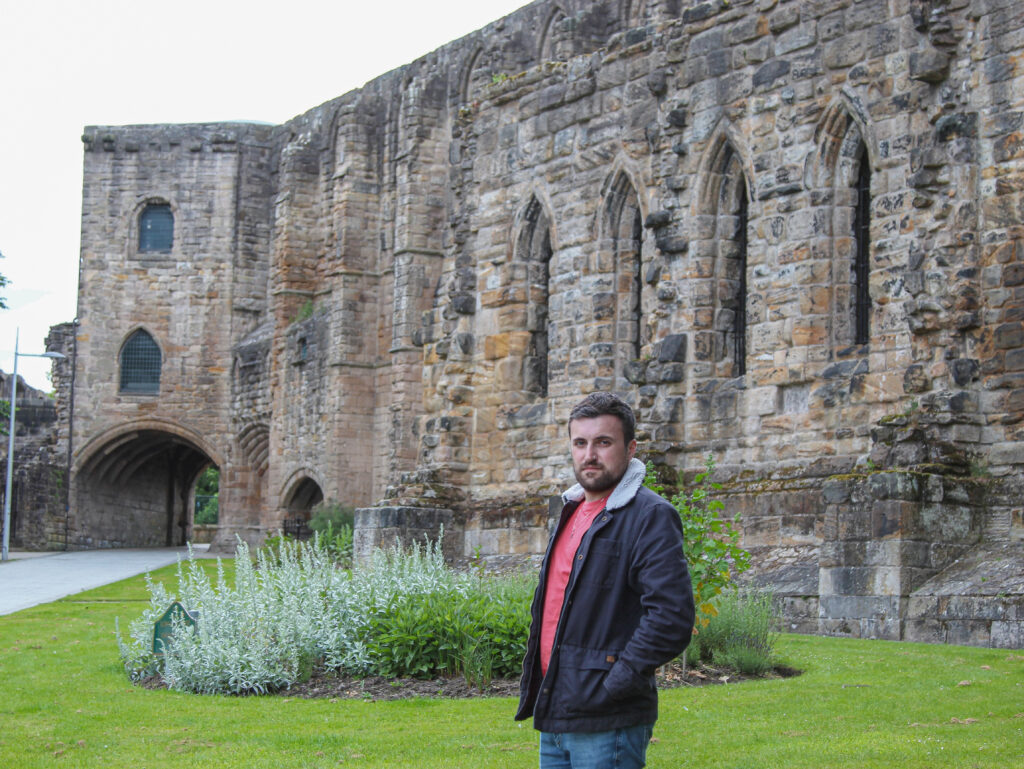
The palace, on the other hand, was a direct result of the Protestant Reformation of 1560. Queen Anna of Denmark led the creation of the impressive palace, which also housed a monastic guesthouse for the neighboring abbey. Not much remains in terms of the interior; however, the overall facade remains crisp and clear, which should give you a clear insight into the grandeur that once would have stood there. Those who have a hard time visualizing ruins can also find detailed information boards at various points that lay bare the true nature and purpose of these royal remnants.
 While most interiors have long gone, the palace still maintains its splendour
Both are free to enter and offer visitors a chance to immerse themselves fully in their rich tales through the self-guided tours, which are guided by assorted information boards throughout.
The abbey remains an active place of worship, with Church of Scotland services held on Sunday mornings. Its monumental nave is a rousing example of Romanesque architecture, and its preserved medieval interior is awe-inspiring enough to remain worthy of the crown.
- Pittencrieff Park
Pittencrieff Park – or ‘The Glen’ as it is locally known – is a whopping 76-acre expanse of lush vegetation and recreational lawns that also contains many meandering and hidden trails throughout the valley that runs along the middle of the park. Keen-sighted visitors who explore the deeper parts of the vale might even get a chance to see some of the resident squirrels and robins, who have become quite accustomed to humans and the food they often bring with them.
Not only that, but the park has been home to a peacock population since 1905, when they were introduced to their new environment by Henry Beveridge upon his return from India. There are currently about a dozen in total, but as they hold the Constitutional Status of having the ‘Freedom of the City’, they can be hard to pinpoint as their freedom permits them to be in other areas around the city center.
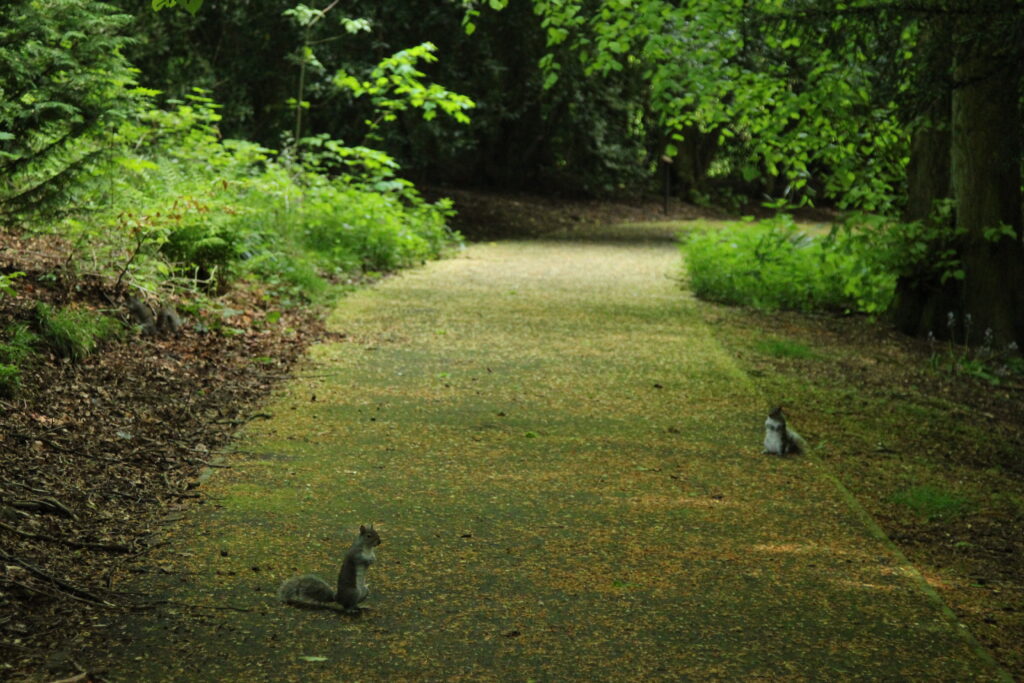 The squirrels in the park are very friendly, just make sure you actually have some food to give them when approaching unless you want a warning nip!
Aside from wildlife, there are plenty of other attractions to keep visitors on their toes. There is the gorgeous glass greenhouse, which, as well as its beautiful collection of exotic plants (and goldfish!), has the added benefit of providing some steamy warmth during the colder months. Also worth checking out are the stunning Italian Gardens and the alluring Art Deco Glen Pavilion, which also provides a selection of food and beverages.
Just across from the pavilion, you can spot the ‘Peace Pole’. Erected following the Dalai Lama’s visit to Dunfermline in 2004, the inscription reads “May Peace Prevail on Earth” in 4 different languages (English, Scottish Gaelic, Tibetan, and Japanese). History buffs might also want to head straight to Wallace’s Well or the remains of Malcolm Canmore’s Tower within the park grounds.
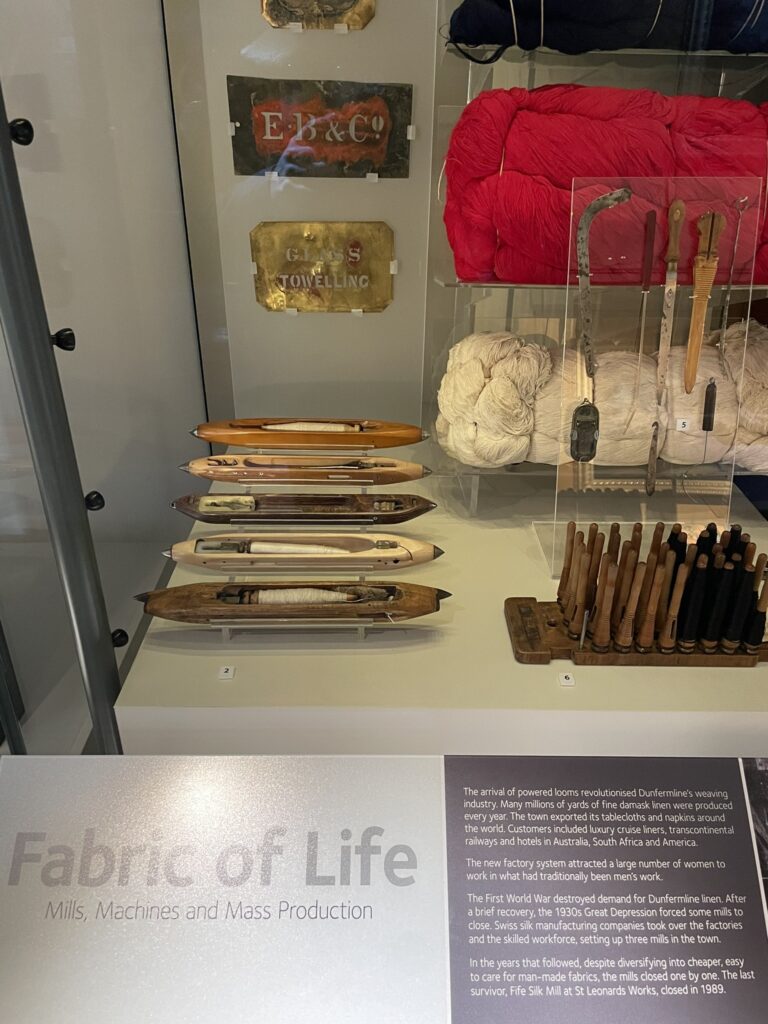 Dunfermline has a rich industrial history that is clearly narrated throughout the library's exhibits
- Carnegie Libraries & Gallery
Any incomers to Dunfermline should not miss out on the opportunity to visit the recently renovated Dunfermline Carnegie Library & Galleries. Carnegie opened an impressive number of public libraries in his lifetime, including here in his hometown, which just so happens to be the first in the world. With its recent modernization comes the chance to see firsthand the past, present, and future of Dunfermline by way of its historic collections, fascinating exhibits, and impressive heritage art gallery.
Distributed over 4 floors, entrance to all areas is also free for all. Not to mention the stunning views visitors will get of the abbey thanks to several floor-to-ceiling window spots incorporated into the new design. The exhibits are varied and often interactive and/or immersive, which creates a much more inclusive and alluring impression for visitors.
The Museum Shop on the ground floor is replete with a wide variety of knick-knacks, gifts, and souvenirs, including items that have been specially commissioned for the building along with unique local artistic works. Also built into the renovations is the new Granary Café, which will be covered later in this post.
 There is plenty of riveting history to be found when taking a heritage tour
- Take a Heritage Tour
Clan MacKenzie Routes is the perfect option for those who wish to delve a little deeper into the history and local lore that remain hidden out of sight to visitors. Operated by Donald MacKenzie, who established his tour guide business in 2015. The goal of the tours is “to attract visitors to explore our heritage, form new friendships, and leave with lasting memories, while also aspiring to create experiences that will not only bring them back but also inspire them to recommend Dunfermline to others.” Donald will go into detail about things like the love story of Queen Margaret and King Malcolm Canmore as you walk by the former site of his tower in the park, Andrew Carnegie and all the relics and donations of his that remain within the city center, or King Charles I and his upbringing in Dunfermline during its regal years.
By scratching just a little below the surface, Donald will reveal a wealth of interesting facts concealed along the historic streets that would otherwise go unnoticed by the majority. This is a truly immersive experience that will pique the interest of history buffs and captivate the sensibilities of cultural explorers alike.
Tours must be booked in advance and typically last 90 minutes in total. The cost is £20 a head – though a minimum charge of £40 is expected, which means you should try to join a tour with someone else or expect to pay more. Group rates for over 10 people are also available upon request.
 The immensely cozy living room at Reid's Corner
 Pittencrieff has a varied amount of diversions worth scouting
 One major asset the city holds is how quiet all its attractions are compared to neighboring hotspots
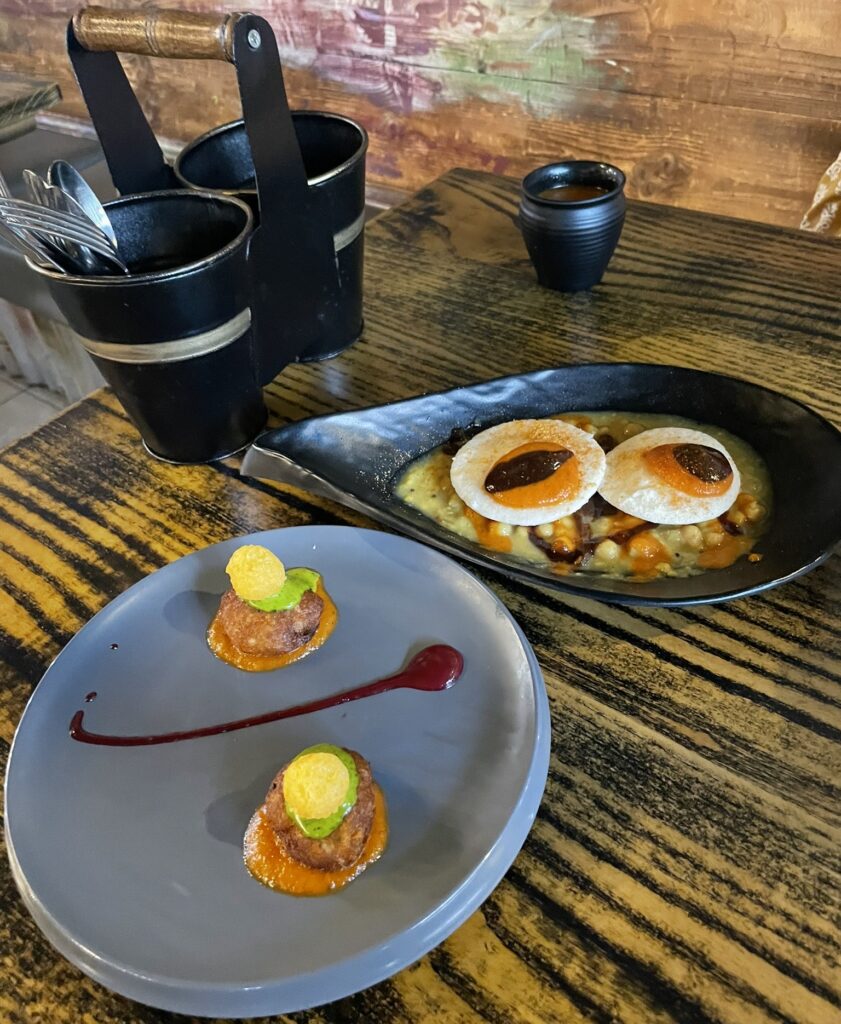 Anyone who enjoys Indian cuisine should not pass up the opportunity to eat out at Dhoom
Where to Eat
- Dhoom
If you’re like me and go crazy for Indian food, then this is a must-visit during your trip. The restaurant has a swank interior with various trinkets and curiosities from across the subcontinent, which creates a cool, eclectic, atmospheric feel for diners. Seating is spacious and varied; there are multiple options to choose from, so just let the staff know if you have a preference. There’s even a tuk tuk that you can sit inside if you are looking for some pictures!
Food-wise, they offer upscale renditions of classic dishes from regions all over India on a comprehensive menu. If you are feeling adventurous (and a little extra peckish), then be sure to sample their 7-course taster menu, which focuses on the flavors of Chennai – capital of India’s southernmost state, Tamil Nadu. Also, don’t forget to check out their cocktail menu, which offers plenty of unique and inviting drinks that make use of Indian flavorings. My personal recommendation is ‘God’s Own Country’, which is a sapid rum and coconut-based cocktail that is served to you on the table flambéed.
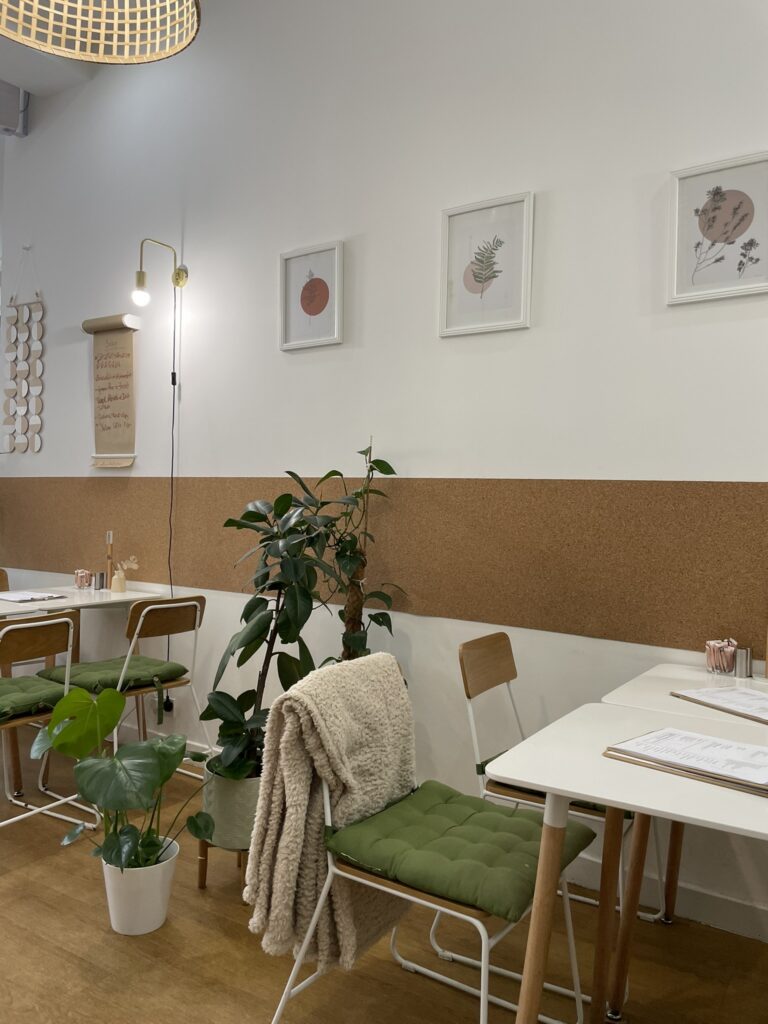 269 Vegan is Dunfermline's local vegan hang-out
- 269 Vegan
Dunfermline Center’s first (and currently only) wholly vegan eatery, this is the perfect place to stop by if you are looking for some meat-free treats. Named after the infamous bull rescued by a group of unnamed activists in Israel, ‘Calf 269’ went on to become a spearhead-like figure in the animal liberation movement that began to become prevalent in the 2010’s. The inside embraces smooth pastel colors with contemporary furnishings. Of particular note is the fact that every chair comes with its own blanket for extra coziness. While this may be a common sight in other colder European countries, it is still a rare sight in chilly Scotland—definitely something I felt grateful for!
Being an independent café, they specialize in numerous scrummy homemade dishes. All made entirely from vegan-based ingredients, patrons can choose from an assortment of waffles, bagels, sandwiches, cakes, and other flavorsome fresh bakes. Catering services are also available, should you require them for any events you might have planned too.
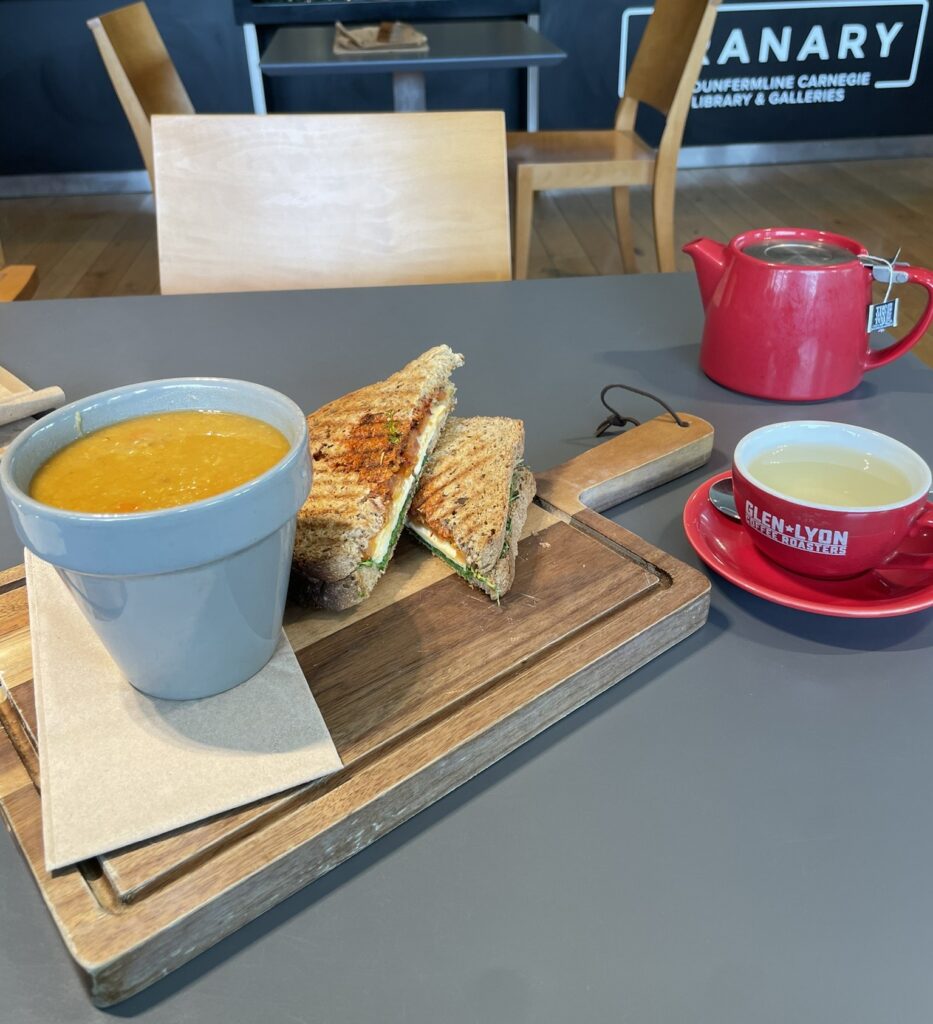 The Granary has a great choice of warm, nourishing food and drink options to keep you going for the day ahead
- The Granary
Situated in the new Carnegie Libraries & Gallery, this is a relaxed café that gives customers captivating views over the abbey and the adjoining gardens. There is no shortage of seats available to choose from both inside and out on the balcony, with its quietness being an added bonus if you are looking for an option that will give you somewhere secluded to retire to.
Open from breakfast through to lunch, the menu is fairly extensive given the size of the café itself. With a selection of delicious oat-based bowls, toasties, artisan rolls, soups, pancakes, waffles, and egg dishes, there should be something for everyone here. As well as plenty of coffee and cake to select from, their tea offerings are particularly impressive. Make sure to inquire to see what is available on your visit, as well as what other specials they might have!
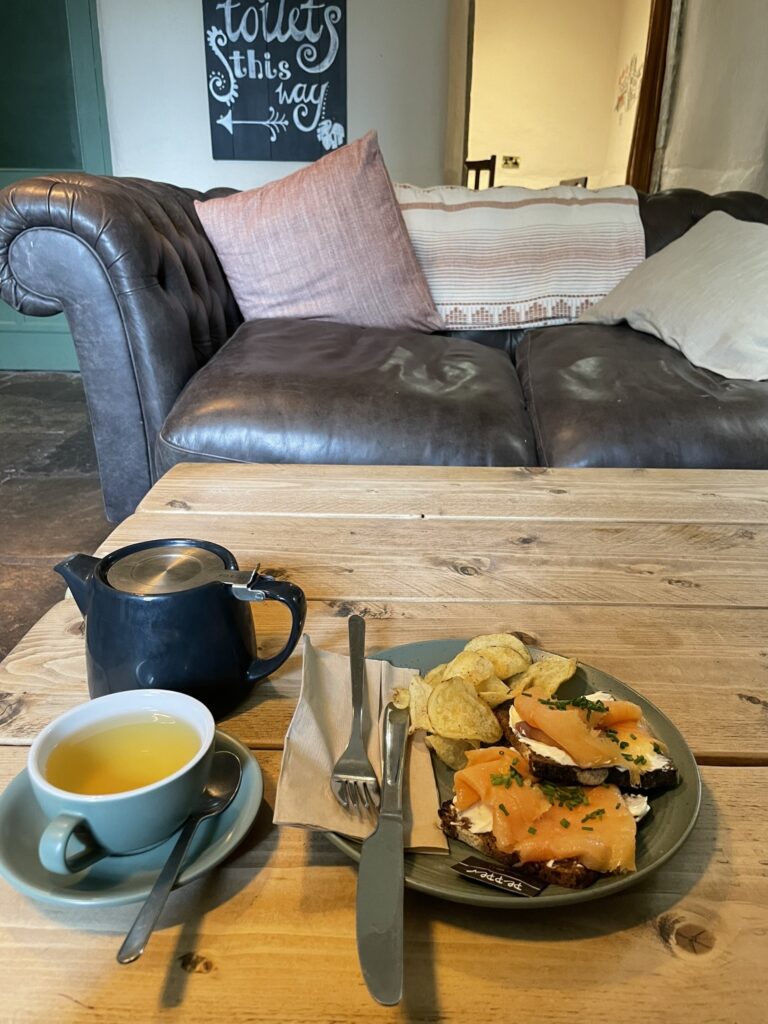 Lunches at Abbot House are simple, but the setting will make you want to stay longer with a book!
- Abbot House
Housed in the oldest house currently left standing in Dunfermline, this 16th-century former residence now houses a snug and mellow little café across the ground floor—after crossing the gift shop. Perhaps the most subdued and muted of choices in terms of ambience, you will definitely feel the presence of this historic treasure. Over the centuries following its completion, the building has undergone innumerable extensions and upgrades, leading to its current incarnation that you can now enter.
Seating is ample for its size, and there are additional tables outside should the weather permit it. Speaking of outside, the walled garden where the outdoor seating is was created by The Beechgrove Garden in 1995, recreating a formal 17th-century garden. This original plot is likely to have formed part of the graveyard that still exists on the opposite side of the wall, later followed by the erection of a boundary wall containing a very simple garden.
The food served is simple but hearty. With a range of sandwiches, toasties, soups, and cakes to pick from, this is the perfect lunch spot that should leave you feeling satisfied to continue with your adventure. Additionally, their coffee shop is independent, being operated by Derrick Thames from Prost Coffee.
 Maria's is every dessert lover's paradise
- Maria’s Baking Stories
Located right next door to Dhoom, this is Dunfermline City’s choice bakery for all things sweet and scrumptious. With its interior as sugary as the desserts served, this is not one for those who are particularly fond of lavish treats, but if you are an avowed sweet tooth, then this is definitely the place for you. The seating area is much smaller than other entries on this list, but thankfully, all menu items are available for takeout should you find that the store is busy upon entry.
What exactly is on offer varies day-by-day, though there is by no means a shortage of choice. You’ll find the likes of macarons, truffles, cakes, pastries, choux buns, baklava, and stuffed cookies. As a self-proclaimed pistachio lover, I went for their only pistachio-flavored choice that day: a pistachio-stuffed cookie. Like most offerings, this was a considerable portion size. So much so, in fact, that I needed help finishing it!
 Heritage lovers must not forget to explore Robert the Bruce's final resting place
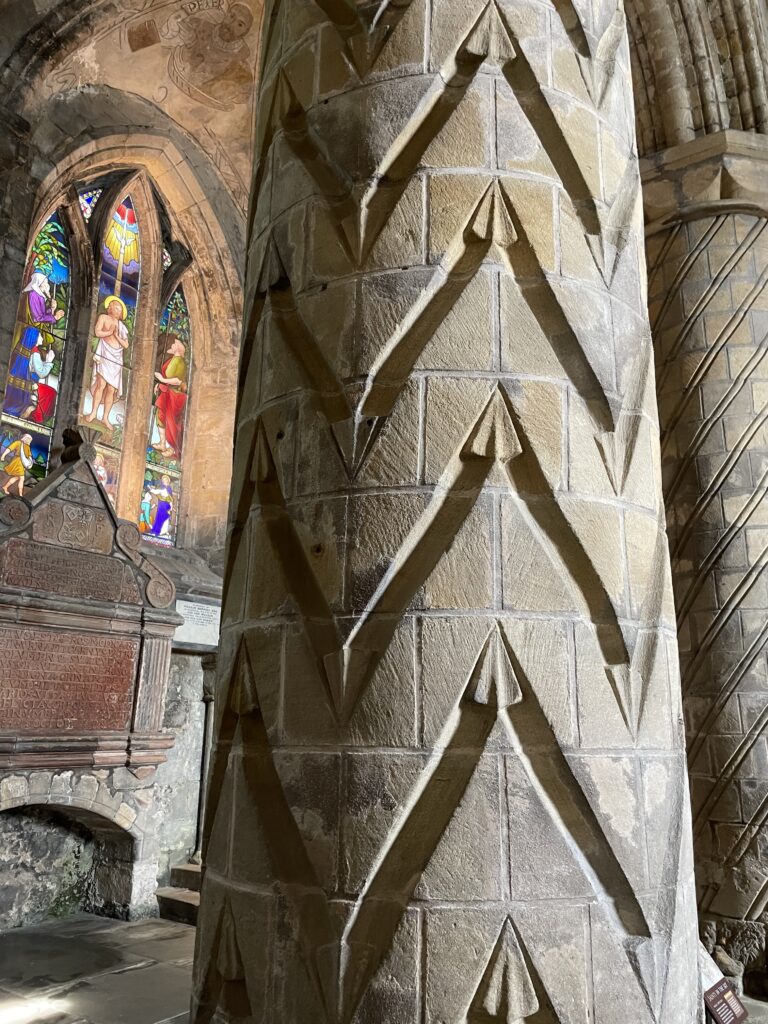 The abbey confers pilgrims with some of the most outstanding stonemasonry and stained-glass-glaziery in the land
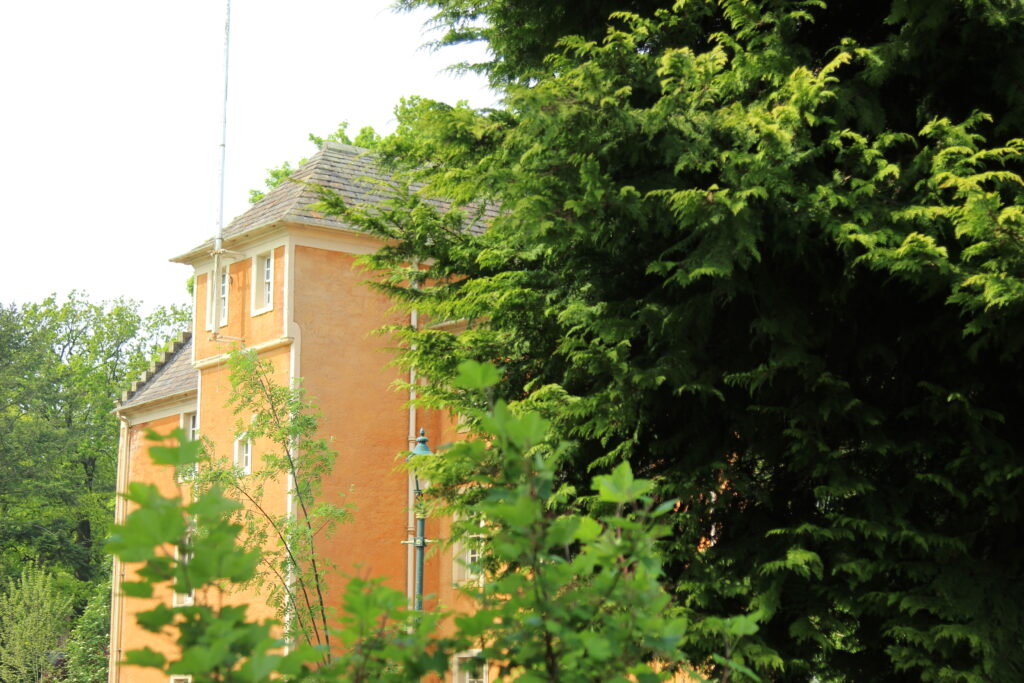 With an increase in funding, there is many more exciting things heading to Dunfermline soon!
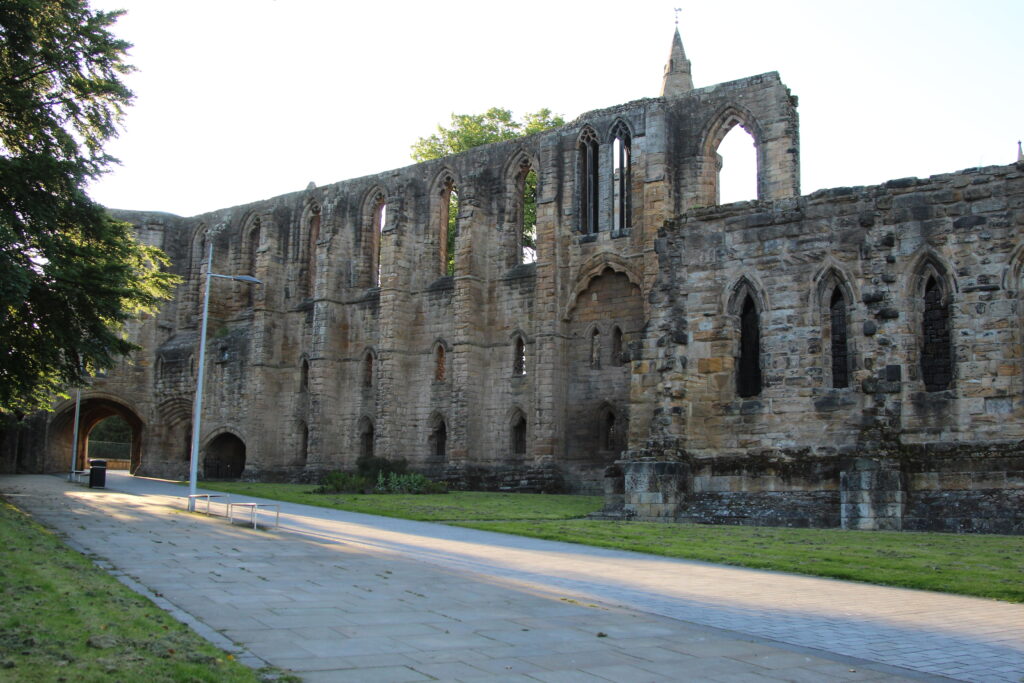 With some much to see and do, Dunfermline makes for the perfect day-trip from the likes of Edinburgh, Glasgow or St. Andrews
What Else to Keep in Mind
Like the rest of Scotland, the weather in Dunfermline is unpredictable and easily changeable. If you want to ensure better weather for your visit, then make sure to come during the summer months of June, July, and August. Though, be sure to pack accordingly for any sudden cold or rainy spells that you may happen across.
While none of the attractions or businesses covered in this post recognize the Sunflower Lanyard scheme officially, there are various businesses across the city which do. More information of which can be found here.
If you liked this article and would like to support my work, then please consider clicking on one of the buttons above to donate a little to either buy me a coffee or support my business initiative. Your generous support enables me to keep creating new and better content, as well as cover business development costs. Please only do this if you are financially able to do so, as these are challenging times for us all – Thank you!
Leave a Reply