
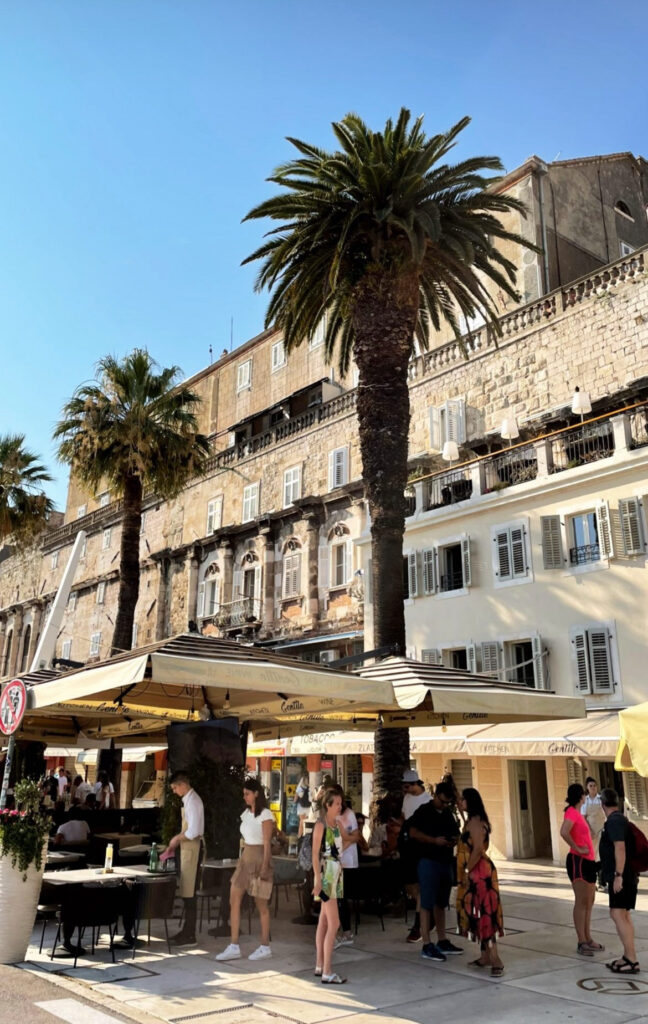
 The center of Split is a contrast of various architectural styles from various periods in its history
Split is no doubt a beautiful destination; it has a lot to offer tourists. It also has its own large port which acts as a gateway to the Croatian Islands. I would have ideally liked to have stayed longer here, but time and money were not on my side during my visit, so it was short and sweet. However, this gave me more reason to try and make the most of my time here. So, let me share with you my suggestions on how to best spend 24 hours in this Dalmatian haven.
Basics
Located on the Dalmatian coastline, Split is heavily influenced by the Venetians from their time ruling the area – and like almost all the rest of the Dalmation coast, still retains its historical buildings from this period. A quick walk around the old town will reveal a lot of Roman and Venetian structures that remain in excellent condition, many now acting as landmarks around the city.
Nowadays, Split is the second largest city (by population) in Croatia and acts as a major tourist hub and destination within the country. Since the turn of the century, many projects have taken place within the city, helping Split establish itself as a tourist stronghold.
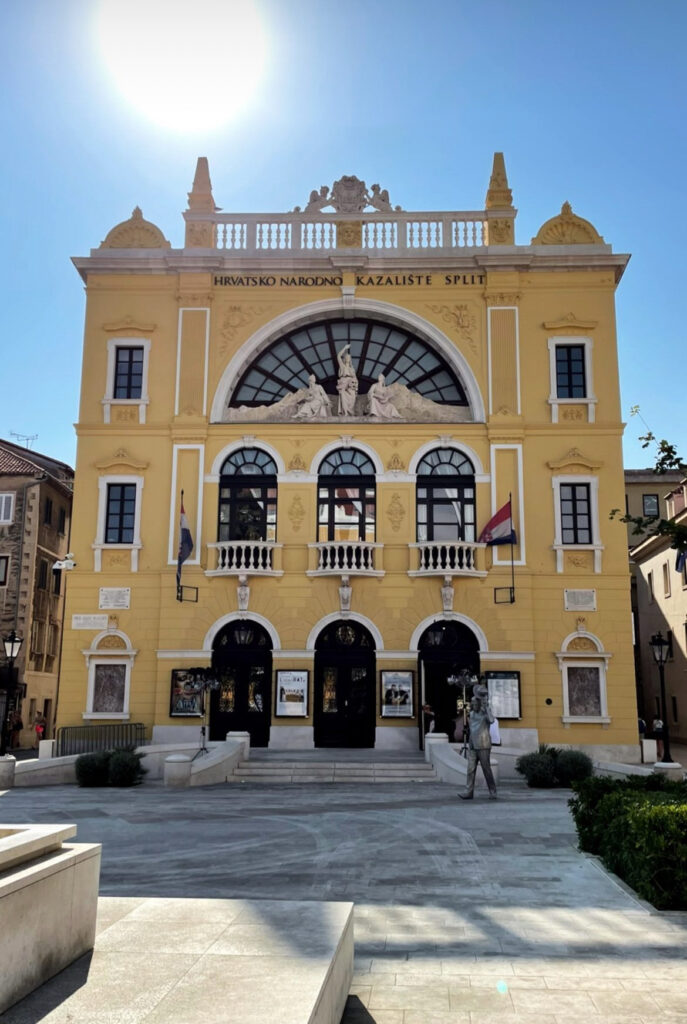 Split's concert hall - just one of many beautiful buildings located in the center
Facts & History
The city of Split was first founded as the Greek colony of Aspálathos around the 3rd century BCE. Following this, it was coemerged as part of the Roman Province of Dalmatia – replacing the nearby town of Salona as the province’s capital. It retained its power through the times of the Eastern Roman (Byzantine) Empire, eventually shifting into the sphere of influence towards the Republic of Venice and the Croatian Kingdom. As with other areas of Dalmatia, there were a lot of power struggles and territorial changes taking place here, although because of this it was able to govern itself autonomously as a free city for a large part of the Late Middle Ages. As with most of modern Croatia, it became part of Yugoslavia in the 20th century, eventually joining the Croatian Republic in 1991 following the breakup of Yugoslavia.
How to Get There
Split is served by its own airport (Split Airport), which is the second largest in the country in terms of passenger numbers. The airport is well connected with many other European countries, including a considerable number operated by budget airlines.
 The old town of Split is a mini labyrinth of backstreets and alleyways
If traveling by land, then numerous coach companies can be used to travel here from other places in Croatia and further afield for a reasonable cost. International coaches such as FlixBus operate routes here, as well as numerous Croatian companies. I recommend exploring several for both prices and reviews (some are better than others).
What to do
1) Explore Old Town
You will have guessed by now that I always suggest to others exploring a destination’s old town. It is guaranteed to be the most touristic place in town, and it often provides some of the best sites, attractions, and architecture (which is a special interest of mine). Split’s old town is no exception to this, with glorious old streets and winding alleyways which give visitors a firsthand look at its history through its well-preserved Roman and Venetian buildings and structures. Don’t forget to explore deep in the streets of this fortified haven to find any one of the old town’s wide-open squares. These plazas act as hubs within the fortifications, and People’s Square is the most popular of all.
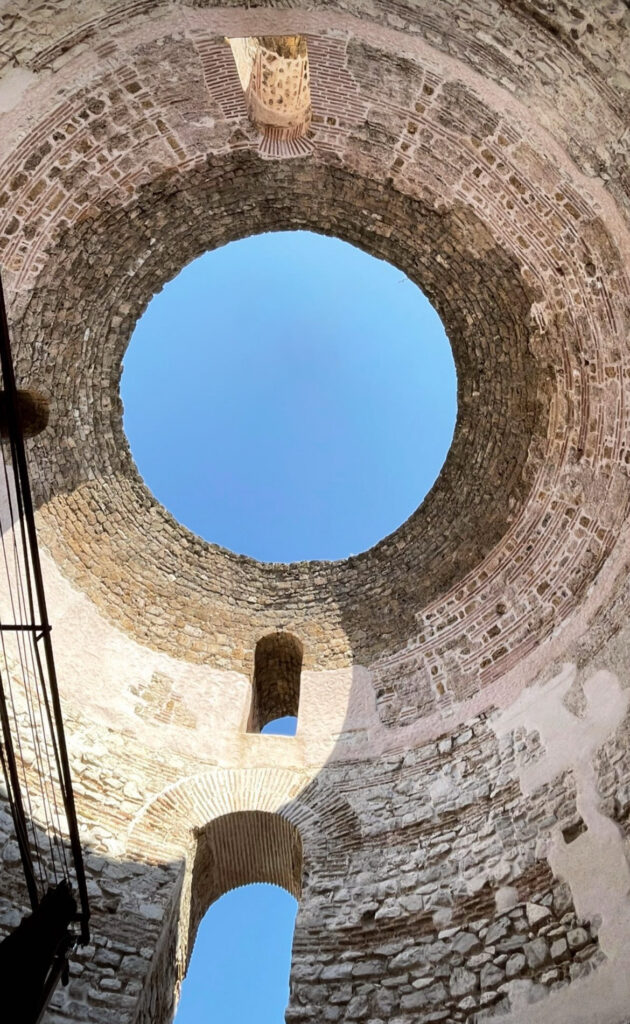 Interior dome of the Diocletian's Palace in the old town
2) Diocletian’s Palace
Diocletian’s Palace is a landmark in Split. A quick look at any promotional material online will likely include at least one picture of this place. The Palace dominates Split’s historic core – most people visiting the city are likely to make a stop here. The palace dates to the 4th century and is a wonderfully preserved complex that has proven to be one of the most important architectural treasures of the Roman Empire in Dalmatia. It has been designated by UNESCO as a WHS (World Heritage Site).
The then-Roman emperor Diocletian built this stately villa as a place where he would retire in peace, so it goes without saying that the palace had luxuries unknown to most today, while at the same time blending elements of a military camp, with its reinforcements in the form of huge gates and watchtowers to protect the retired emperor.
Central to the Palace is the peristyle; a type of open-air porch popular in ancient Greek and Roman construction, complete with surrounding columns and whose original purpose was for Emperor Diocletian to appear before his subjects and to be celebrated as the descendant of Jupiter.
As with large parts of Dubrovnik, Game of Thrones fans will recognize this as one of the filming locations for the series.
 Split has a lot of archaeological sites, making it a great choice for history buffs
3) Jupiter’s Temple
Split has its very own temple dedicated to the Roman god Jupiter (there are 2 more in the vicinity dedicated to Venus and Cybele). It can be found in the western section of Diocletian’s Palace near the Peristyle. It was built sometime between 295 and 305 CE, during the construction of the neighboring villa. It was said to have been converted into a Baptistery for St. John the Baptist in the 6th century. Leading up to the main entrance is one of the 12 sphinxes brought from Egypt by the emperor Diocletian.
4) Walk Along the Riva (Split’s Main Waterfront)
This place is also a hive of activity, which some might find overwhelming – thankfully, the pedestrianized boulevard can feel as wide as it is long (unless you find yourself there during summer). This is Split’s prime meeting spot for many and is lined with outdoor bars, restaurants, and cafés – all of which are overpriced and cater primarily to tourists.
 The Riva waterfront is a peaceful walk in daylight, but quickly fills up as night approaches
Regardless, it makes for a nice leisurely stroll across its span as you have the glorious Croatian water to one side of you, and the amazing Venetian and Roman substructures of the old town to the other.
5) Cathedral of Saint Domnius
This towering cathedral can be seen rising above the skyline from various points in the city. If you want a good command over Split and the nearby Mediterranean Sea from the center, then climbing the giant 17 meter (57 feet) high bell tower is necessary.
Locally referred to as Sveti Duje, the cathedral was designated at the turn of the 7th century CE. It is regarded by historians as the oldest Catholic cathedral on earth that remains in use while retaining its original structure. Although the huge bell tower was added much later in the 1100s. There are 4 ticket types available for purchase based on a color coded system. The lowest level (Blue) includes entrance to the cathedral, crypt, and baptistery for €7, while the highest level (Purple) includes entrance to all 5 sites in the complex (the 3 listed above plus the bell tower and treasury) for €11.
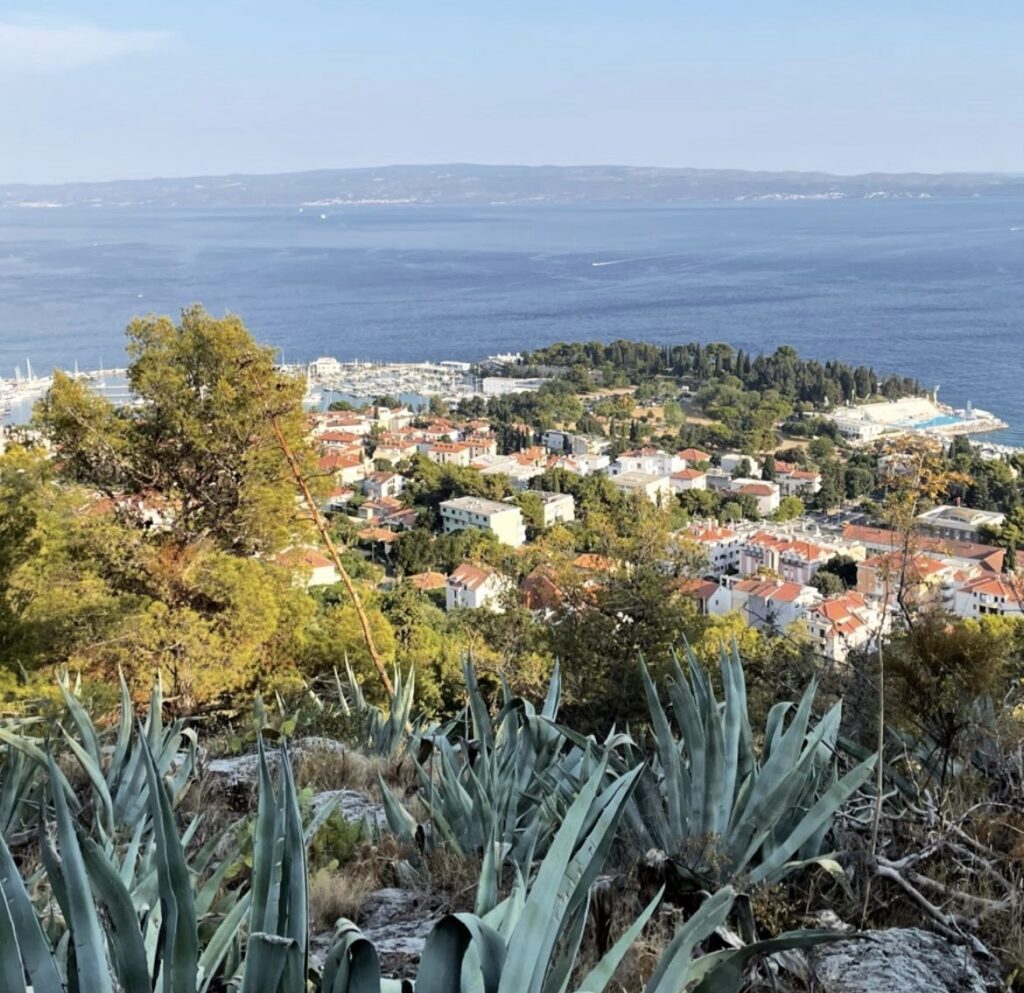
 One of the vistas you will be awarded with when climbing Marjan Hill
6) Climb Marjan Hill for the Best Panoramas
If you have some energy to spare, then this is one that requires a little extra exertion, but the rewards at the end make it all worth it. The walk to the base of the hill from the historic center should take no more than 15 minutes. From here you will have quite a climb to reach the top, but there is plenty to see along the way – so do not be afraid to explore. The entire hill acts as a kind of recreational area, so you can find parks, ancient churches, and plenty of viewing points. The observation deck at the top makes for the perfect lookout, especially during sunset. There is a huge cross here, so use that as a landmark.
7) See the Old City Gates
These gates are connected to the construction of Diocletian’s Palace and make for a nice attraction to visit in themselves. There are 4 in total; Bronze Gate, Golden Gate, Silver Gate, and Iron Gate. With all of them leading into the palace grounds, this speaks of the incredible size of this place. Every gate has a unique design, so it was nice to look around and compare each one.
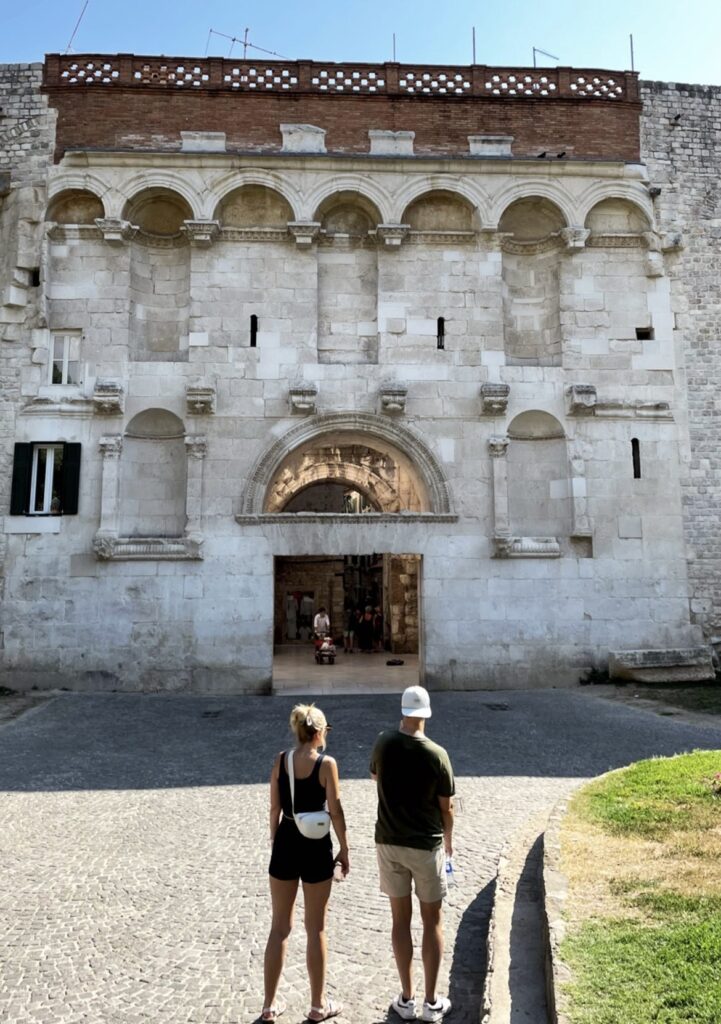 One of the grand old city gates that still connects old town with the rest of the city
I found that learning the locations of these gates helped me get a better orientation of the historic old town.
8) Wander around Republic Square
Republic Square is located just outside of the old town’s fortifications and is unmissable thanks to its beautifully colored red buildings that encircle the square, complete with huge porticos on either side. I initially came here as I was informed by a local that the food from the restaurants here was much better quality and price than anything I would be able to find in the old town. I took his advice and went to Restaurant Spalatin. It’s located towards the back of the square, and sure enough, the prices were very reasonable for being located so central in Split and, thankfully, the quality was not impacted by this.
9) Make it a Beach Day
Another thing I will always recommend to others visiting sunny stops such as Split is the beach! As it is on the Dalmatian Coast, you will find many beaches throughout the area. As is usually the case in Croatia, all the beaches I visited were stone/pebble, and not sand – so barefoot walks are not the most comfortable. Some popular beaches near the city center include Bacvice, Ježinac, and Kupalište Bene.
 Summer may be the busiest season, but the warm Mediterranean weather is unparalleled
Where to Stay
My stay was last minute, so I opted for the cheapest available option at the time. I stayed at Hostel Cicada. It was a nice set-up, had a super friendly owner who provided guests with free food and drinks, and as I said, it was cheap. My biggest gripe was that it was quite a walk outside of the old town – which meant it was a 30-minute walk to get to any of the attractions. Thankfully, I love walking, so it was not so much of an issue for me. But for anyone looking for somewhere closer to the center, my advice is to book earlier if in peak season, but also be prepared to pay a lot more.
Other Things to Keep in Mind
As with all other major tourist hubs along the Croatian coast, Split can become very overcrowded in peak seasons, so if you want to experience the city without the crowds (and the hiked-up prices that usually go with them), then consider going during off-peak for a more relaxed experience (but it won’t be as warm).
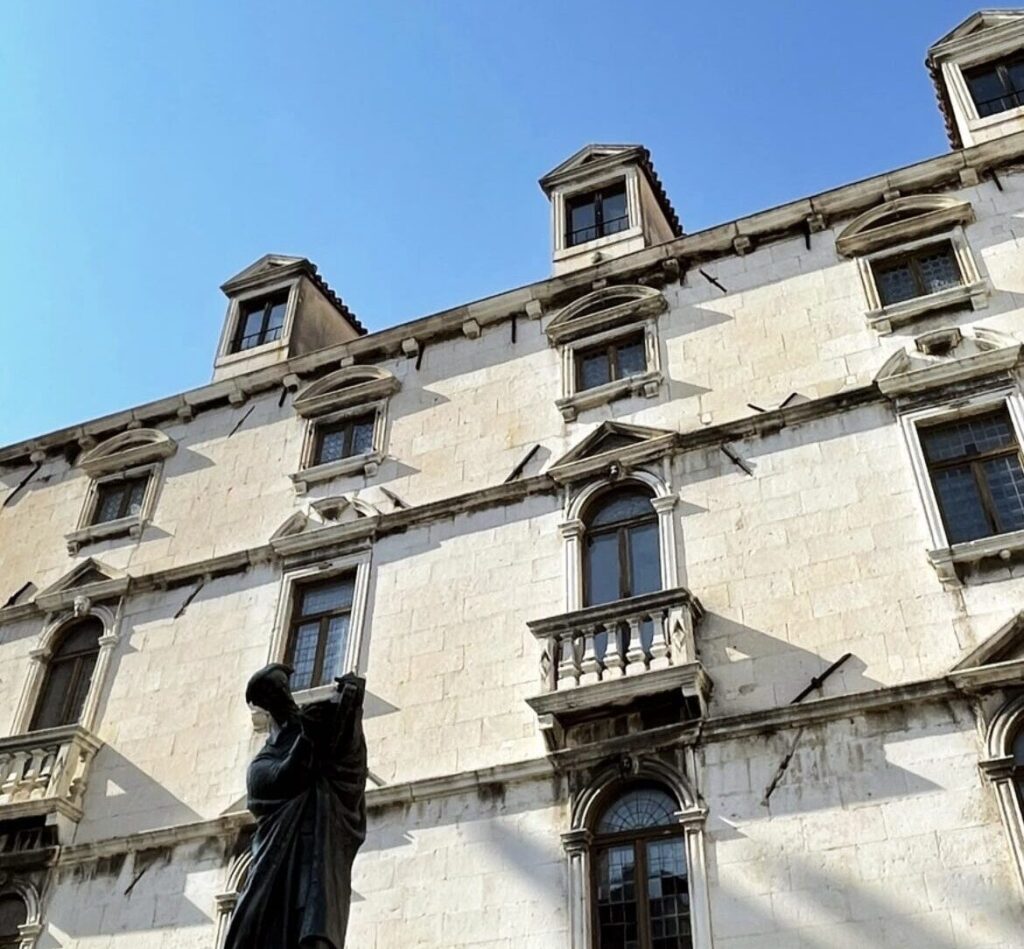 Split has a compact variety of architectural styles all located within the vicinity of old town
If traveling by coach, then it is important to know that most, if not all, coaches charge a small fee for handling stored baggage. In these instances, card will not be accepted, so carry cash with you to avoid any unpleasant situations.
On that note, I had an issue finding any free ATMs in Split. Even the banks I had been using elsewhere (including Dubrovnik) that had no fee elsewhere, charged here. I am unaware if this is related to it being a major tourist center, or if it was a summertime-exclusive thing that banks do. Either way, I would say to try and bring cash from elsewhere before arriving here.
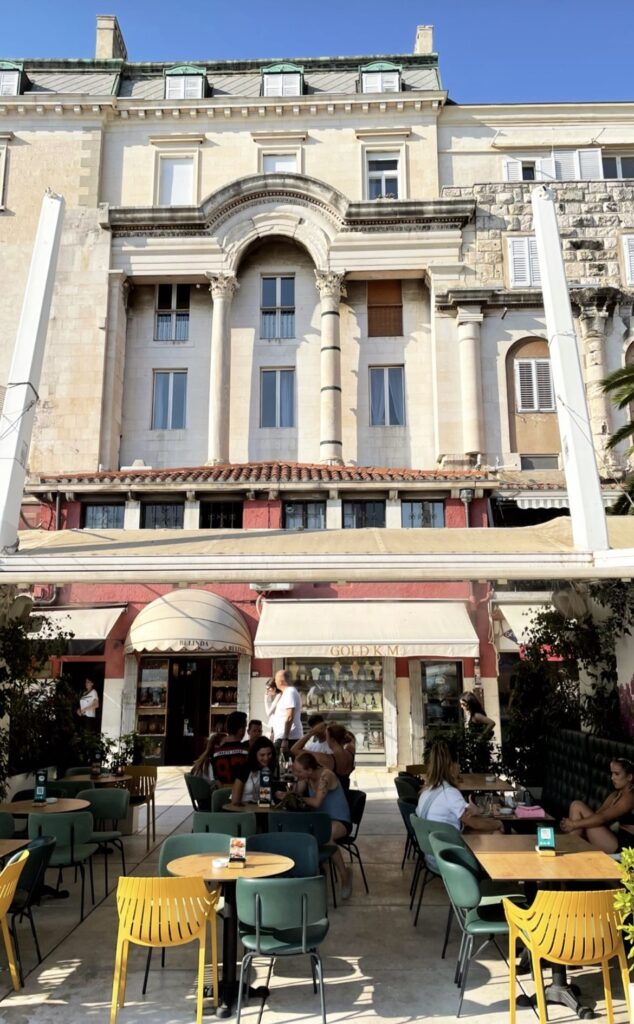 Various buildings from different eras built on top of one another on the waterfront
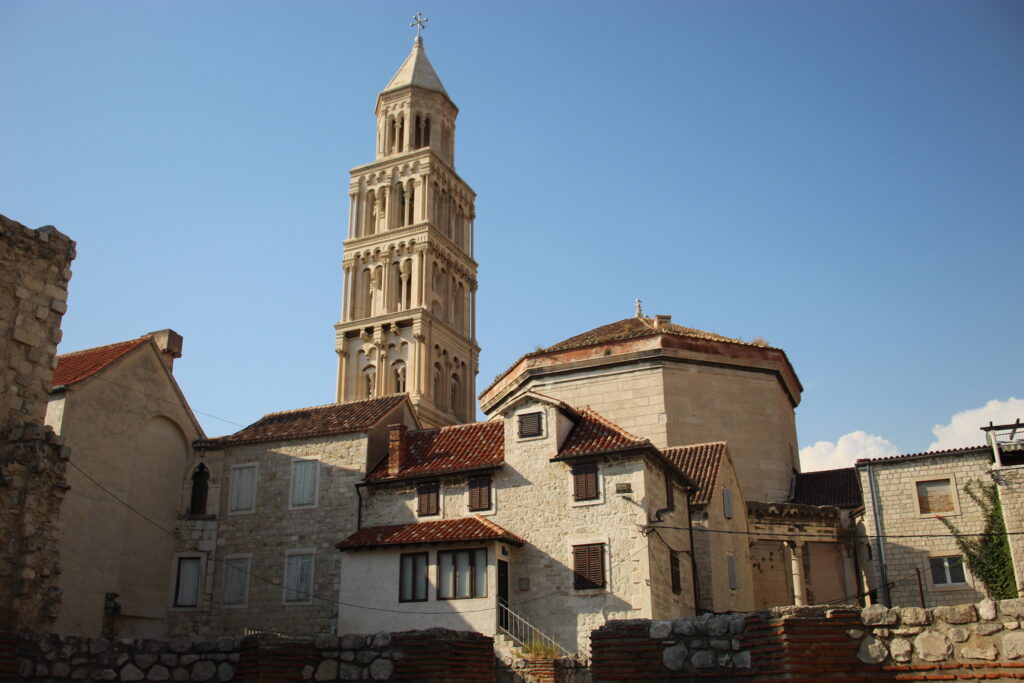 Looking out towards Cathedral of Saint Domnius
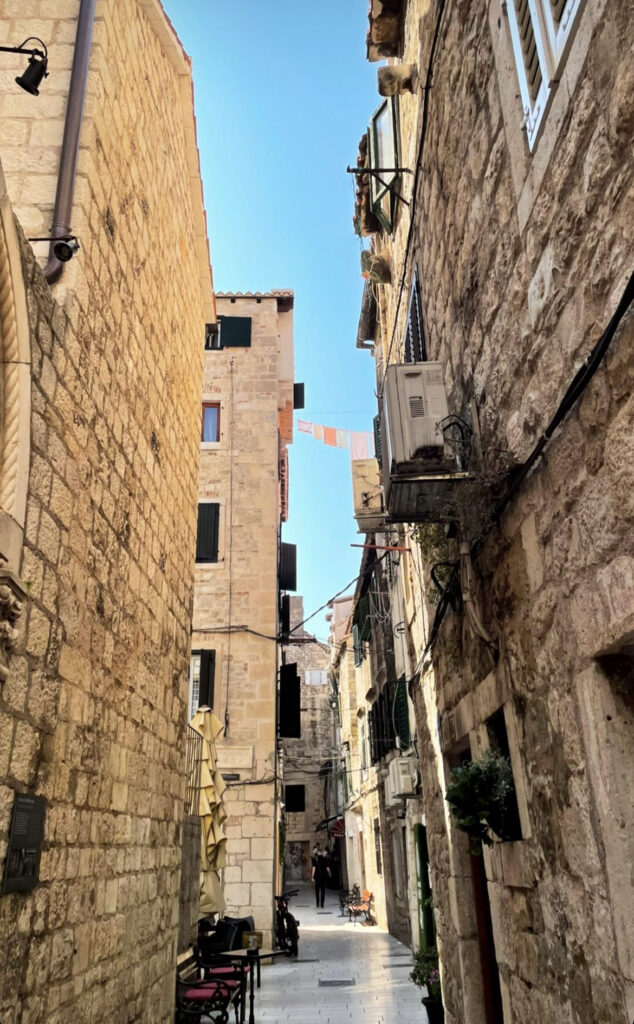 See what curiosities you can discover by exploring the many winding back streets
If you liked this article and would like to support my work, then please consider clicking on one of the buttons above to donate a little to either buy me a coffee or support my business initiative. Your generous support enables me to keep creating new and better content, as well as cover business development costs. Please only do this if you are financially able to do so, as these are challenging times for us all – Thank you!
Leave a Reply