
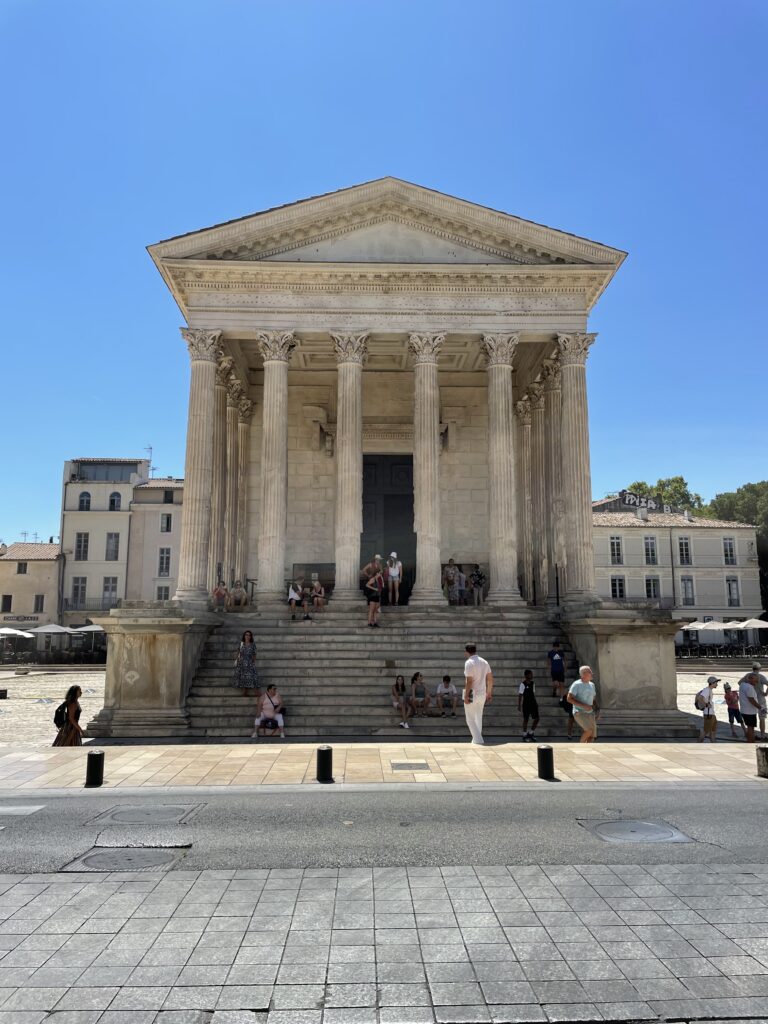
 La Maison Carrée - just one of many amazing Roman relics perfectly preserved
Nîmes is a small city located in the south of France, less than one hour’s drive from Montpellier. Despite its small size, it has a lot of amazing sights to behold – namely because of its incredibly well-preserved Roman architecture.
It’s easy to see why this place is also known as the most Roman city outside of Italy. There is an abundance of Roman vestiges to be found around the city center and beyond. Perhaps the most famous two being the Arena of Nîmes and the Maison Carrée – both of which are must visits if you plan a trip here.
Basics
Nîmes is a small prefecture, with a population of about 150,000. The climate is typical of other Mediterranean locations found in Europe. Rich in history dating all the way back to the Roman era when the city was listed as a regional capital within the empire.
History & Facts
The history of Nîmes extends way back to Neolithic times with several sites around the city area indicating semi-nomadic cultivators having inhabited the area at that time.
 For such a small city, I found there to be a fair share of architectural triumphs dotted around
The city continued to be inhabited by various local tribes right through to the period of Romanisation. This began properly in Nîmes in the 1st century BCE. The then-town became prescribed as a ‘colony under Latin law’ and countless monuments of sheer magnificence were built. The Emperor Augustus and his successors made it a town for the promotion of Romanity in Gaul. Nîmes gradually grew during this period, and its 4.3 miles/7 km of ramparts enclosed 220 hectares / 544 acres of land.
However, the Middle Ages saw somewhat of a backtrack for Nîmes, and the town gradually shrank. By the 8th century CE, it was a tenth of the size that it had been in Roman times. A large portion of the population took refuge in the amphitheatre during this time and made it a fortress due to increasing insecurity within the area. The Roman ramparts were used as a quarry where everyone helped himself to stone. Some districts, like that of La Fontaine, were abandoned.
It wasn’t until around 1000 CE onwards that Nîmes started to explore revitalization. New city walls were built, and trade started flowing through the area again, thanks to vineyards, olives and sheep farming.
Nowadays, the old districts are being renovated and the city is currently enlarging slowly towards the south. Architectural and town planning projects have been entrusted to the greatest international names. For example, the ‘AEF’ project (which was completed in 2013), designed by the architect and town planner Alain Marguerit, is aimed at enlarging the historic centre by creating a continuous 8 hectare/ 20 acre urban area covering the arena, Esplanade Charles de Gaulle and the railway station, making a 21st century forum.
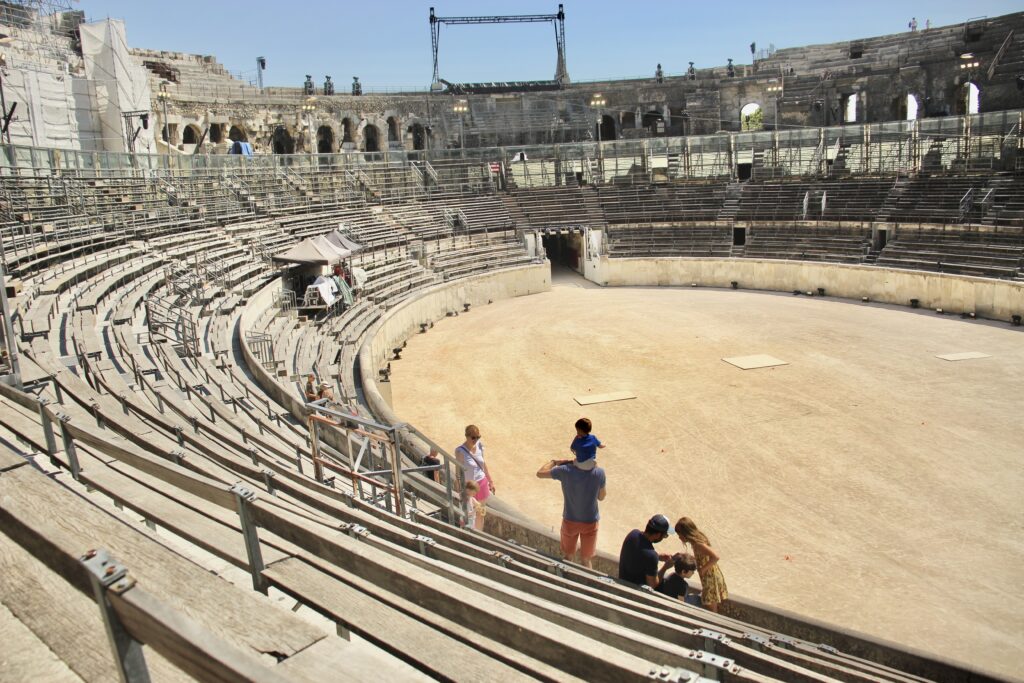 The Ancient Roman Amphitheater
Recommended Length of Stay
I stayed just one night in Nîmes, and personally found that this was more than enough time to see all the city’s main attractions. The city is very small, and thus extremely walkable.
How to Get There
Ryanair operates low-cost flights to Nîmes airport from several other European destinations, so this should be a good option for anybody looking to fly directly into the city itself.
Otherwise, look into trains or coaches (the latter being the cheaper option) from any other part of France or neighbouring countries – with very well-connected routes available.
BlaBlaCar is also extremely popular in France – a ridesharing app that allows users to carpool with strangers in exchange for cash. This is usually the cheapest option available for traveling within France.
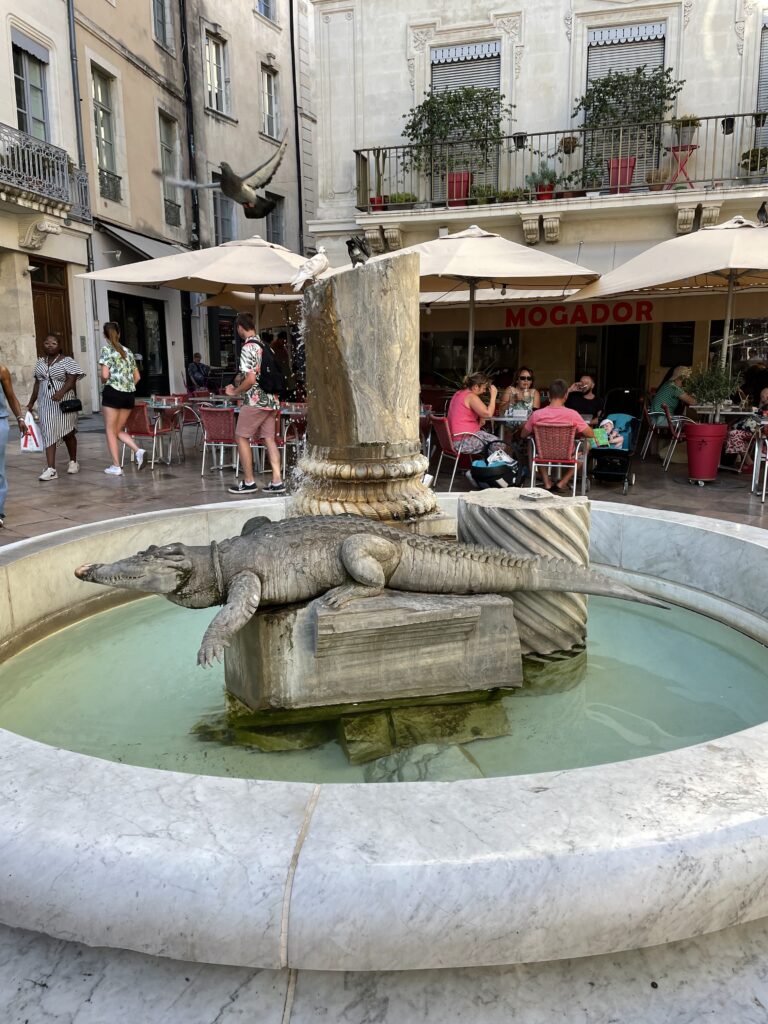 I found this realistic alligator statue while wandering the streets - I thought it was real from a distance!
Where to Stay
There are plenty of hotels available within the city, ranging from mid to high cost. Being on a tight budget, I opted to stay at the Vertigo Hostel. Conveniently located just across the street from the main train station, it was a prime choice. With a very modern design, with friendly staff, a cozy lounge and bar at the front entrance, and best of all, a small rooftop offering amazing views over the city – the perfect spot to take your lunch and just chill out.
Couchsurfing options are fairly limited here, and I couldn’t find a host before arriving.
Things to do
- The Roman Arena
Probably Nîmes’ most renowned site. The arena was built about 70CE, not long after the completion of the Colosseum of Rome. Nowadays, it remains one of the world’s best preserved Roman Ampithetres and is still used today to host several annual events.
 Tour Magne is not for the faint hearted or vertigo sufferers
- Maison Carrée
Nîmes’ second most visited attraction. The Maison Carrée is an amazing, well-preserved Roman Temple located in the heart of downtown Nîmes. Originally part of a much larger site, it is now the only structure that remains. There isn’t so much to see inside of the building itself, but there are detailed information plaques which vividly tell of the temple’s history from construction all the way to the present day.
- Tour Magne
A ruined Roman Tower located above the city’s public park. At the time of the Romans, around 80 towers stood in Nîmes. Today, the Tour Magne is all that remains.
Built on top of the foundations of an earlier Gallic tower, the Romans used this building as a watchtower over the city below.
Tourists can now enter the tower and climb the stairwell all the way to the highest point, which offers some breathtaking views over the city below. Definitely not recommended for any vertigo sufferers!
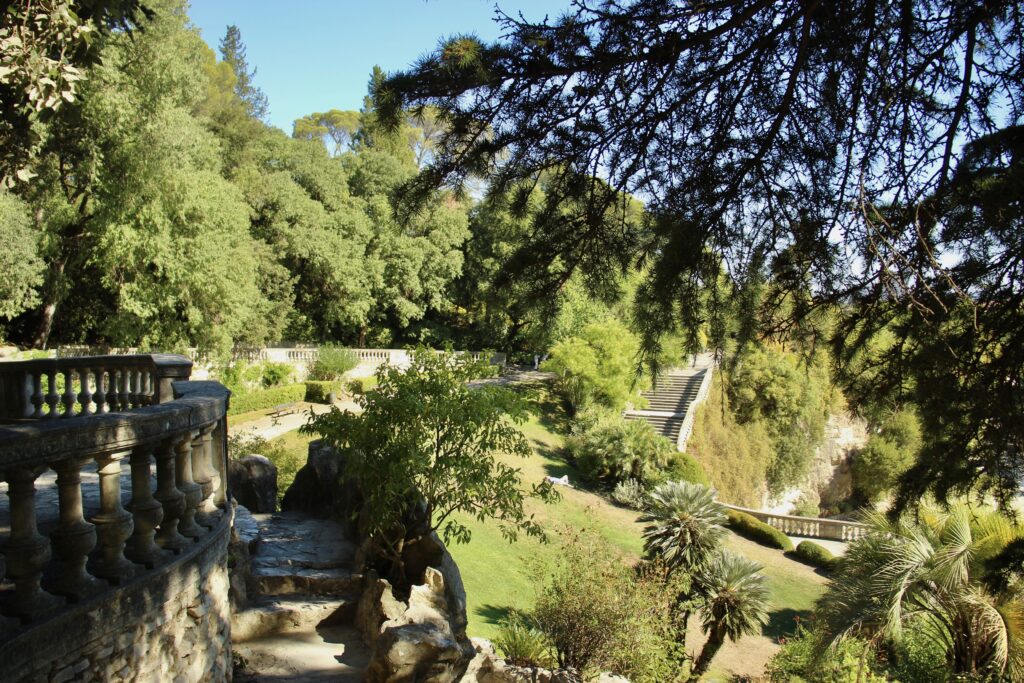 You can easily spend a full day in Jardins de la Fontaine alone
- Musée de la Romanité
The city’s archaeological museum is dedicated to Roman history and artifacts. A must for anyone who has a love of ancient history!
- Jardins de la Fontaine
The main public park, built on the site of Roman thermae ruins. If you’re looking for some downtime, then this is the place to go. The gardens offer some well-maintained landscaping, diverse plant life, and stunning architecture in the form of some exquisite nymphaeum statues.
Also located in the park is the ‘Temple of Diana’. Once part of a Roman Sanctuary that was built around the thermal springs, this structure is thought to have originally been used as a library. Now in ruins, it’s still an interesting place to explore during your visit to the gardens.
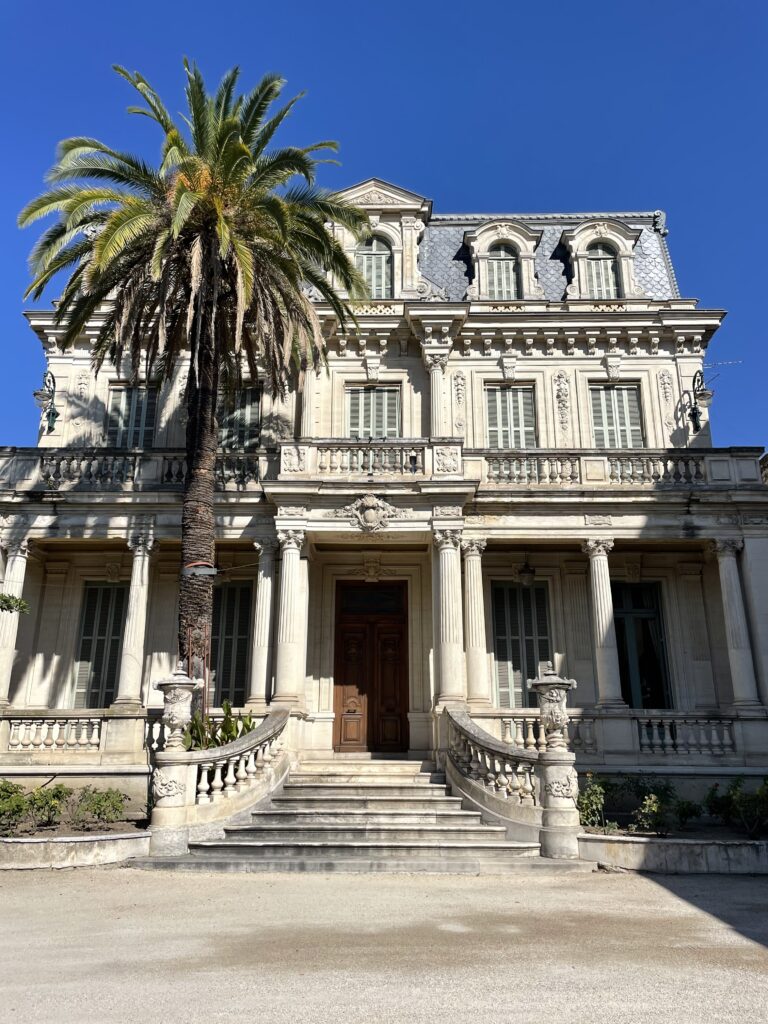 The architecture here didn't disappoint either!
- Downtown
The city center is itself a wonderful place to take a leisurely stroll around. Get lost in the fabulous backstreets to find an abundance of French cuisine and traditional architecture. There are also several churches, chapels and cathedrals worth stopping by to gaze at their splendour, as well as several lesser-known Roman ruins – such as the former city gates of Porte d’Auguste & Porte de France and the Castellum Aquae.
Other Things to Keep in Mind
I recommend heading straight to the tourist information center upon arrival. Found just opposite the Arena, towards the city center, you can purchase a ‘City Pass’ here for just €13. For this you gain access to the Arena, the Maison Carrée, and the Tour Magne. Alternatively, you can opt for the slightly more expensive ‘Discovery Pass’ option for €17, which, in addition to the previously mentioned attractions, also includes entry into the city’s archaeological museum (Musée de la Romanité).
Not only is this pass a great idea as it saves you spending more on the individual attractions, but it has the added benefit of allowing you to skip all queues! Which, believe me, is well worth it, as the ticket queues for the Arena alone were insane.
 Temple of Diana - an old Roman sanctuary
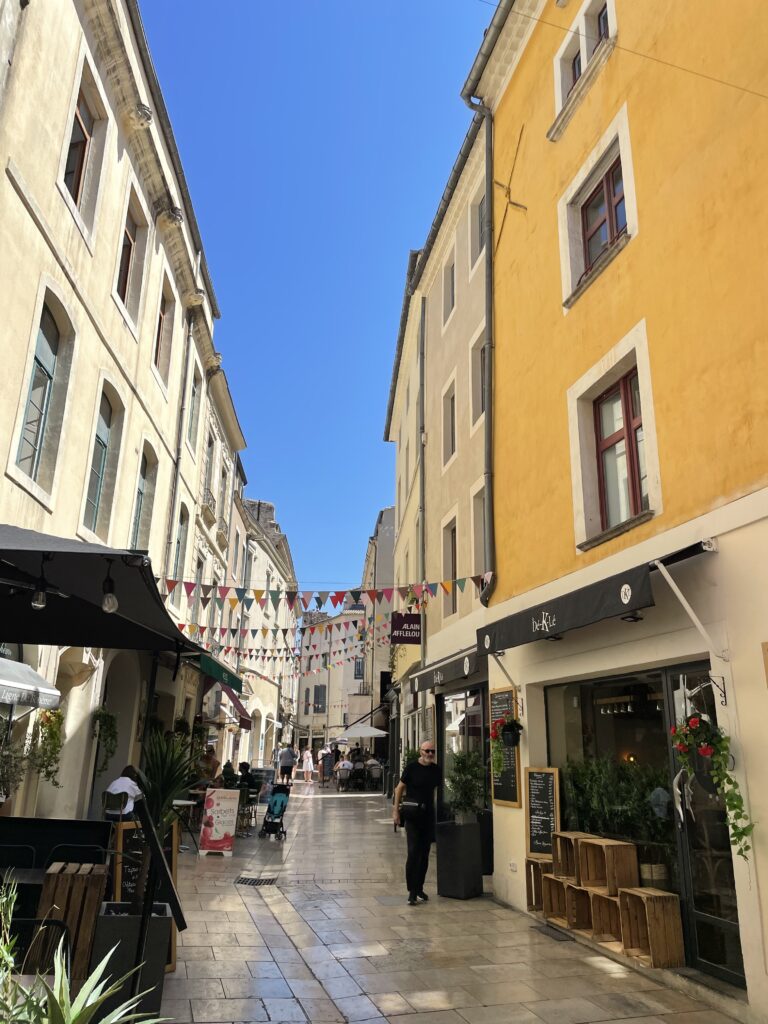 The colorful streets are filled with delicious eateries
 The outstanding marble statues found in Jardins de la Fontaine
If you liked this article and would like to support my work, then please consider clicking on one of the buttons above to donate a little to either buy me a coffee or support my business initiative. Your generous support enables me to keep creating new and better content, as well as cover business development costs. Please only do this if you are financially able to do so, as these are challenging times for us all – Thank you!
Leave a Reply