
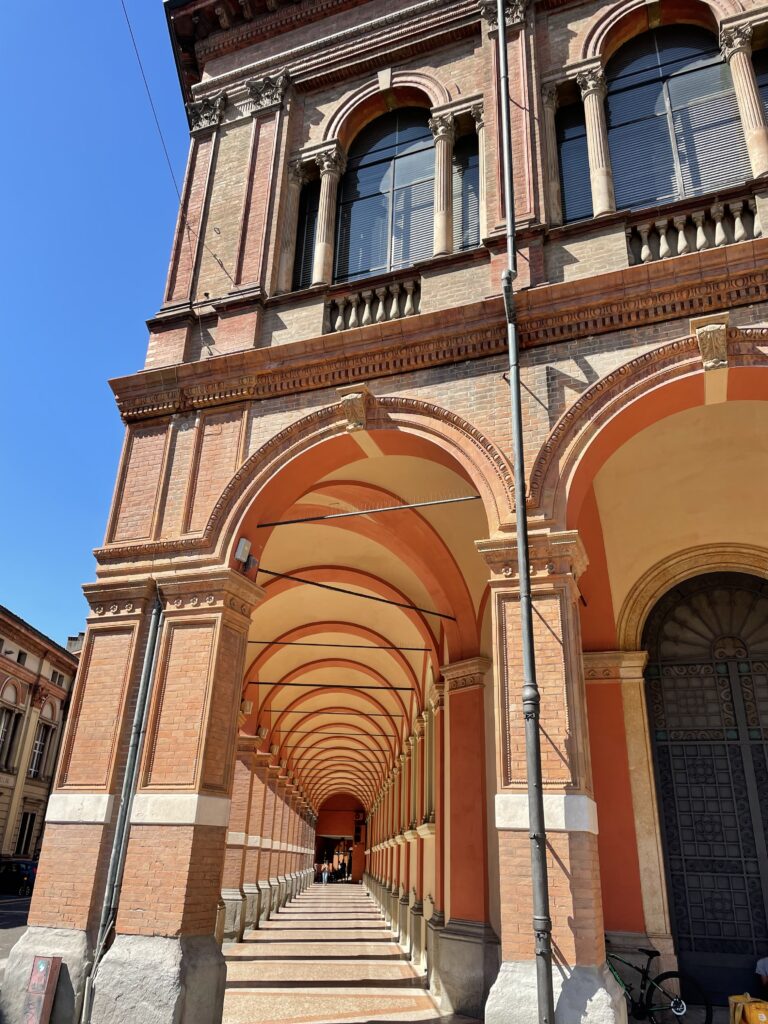
 The Porticoes of Bologna are an important cultural and architectural heritage of Bologna
Bologna, the home of Bolognese sauce – one of the many gifts Italian cuisine has bestowed on the world. This city is surprisingly a lot bigger than I expected, so if you can, try and spend 2/3 days here if possible. But, if you’re strapped for time like I was, and can only spend one day/night here, then this is the guide for you!
Basics
Bologna is the capital of the Emilia-Romagna region, in northern Italy, just about 1 hour north of Florence, situated between the Reno and Savena rivers. No different from other major Italian cities, this place is steeped in history and culture that it is readily available to be immersed in as a tourist. Home to the oldest university in Europe (and one of the oldest in the entire world), Bologna is a place to excite all five senses.
How to Get There
Italy has a very well-connected transportation network. Being a major city within the country means that you will be able to get here with relative ease from mainland Italy and surrounding European countries by either bus or train.
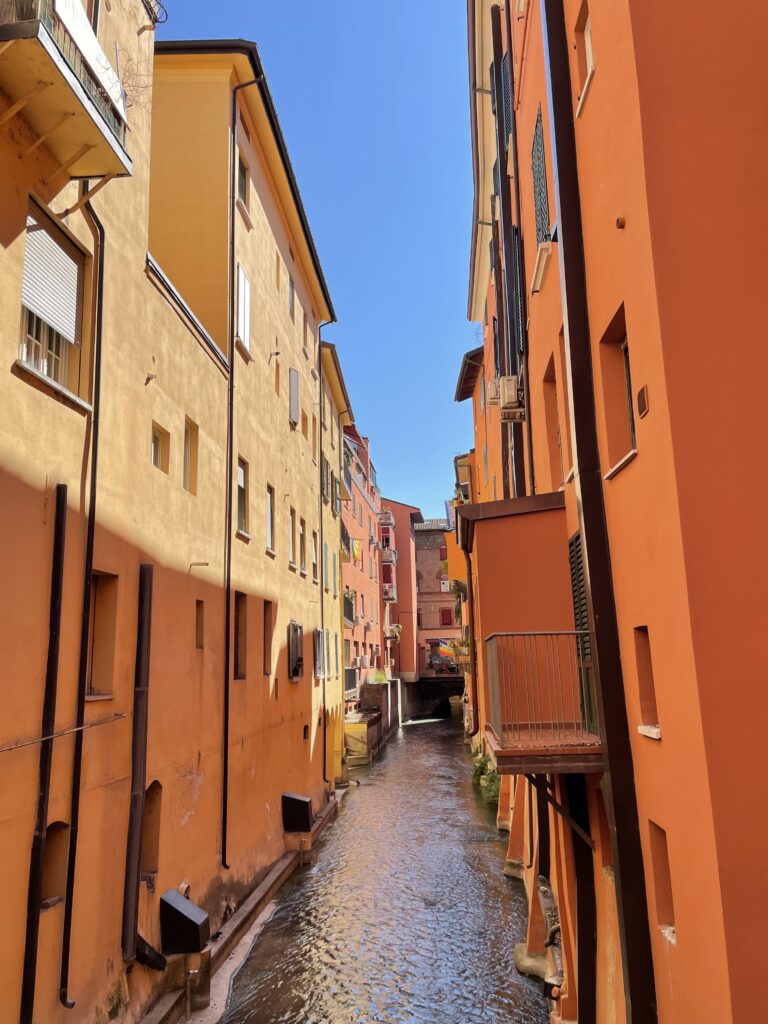 Finestrella is one of the most picturesque spots you will find in the city
If coming by plane, then check for budget airline flights that operate from Bologna airport. Ryanair, Wizz Air, and EasyJet all operate direct flights from around Europe (as well as a little further afield; Morocco and Israel, namely). There is a direct shuttle train going into the center that operates from 5.40am until midnight – which should cover all of the airport’s incoming flights. This journey costs €9.20 for a single journey.
Where to Stay
I have always found accommodation in Italy to be a little more expensive than most of what Europe has to offer. I think demand is a big part of this, and places do fill up rapidly – especially in the peak seasons/summer months – so be sure to plan ahead of time to ensure you can find suitable accommodation.
I ended up staying at ‘Combo Bologna’. This was the only hostel available at the time I booked, but it ended up being the perfect choice. Location-wise, it’s a mere 10-15 minutes’ walk from the train station (and about 20 minutes from the bus station), the building feels very new, fresh and inviting – with a large open outdoor space with seating to relax. The staff I interacted with were all super friendly, and breakfast was included in my booking. The room itself was ideal; plenty of space with a desk, kitchen facilities, and best of all, a comfortable bed! It really had everything I was looking for during my one-night stay!
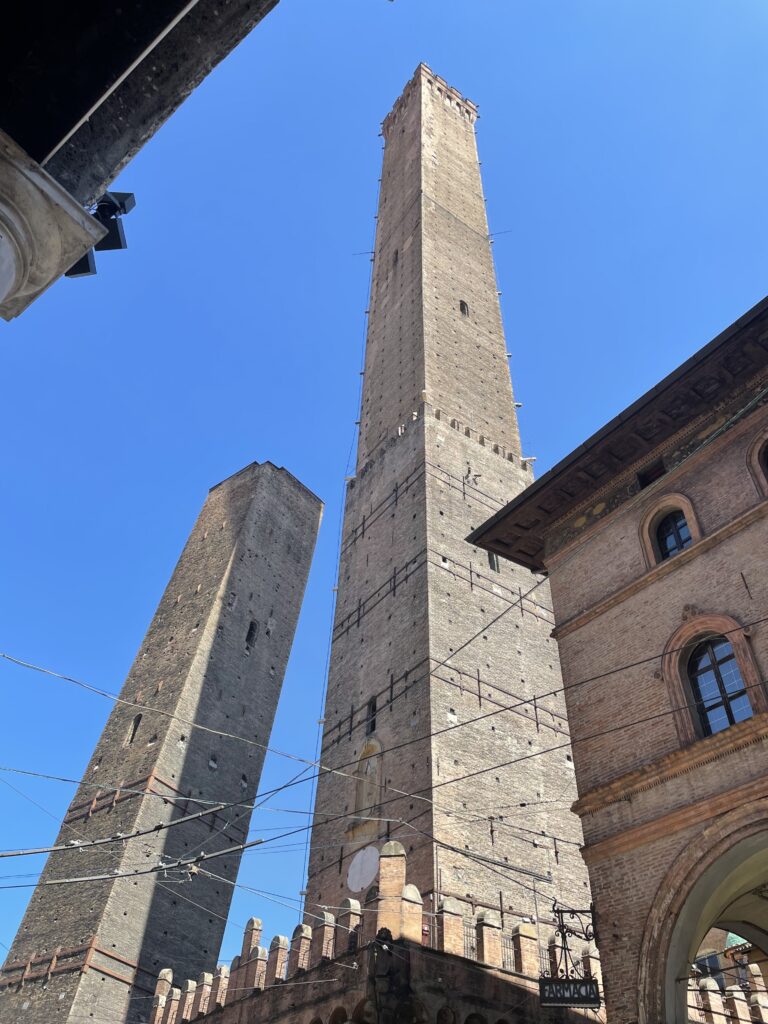 The Two Towers are the longstanding symbol's of Bologna
Things to do
Like most Italian cities, Bologna is packed with tourist-friendly sites and activities, so you will be unlikely to see/do everything within a 24-hour window – pick wisely! Below are the things I was able to do and personally recommend to visitors!
- Two Towers (Due Torri) / Piazza di Porta Ravegnana
Let’s get the city’s biggest attraction out of the way first. The Two Towers are two medieval towers standing side-by-side – towering over all other structures in the city. Now seen as symbols of the city – Torre degli Asinelli and Torre Garisenda – only the former is open to the public. The latter is significantly smaller and has a noticeable incline – similar to the Leaning Tower of Pisa.
Tickets to climb Torre degli Asinelli cost €5 per person and must be purchased online beforehand, whereupon you pick a specific time slot. I went during peak season, and there were still plenty of spots throughout the day, so I wouldn’t worry too much about leaving it until the last minute.
 The city is full of interesting architectural curiosities hidden throughout the map, many of which I found to be relatively quiet/empty
The climb to the top of the tower is tough and not suitable for severe vertigo sufferers. There are a total of 498 steps inside, separated at intervals by several internal platforms inside, which lead you to the viewing platform at the top. The views here are unparalleled and give you a perspective of the city that will go unnoticed from the streets below.
As a quick note, city squares are called piazzas in Italian – and every city has its fair share of them. They are a hub of activity, and Piazza di Porta Ravegnana is no different.
- Piazza Maggiore
Another piazza brimming with activity. This one is probably the busiest you will find in Bologna, as there are a lot of the city’s most notable attractions located here.
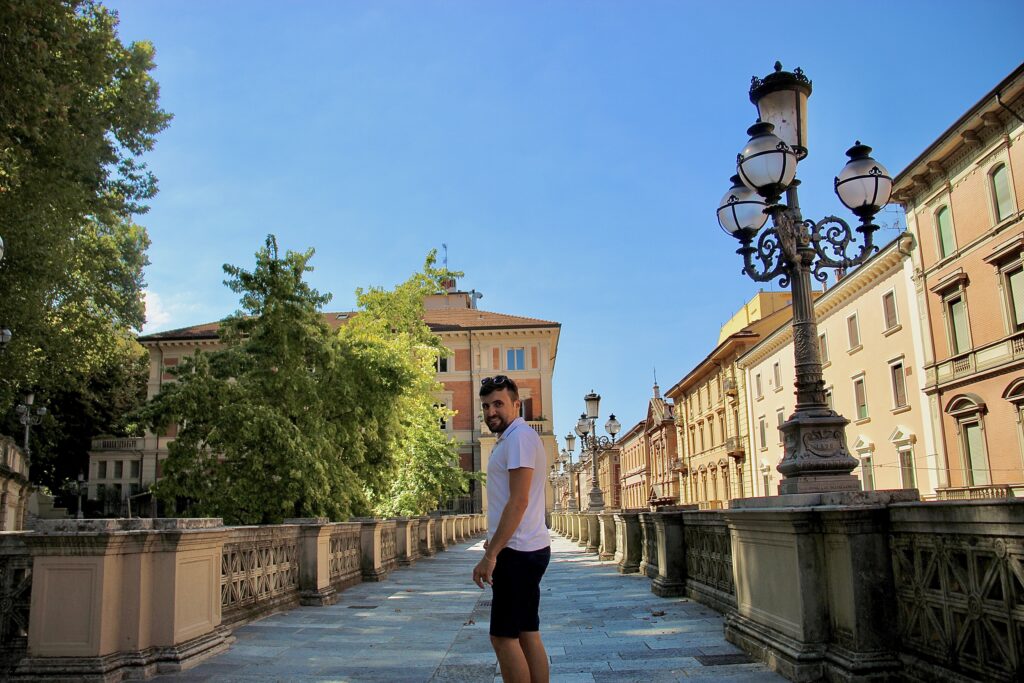
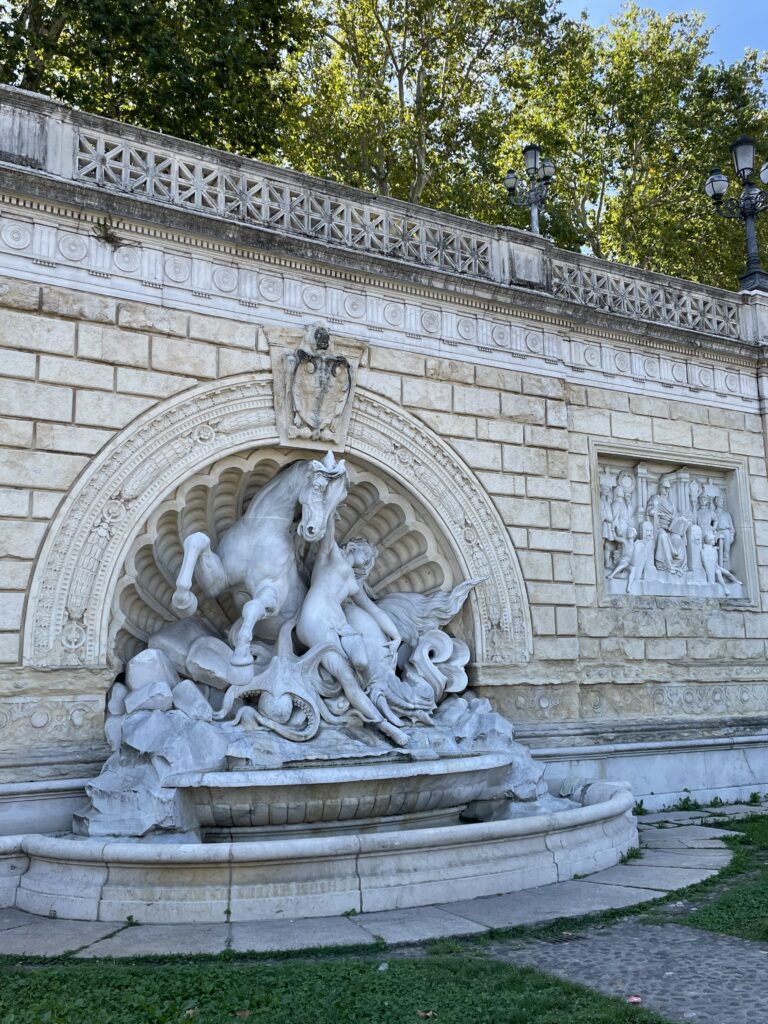 Fountain at the Pincio Staircase leading to The Park of Montagnola. It depicts a nymph being attacked by an octopus
First off, is the Basilica di San Petronio – arguably Bologna’s most notable basilica. Unlike many basilicas as grand as this, entry is free! However, there is a viewing terrace where you can pay €5 to get some grand views from above. This was unfortunately closed for whatever reason during my visit.
Next is the Fountain of Neptune. Not much to see here apart from the fountain itself, but it is considered a local landmark – dating all the way back to the 16th century, and an artwork worth a quick marvel at (it will not take you long to notice where some of the water is spouting out of).
Close by is Palazzo del Podestà. This, again, is more of a landmark but features a moody little arcade inside where you can do some gift shopping. The interior also offers different perspectives of the square from its various exits – perfect for some snaps.
Finally, Palazzo d’Accursio. Bologna’s very own town hall – a huge complex dating back to the 14th century. There is a lot to explore here, with a surprising amount of the interior open to the public. Entry into the building is entirely free, only the fine art museum and clock tower have a visitor fee (both are located on the top floor of the building). It is worth noting that the clock tower in particular offers free visits to disabled guests (with proof/evidence of disability), so all autistic (and any other disabled) visitors should make full use of this if you stop by! Regardless, there is a lot to see here – as with most important buildings in Italy, the architects, sculpters and artists went full out here.
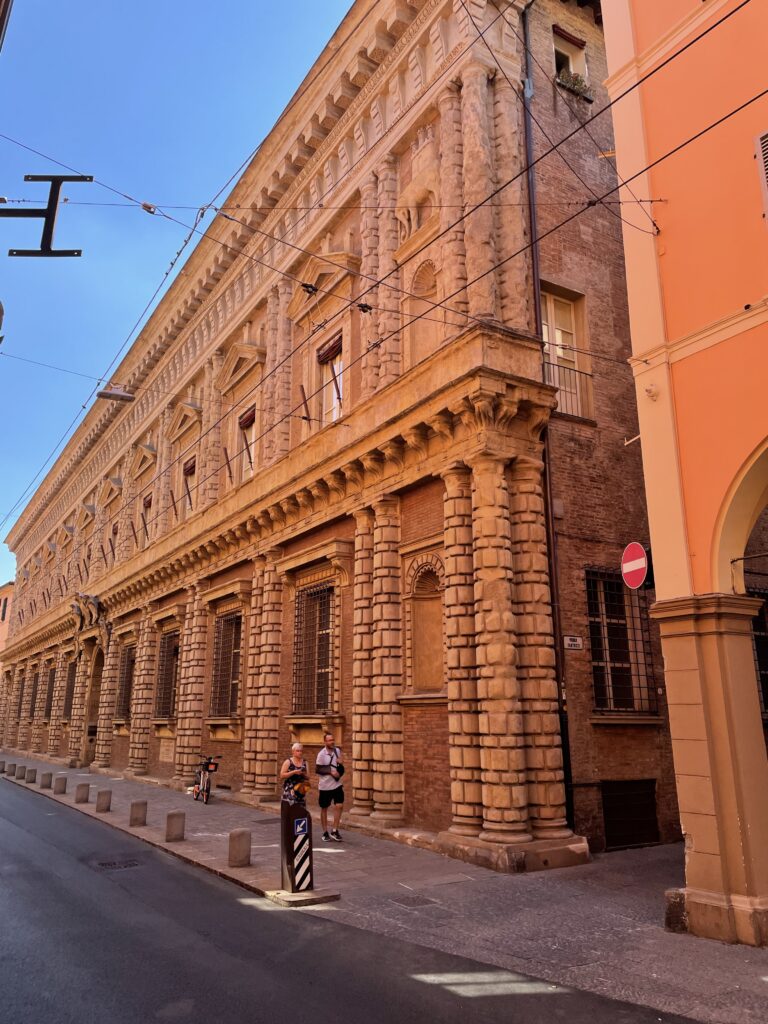 Bologna is full of outstanding buildings, usually complete with vidid coloring
- Basilica di Santo Stefano
Located on Piazza Santo Stefano, the basilica comprises a huge complex of religious edifices that have been opened to the public. Give yourself at least an hour to explore this place, as there are numerous buildings, rooms, and courtyards to explore – and even a small museum boasting the most beautiful religious artifacts.
- Palazzo Hercolani
This one is a bit of a ‘hidden gem’ within the city. Once part of a larger Neoclassic structure, it now serves as the offices for the Political Science Department of the University of Bologna. Nevertheless, entrance to this grand hall is not restricted to the public, and you can walk in without encountering any problems. The hall itself isn’t so big, and should not take long to explore, but it was one of my favorite photo spots within Bologna, so I will naturally recommend it to visitors.
- Finestrella
Alternatively known locally as ‘little Venice’, this is another spot worth a quick stopover during your visit. Put simply, this is a tapered street lined with several osterias which overlook a short canal whose construction can be traced to the Middle Ages. This should be on your Bologna itinerary if you are looking for a picturesque spot a little outside of the box from the rest of the city.
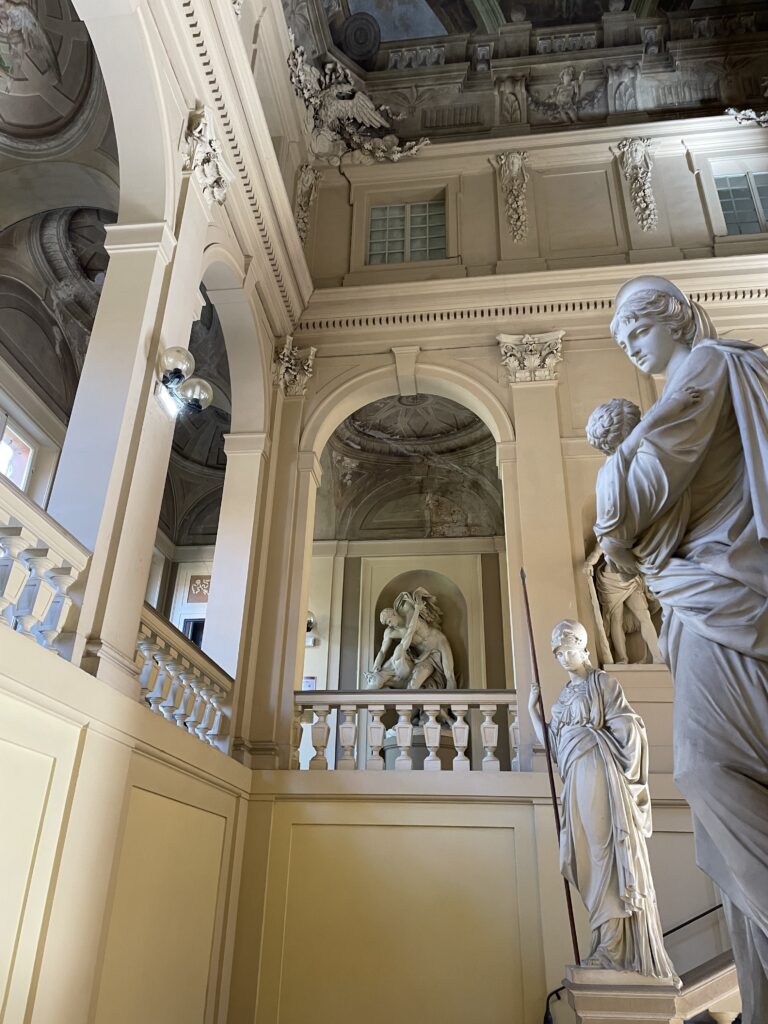 Once part of a palace, Palazzo Hercolani now acts as part of the University of Bologna
Other Places Worth Exploring
These are just some of the main attractions that I was lucky enough to visit during my regrettably short stay in this wonderful city. Without a doubt, any visitors will be sure to come across the passel of porticoes (which are architectural masterpieces in their own right and offer fantastic photo-ops), countless churches (offering a lot of local history, artist’s endeavours and spots for quiet reflection should you need that) and innumerable osterias dishing up local delicacies (tortellini is a must here).
If you have some time to spare, then why not try going a bit further out of the center? Bologna has some stunning sites located outside the main tourist zone that I unfortunately didn’t have time to visit – but I could at least see almost all of them from the top of Torre degli Asinelli as a small consolation for my tight schedule.
South of the main city ring there are several sites of interest that visitors should seek to examine. I didn’t have time to really do much scouting outside of the center, so think of the following also as a reminder of what I personally need to return to do next time.
Giardini Margherita is undoubtedly Bologna’s largest public park. Offering hectares of green energy to zone out in amongst its many trees and flora. The park sports many sections and boasts a handful of fountains, children’s playgrounds and cafes throughout. A local market is held here every Saturday, so be sure to check it out if you are looking for Tuscan souvenirs.
A little west of this is Bagni di Mario/Cisterna di Valverde (known by both names). This Renaissance-era cistern is dated to 1564 – originally constructed by the Palerritan architect, Tommaso Laureti, and designed as a water supply for the Fountain of Neptune.
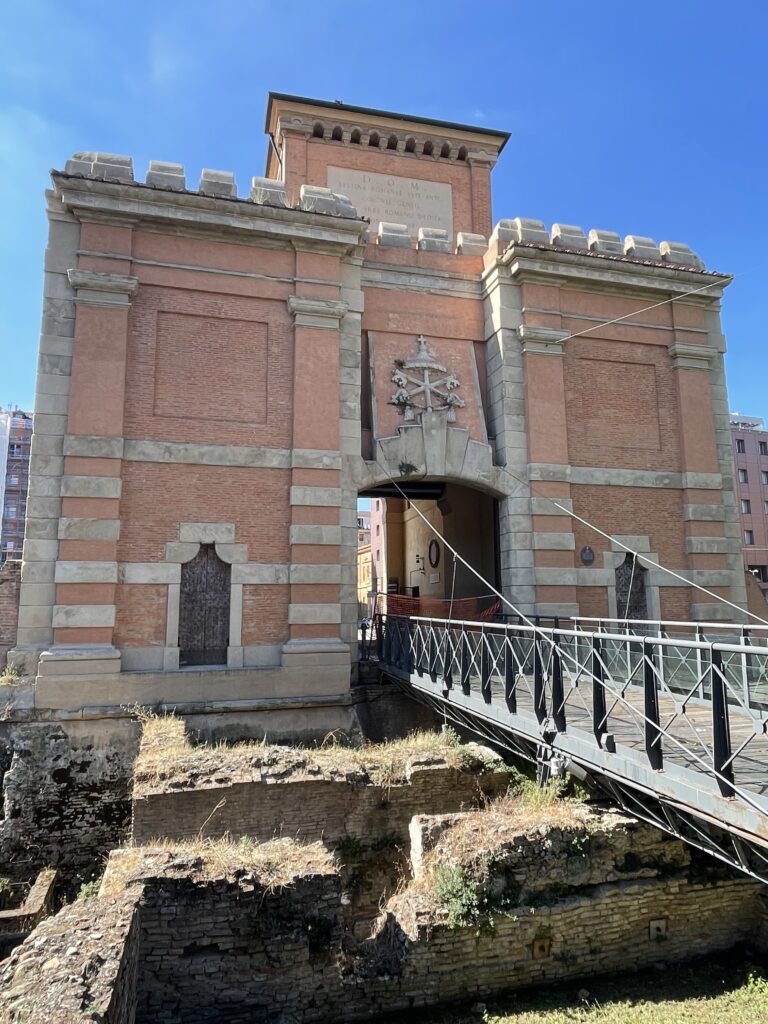 An old 'porto' - one of the gates from the former outer medieval walls of the city of Bologna
Bagni di Mario was the name mistakenly given to the Valverde Cistern which, when discovered in the 20th century, was theorized to be a spot made specifically for thermal use. The main cistern is octagonal in shape, with a total of 4 blind tunnels that go into the neighboring hill as well as 3 connected cisterns. Tours must be booked in advance via the website.
Heading west again reveals even more gems. Villa Spada, Arco del Meloncello and Ai 300 Scalini are all within the same vicinity and can be combined into one visit. Villa Spada is a luxurious communal garden that sits behind the neoclassical villa it once belonged to (this now houses a textile museum). Dating back to the 1700s, the estate is now in the hands of the state, which translates to it being open for public enjoyment. The views of the old city from here are meant to be sublime!
Arco del Meloncello is an 18th century Rococo structure containing the longest portico in the world – at around 2.5km long. Erected in 1732 by Carlo Francesco Dotti, the project was to allow pilgrims a direct path to the Sanctuary of San Luca, with the main structure representing the beginning of the portico leading up to the Sanctuary.
Ai 300 Scalini is Bologna’s unparalleled panorama spot. It is uphill from the previous two entries, so some footwork is necessary to reach the vista. As with most bird’s-eye-views, I was recommended to come here for sunset to see the evening glow strike the city below with all its might.
If you liked this article and would like to support my work, then please consider clicking on one of the buttons above to donate a little to either buy me a coffee or support my business initiative. Your generous support enables me to keep creating new and better content, as well as cover business development costs. Please only do this if you are financially able to do so, as these are challenging times for us all – Thank you!
Leave a Reply